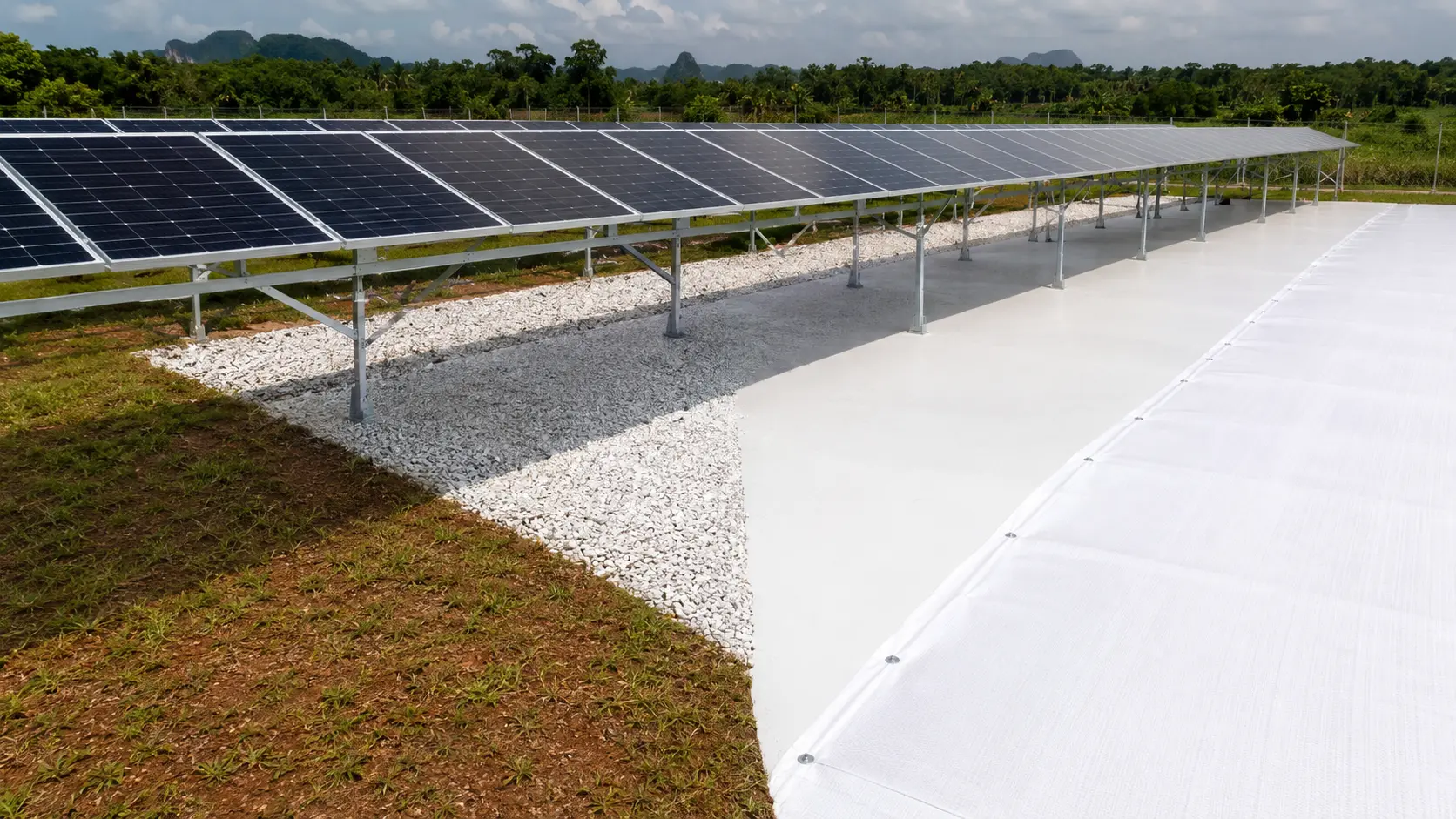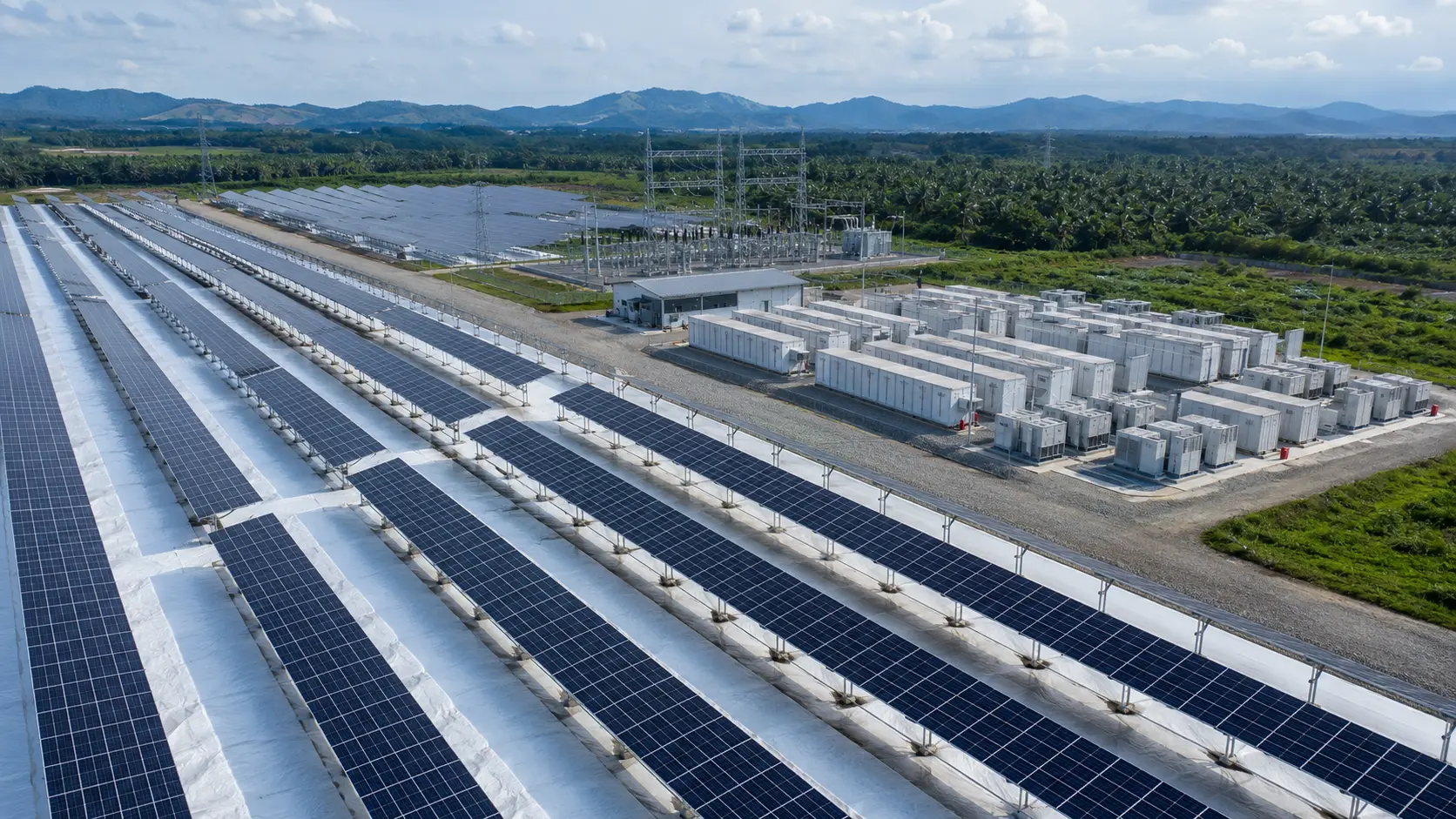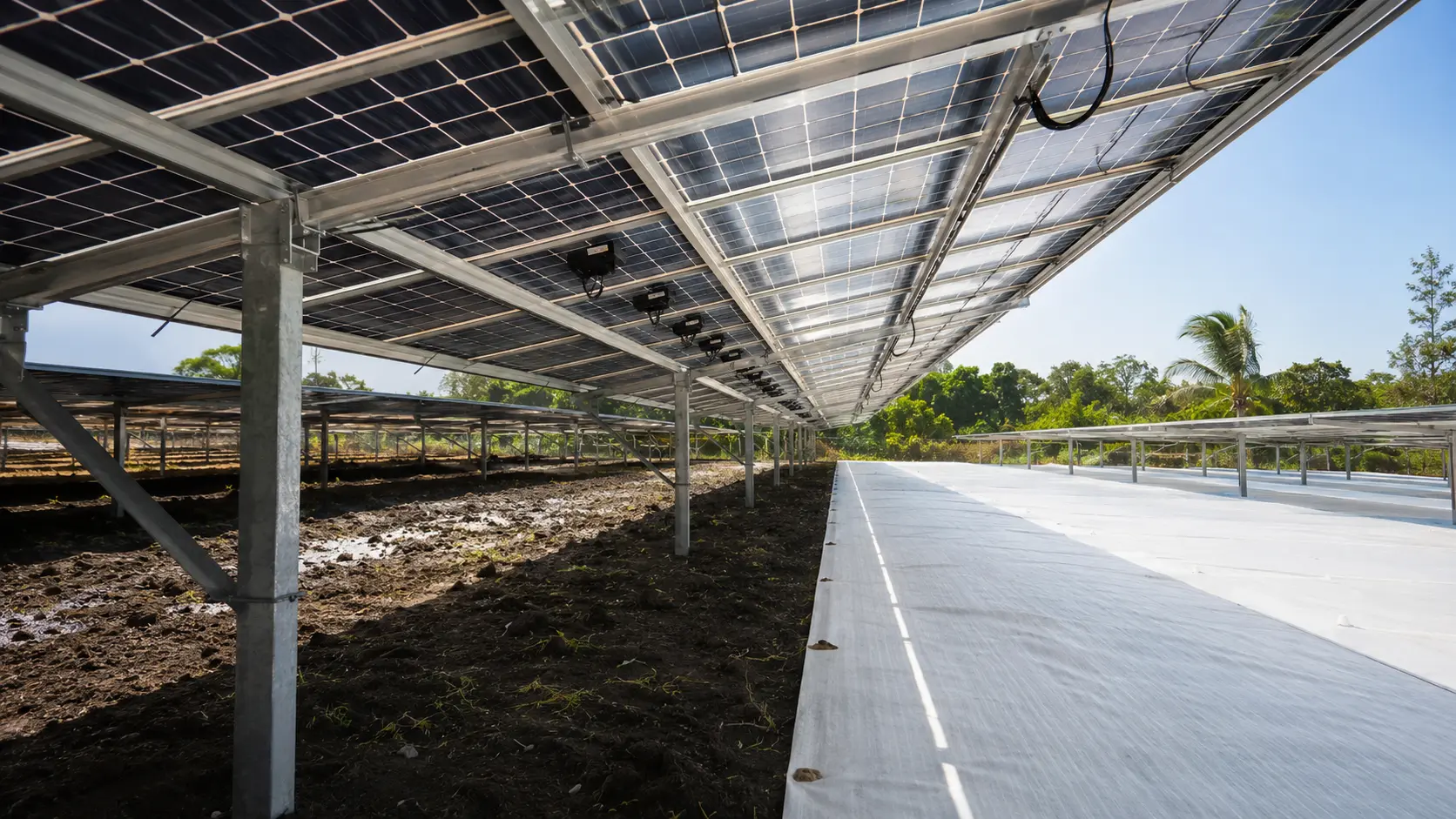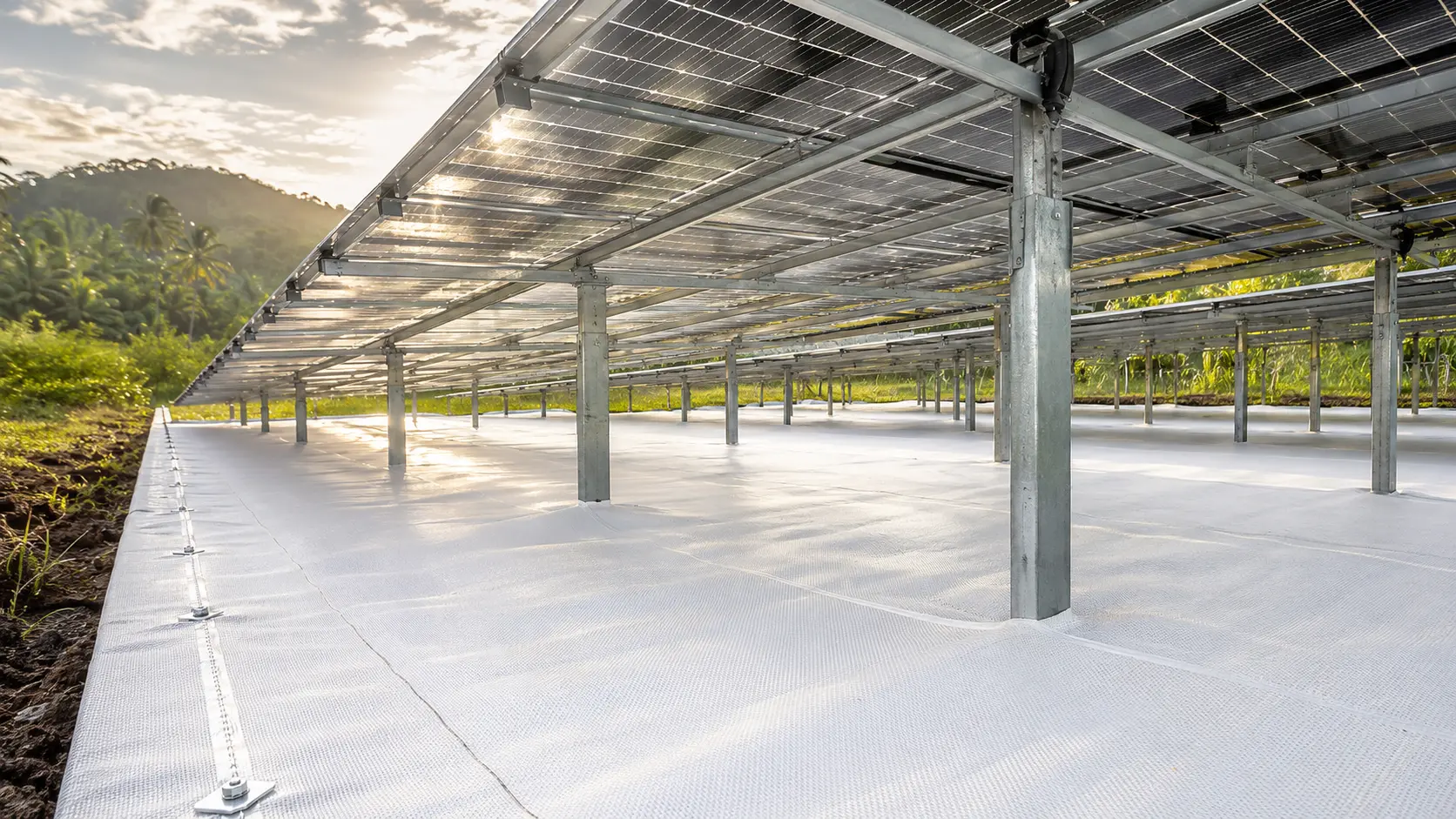
A solar reflective membrane is a durable, high-reflectance ground covering installed beneath and between bifacial PV rows. It turns an ordinarily absorptive surface into an optical asset, redirecting more sunlight toward the rear of the modules while also covering part of the ground where vegetation would otherwise grow.
Key takeaways
- The product is the white membrane on the ground—not a module coating or mirror.
- It works by increasing diffuse reflected light visible to the rear side of bifacial modules.
- Energy uplift depends on albedo, geometry, coverage, bifaciality, clipping and site conditions.
- The same covered area can reduce recurring vegetation-control work.
What exactly is being installed?
The membrane is supplied as a white engineered sheet and fixed over prepared ground beneath the array. Unlike a mirror, it is intended to create broad, diffuse reflection. The rear glass of a bifacial module can then receive more irradiance from the ground plane across a useful range of sun positions.
SunBooster is evaluated as part of the site system: membrane width, row length, post arrangement, drainage, access paths and fixing density all matter. It is not a loose blanket and it should not be specified from a single generic row-spacing rule.
How does reflected light become additional electricity?
Sunlight reaches the ground directly and diffusely. Ordinary soil or vegetation absorbs much of it. A high-reflectance surface returns a larger share upward, and a portion of that reflected irradiance reaches the rear cells. The module's bifaciality factor determines how efficiently the rear side converts that light relative to the front.
The DC increase is not automatically the same as delivered AC energy. Inverter loading, clipping, curtailment, cable losses, soiling and the timing of the gain affect the commercial result. That is why SunBooster separates optical uplift from sellable-energy and cash-flow assumptions.
Where can the technology create value?
New projects can optimise reflective coverage with the module, structure and inverter design before financial close. Operating plants can assess a retrofit without replacing the existing module fleet. In both cases, the strongest opportunities usually combine good rear-side visibility, meaningful unutilised inverter headroom and an energy value that rewards extra delivered kilowatt-hours.
For Malaysia, the second value stream is vegetation. Covering selected zones blocks light and growing space, reducing the area that needs repeated mowing. The actual saving must be reconciled with perimeter growth, swales, access roads and the plant's current O&M contract.
What should a bankable assessment include?
Start with measured or defensible albedo, hourly weather data, the real module PAN file, array geometry and inverter limits. Run a base case and reflective case using consistent assumptions. Then translate incremental AC energy into revenue using the project's realised tariff or avoided-energy value.
A technical review should also cover wind uplift, tensile and tear strength, UV and damp-heat durability, salt and dust exposure, fire behaviour, drainage, installation quality and long-term inspection. A pilot can validate workmanship and site-specific response before full deployment.
- Optical and energy model
- Civil and drainage review
- Mechanical fixing design
- Commercial cash-flow model
- Pilot and measurement plan
Frequently asked questions
Questions asset owners and EPCC teams ask
Is a solar reflective membrane the same as a mirror?+
No. A useful ground reflector produces broad diffuse reflection rather than a narrow, concentrated beam. Project modelling normally treats the surface through an albedo value and rear-side view factor.
Can it work with monofacial modules?+
The primary energy-yield case is designed for bifacial modules because their rear cells can convert reflected light. Monofacial arrays may still gain vegetation-management value, but not the same rear-side energy benefit.
Sources and further reading
External technical and policy links are provided for due diligence. Supplied-reference project claims should be verified against full reports before investment use.
Engineering and investment note: This article is educational content, not a performance guarantee, tender interpretation or investment recommendation. Project results depend on site geometry, measured conditions, equipment, contracts and final engineering.