The white surface is the product
The SunBooster reflective membraneThe white membrane catches sunlight and reflects it upward onto the rear of each bifacial module.Sunlight ↓Membrane ↗Rear-side energy
Groundbreaking solar-yield technology
The reflective ground membrane that boosts bifacial solar yield.
SunBooster is a high-reflectance white membrane laid on the ground beneath and between PV rows. It redirects otherwise-lost sunlight onto the rear of bifacial modules while suppressing grass growth.
RM20,608added energy revenue per MWp in year oneRM0.20/kWh assumed PPA tariff · 1,400 peak-sun-equivalent hours/year · 7.36% modelled AC uplift
Malaysia · MYRBifacial PVReflective ground plane
Start with the numbersSee what the uplift could mean for your plant.
View the Malaysia business case Third-party material evidence
Five testing bodies. Seventeen test items. One due-diligence trail.
The supplied technical dossier references independent reports covering optical performance, accelerated ageing, mechanical strength, restricted substances, flame behaviour and field durability.
See every test and what it proves Optical performance and accelerated durability
 Restricted-substance and chemical compliance
 Reflectance decay and UV-ageing assessment
 Mechanical strength, flame behaviour and cleanability
 Tensile and tear-strength verification
Material-level reports are referenced from the technology partner’s dossier. Testing-body names identify report issuers; they do not imply a blanket endorsement of the SunBooster brand. Full reports, report numbers, tested-sample identity and white-label chain of supply should be verified during technical due diligence.
Need the evidence trail?Review the reported tests, methods and results.
Explore the technical proof Groundbreaking technology. Measurable returns.
RM20,608 in added energy revenue—plus RM20,000 in grass-cost savings per MWp.
SunBooster is an exclusive reflective-membrane technology offered in Malaysia for suitable bifacial solar plants. The base case converts approximately 103 MWh of additional delivered AC energy into added gross income from the same 1 MWp operating asset—without adding another megawatt of modules. With the editable Malaysia vegetation-cost assumption, combined year-one gross benefit reaches RM40,608/MWp.
Additional delivered AC energy×Realised energy value=Added gross revenue
Malaysia 1 MW calculator preset
See how the value scales with plant capacity
Base-case assumptions: 7.36% AC uplift, 1,400 equivalent full-load hours and RM0.20/kWh.
potential added gross revenue per year
103 MWh additional AC energy per yearpotential added gross revenue per year
5.15 GWh additional AC energy per yearpotential added gross revenue per year
10.30 GWh additional AC energy per yearReference performance range
RM14,000–RM30,800 per MWp, per year
At the same RM0.20/kWh energy value and 1,400-hour assumption, a 5–11% AC uplift corresponds to approximately 70–154 MWh of additional energy per MWp each year. The 8.88% independent proof-of-concept result would equate to about RM24,864 per MWp annually.
Modelled screening results, not a quotation or performance guarantee. The Malaysia 1 MW preset uses approximately RM192,350 installed investment, RM1,200/MWp annual O&M, a 25-year analysis period and 7% discount rate. It also includes an editable RM20,000/MWp/year avoided grass-cutting cost, producing a 4.98-year simple payback and 19.2% standalone membrane-investment IRR. With the grass saving set to zero, the original generation-only case is 11.04 years and 6.6% IRR. Neither figure is the percentage-point increase in the host plant’s total IRR. Results vary with layout, covered area, degradation, clipping, curtailment, contract terms, tax, financing and the existing O&M contract.
Solar asset owners
Recover more value from an operating bifacial plant by adding energy yield without replacing the installed module fleet. Model added billable energy, payback, NPV and IRR before committing to a retrofit.
Developers and IPPs
Strengthen the revenue case at development stage by testing how higher rear-side contribution affects sellable AC energy, PR and LCOE within the project’s land, grid and offtake constraints.
EPC and EPCC teams
Differentiate bids with a quantified energy-uplift option. Value-engineer membrane coverage against row pitch, module bifaciality, clipping, logistics and installation cost instead of relying on a headline percentage.
Apply it to your assetReplace the screening assumptions with your project data.
Model your MYR returns How it works
Make the rear side work harder.
Bifacial modules can generate from both sides, but ordinary ground absorbs much of the sunlight that passes between the rows. SunBooster changes the ground condition into a productive optical surface.
Model your layout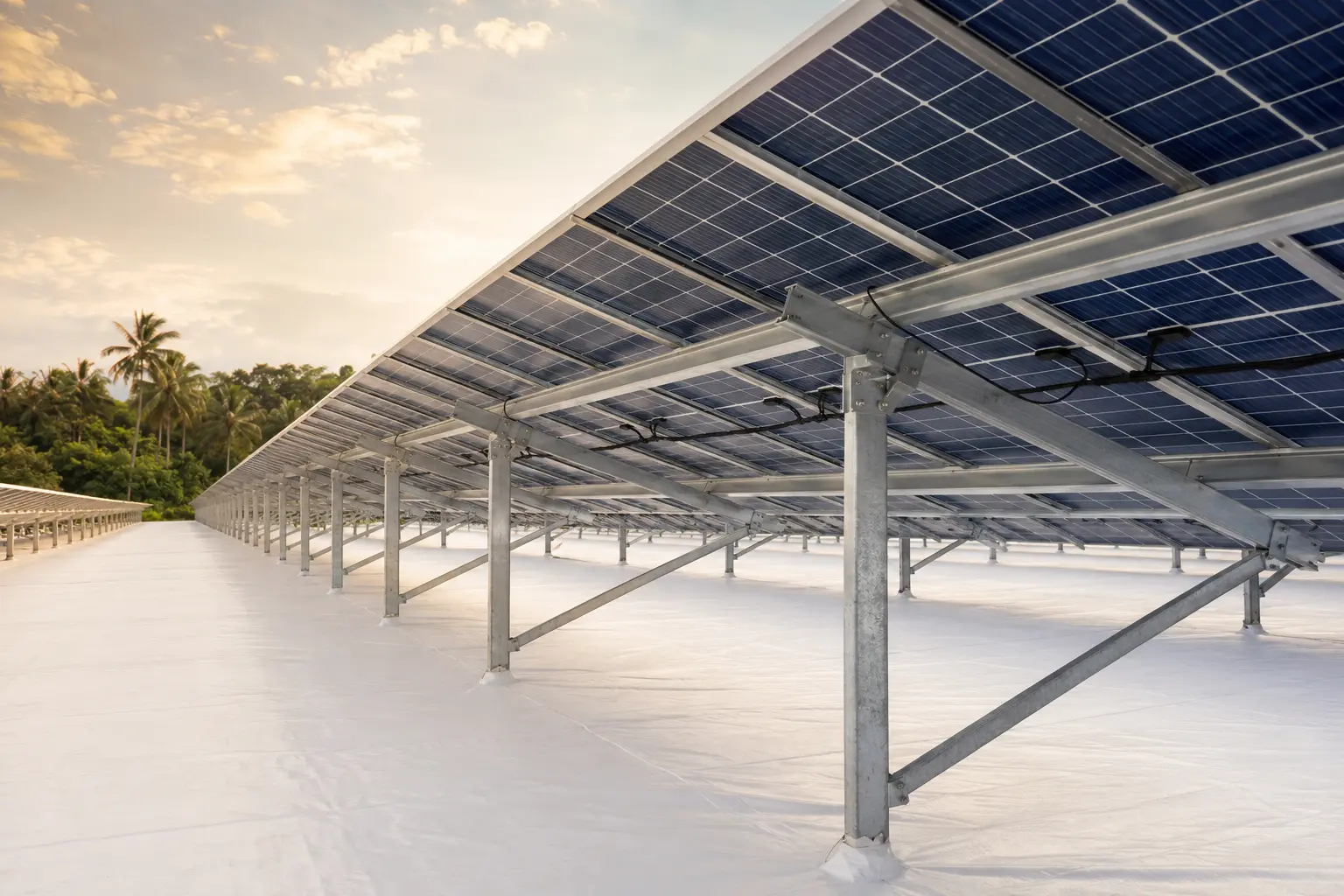
Capture overlooked irradiance
High-reflectance membrane redirects sunlight that would otherwise be absorbed by soil or vegetation.
Increase rear-side contribution
More reflected light reaches the underside of compatible bifacial modules, lifting DC yield.
Convert uplift into project value
Sellable AC energy, clipping, tariff, maintenance and degradation are modelled over the project life.
Move from principle to layoutSee the preliminary mounting options for Malaysia.
Review Malaysia design 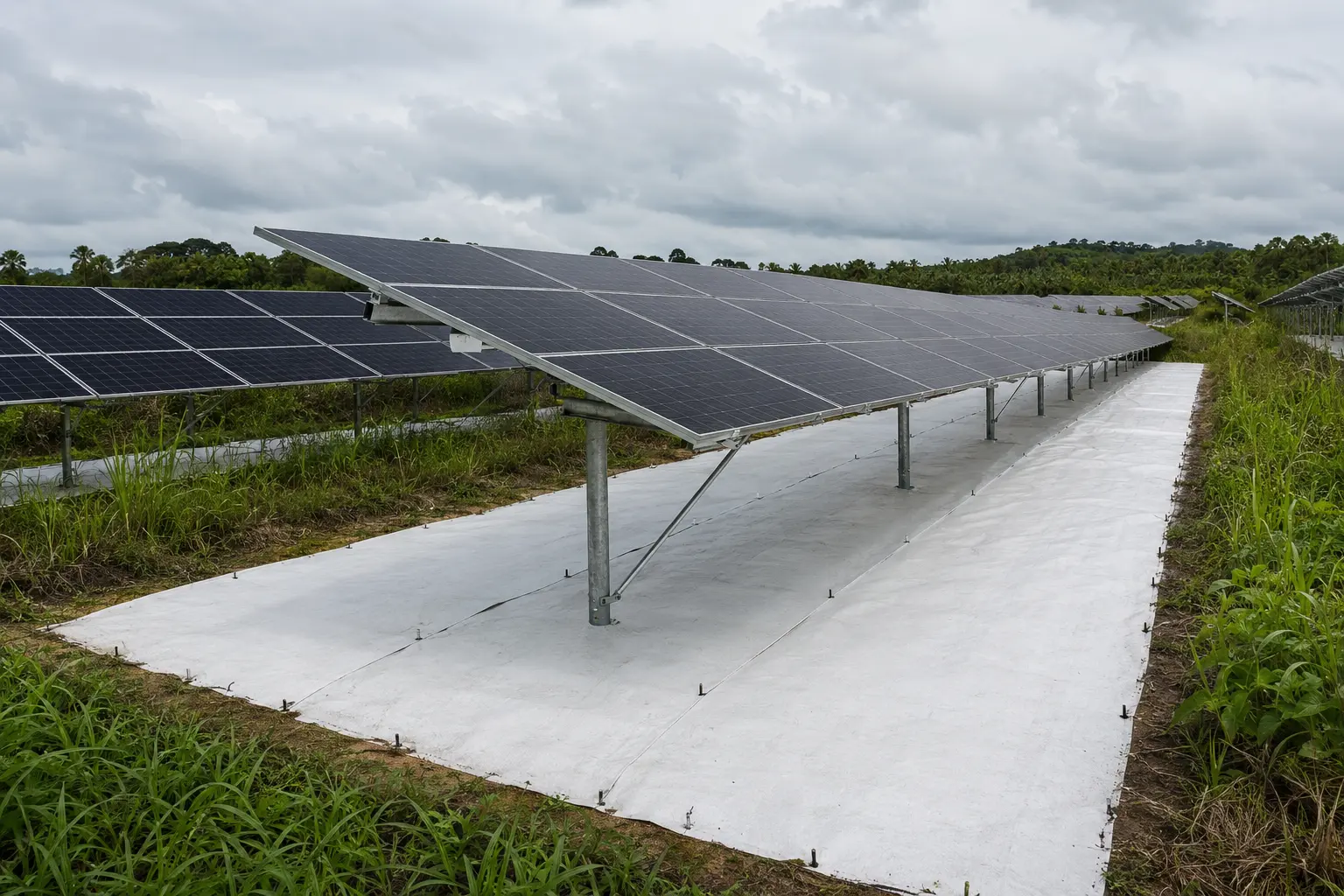 Reflective coverage limits sunlight and growing space beneath the array
A second return stream for Malaysia
Generate more energy—and spend less fighting tropical grass.
Malaysia’s heat, humidity and rainfall can drive aggressive vegetation growth, including lalang that regrows from deep rhizomes. A reflective membrane also acts as a physical ground barrier across the covered zone, reducing light available to weeds and the area that crews must repeatedly cut.
Malaysia 1 MW model · year oneRM20,608 energy revenue + RM20,000 grass saving = RM40,608 gross benefit
At approximately RM192,350 installed investment, the combined screening case produces a 4.98-year simple payback and 19.2% standalone IRR.
The 10-year horizon reflects the supplied commercial scenario, not a universal life guarantee. Savings apply only to covered zones and should be validated against the site’s mowing frequency, perimeter treatment, drainage corridors, access routes and existing O&M contract. Physical suppression can reduce repeated mowing and spot-herbicide demand; it does not justify claiming that all vegetation management or chemical use disappears across the entire plant.
Capture both value streamsModel energy revenue and avoided vegetation cost together.
Calculate the combined benefit Malaysia preliminary design envelope
Choose coverage around the structure—not from a generic rule.
The supplied quantity workbook supports three common mounting layouts. These dimensions are a pre-design starting point for membrane quantities and fixing counts; final geometry must be reconciled with the actual module, structure, terrain and drainage drawings.
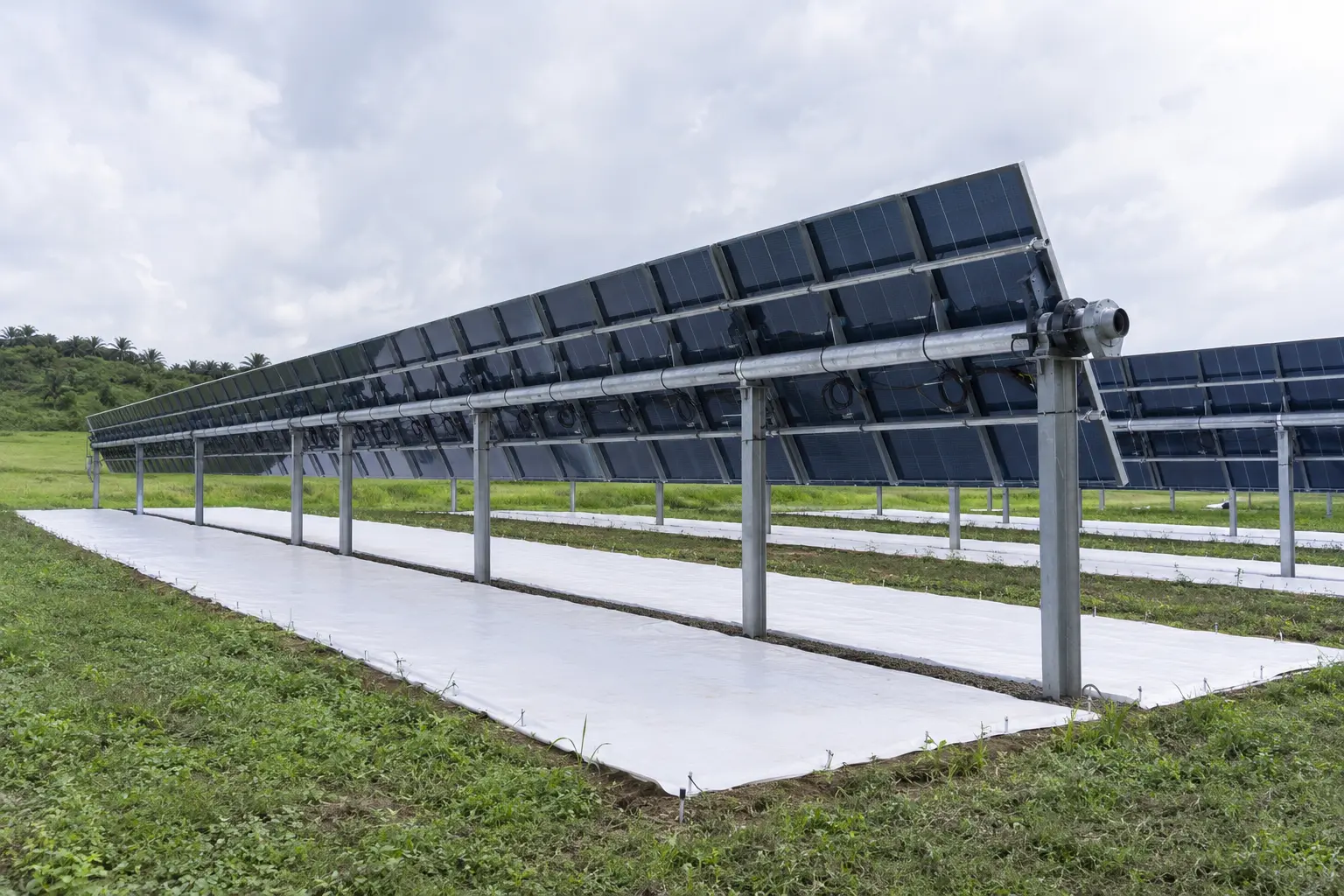
≈1.5 mreference tracker-axis height
Malaysia project design
Set the geometry from the actual Malaysian site and mounting system.
Approximately 1.5 m tracker-axis height can be screened as an indicative starting point, but row spacing must come from the project layout and energy model. The design team should re-check:
- rear-side view factor and row-to-row shading
- tracker rotation and emergency stow envelope
- design flood level, swales and storm-water flow
- wind uplift, soil pull-out strength and fixing density
- walkways, cabling, access and remaining vegetation zones
1P single-axis tracker
4.6 m total membrane width
- Row
- 36.62 m modelled row length
- Fixings
- ≈168 fixings per row
2P fixed · single-post
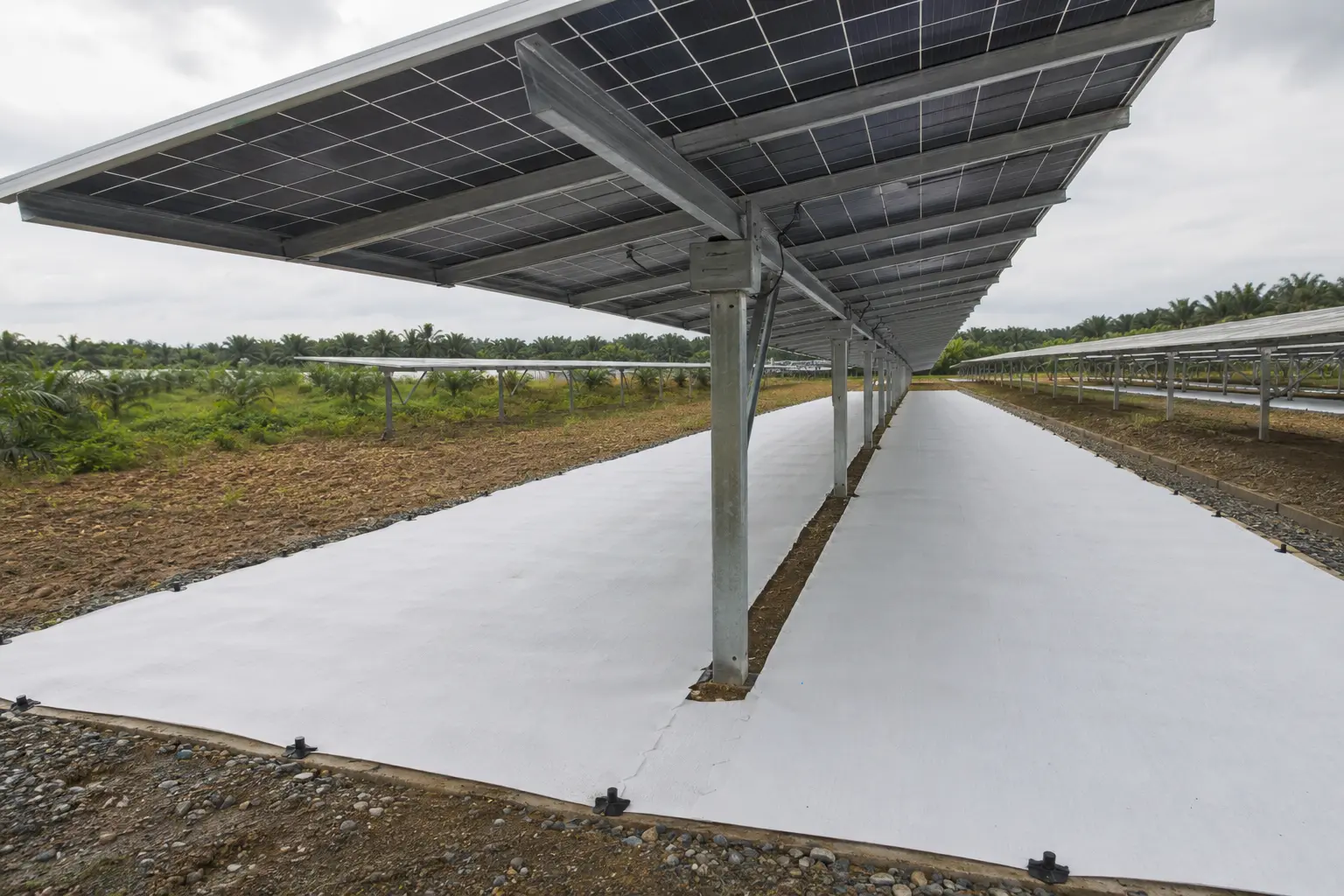
5.4 m total membrane width
- Row
- 36.62 m modelled row length
- Fixings
- ≈172 fixings per row
2P fixed · double-post
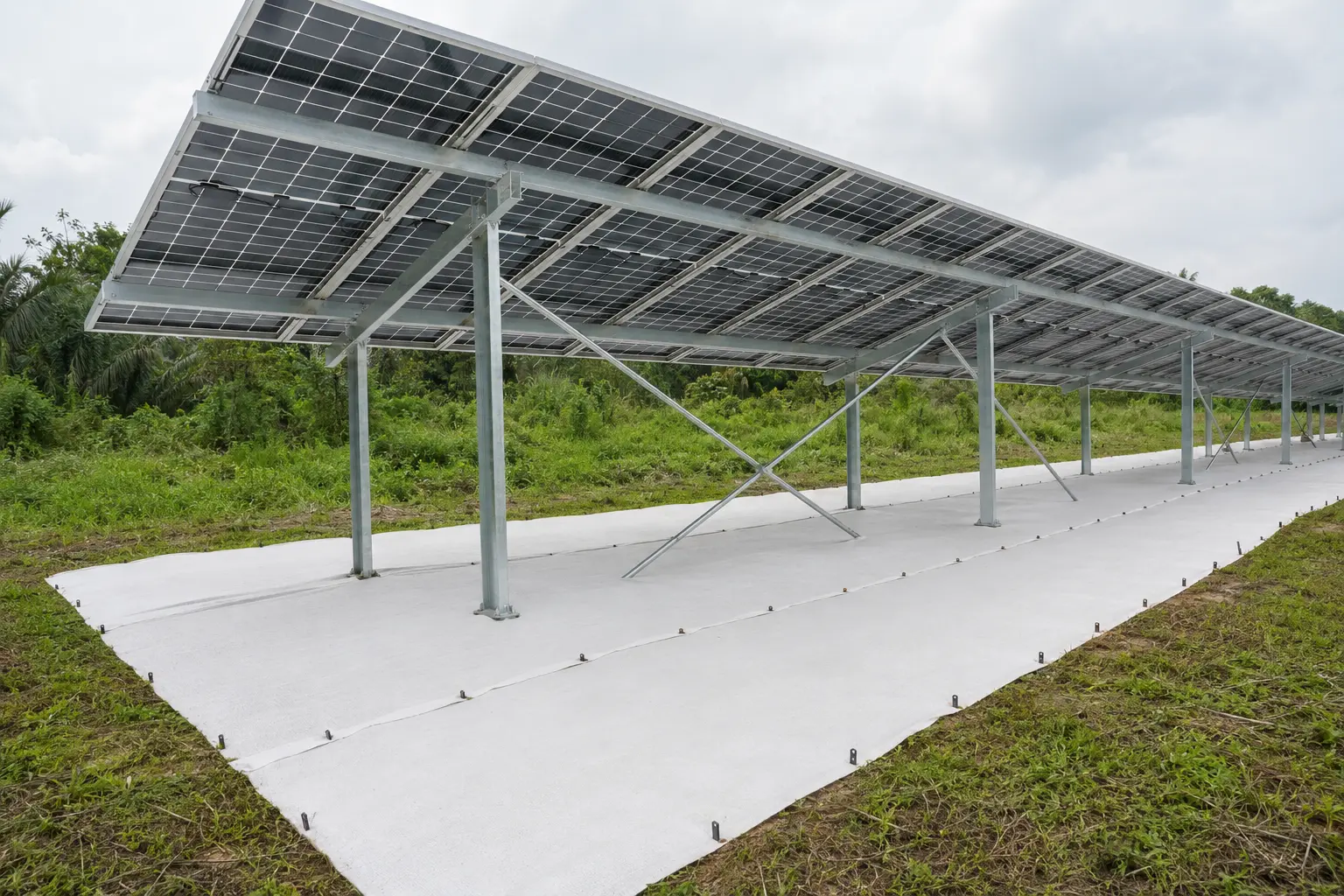
5.4 m total membrane width
- Row
- 36.62 m modelled row length
- Fixings
- ≈172 fixings per row
Workbook caution: visible module ratings and some underlying formulas are not fully consistent. SunBooster therefore presents these dimensions as preliminary quantity layouts, not bankable engineering outputs. Final quantities require a cleaned bill of materials, structure schedule and project-specific simulation.
Bring the actual drawingsTurn the preliminary envelope into a project-specific layout.
Start a layout assessment Independent proof and testing
Five report issuers. Seventeen test items. Results you can interrogate.
Independent laboratories and testing bodies referenced in the supplied material dossier cover generation uplift, optical reflectance, mechanical strength, weathering, restricted substances and field durability.
8.88%
Independent proof-of-concept gain
Recorded output-per-watt uplift from a monitored module and micro-inverter comparison.
Optical performance
Up to 88% reflectance
Measured across the 280–1100 nm solar wavelength range.
Outdoor durability
Accelerated UV ageing
Testing covers reflectance decay under prolonged ultraviolet exposure for long-horizon modelling.
Project validation
Design before deployment
Geometry, coverage, bifaciality and clipping are evaluated before a project-specific recommendation.
Service life and warranty
Designed for a long operating horizon—with warranty terms defined for the actual project.
The supplied dossier supports long-horizon evaluation, but service life, accelerated-ageing equivalence and contractual warranty are three different things. SunBooster keeps them separate so owners and EPCC teams can complete proper due diligence.
Important: Accelerated UV equivalence is laboratory evidence, not a guarantee of identical field life. Final warranty wording and product traceability should be approved before procurement.
Optical performance and accelerated durability
ISO 9050 · IEC 61215-2 · IEC 61701 · IEC 60068-2-68 · ASTM D968
88.58% reflectance · UV −4.41% · damp heat/TC200 −0.44% · salt mist −1.35% · dust/sand −0.68%Restricted-substance and chemical compliance
REACH SVHC · RoHS 2.0 · California Proposition 65
PASS for the three screening categories referenced in the supplied dossierReflectance decay and UV-ageing assessment
GB/T 31034-2014 reflectivity ageing test
Fresh 85.99% · 1,200 kWh UV exposure 79.90% · supplied note equates Oman exposure to 28 outdoor years with module shadingMechanical strength, flame behaviour and cleanability
GB/T 14800 · CA117-2013 · stain and soil release
6.5 kN bursting force · flame PASS · Grade 4–5 stain/soil releaseTensile and tear-strength verification
ISO 1421:2016 · DIN 53363:2003
≈2,500 N tensile strength · 500 N tear strengthMechanical performance
Checks whether the membrane can withstand installation loads, wind movement, abrasion and long-term field handling.
ISO 1421 tensile strength · DIN 53363 tear strength · GB/T 14800 bursting force · ASTM D968 sand abrasionWeather resistance and ageing
Quantifies how reflectance and material performance change under ultraviolet exposure, heat, humidity, salt and dust.
ISO 9050 reflectance · IEC 61215-2 UV and damp heat · IEC 61701 salt mist · IEC 60068-2-68 dust and sand · GB/T 31034 reflectance decayEnvironmental and safety
Screens restricted substances, heavy metals, phthalates, flame behaviour and cleanability for safer deployment and O&M.
REACH SVHC · RoHS 2.0 · California Proposition 65 · CA117 flame retardancy · Grade 4–5 stain and soil release8.88%independent output-per-watt gain in the TÜV proof-of-concept
88.58%ISO 9050 spectral reflectance result across 280–1100 nm
PASSREACH SVHC, RoHS 2.0 and California Proposition 65 screening in the supplied dossier
Testing-body identifiers are displayed to identify reports referenced in the supplied material dossier; they do not imply a blanket endorsement or transfer of certification to the SunBooster brand. Full reports, report numbers, tested-sample identity and supply-chain linkage should be checked during technical due diligence. Performance varies by project and must be validated for the specific site.
Evidence into economicsTest what the reported performance means for your project.
Run the project calculator Where it creates value
One intervention. Three routes to a stronger project return.
New-build optimisation
Improve rear-side irradiance at design stage and optimise the relationship between modules, row pitch and membrane coverage.
Operating-plant retrofit
Add generation uplift to suitable bifacial assets without replacing modules, trackers or inverters.
Bid differentiation
Model additional sellable energy and a lower LCOE before tender submission or financial close.
Choose the right pathwayEvaluate new-build, retrofit or tender-stage deployment.
Assess your opportunity From reference to MalaysiaCompare the operating evidence with your own site conditions.
Model a Malaysian project International deployment record
Proven across different countries, climates and mounting systems.
The supplied technical dossier reports more than 700 MW of deployed reflective-membrane capacity, with installations and pilots across the Middle East and Asia.
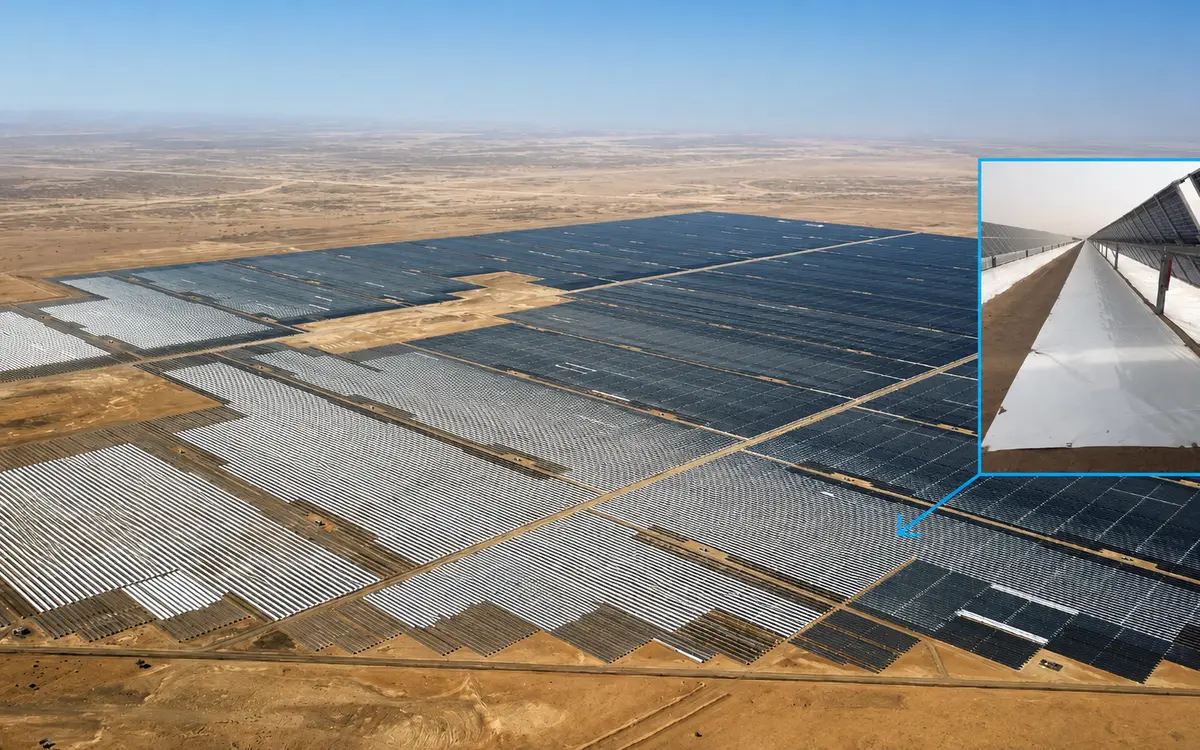
01 · Oman
Ibri utility-scale deployment
575 MW plant500 MW full coverage; reported 9.74–11% gain under non-curtailed conditions.
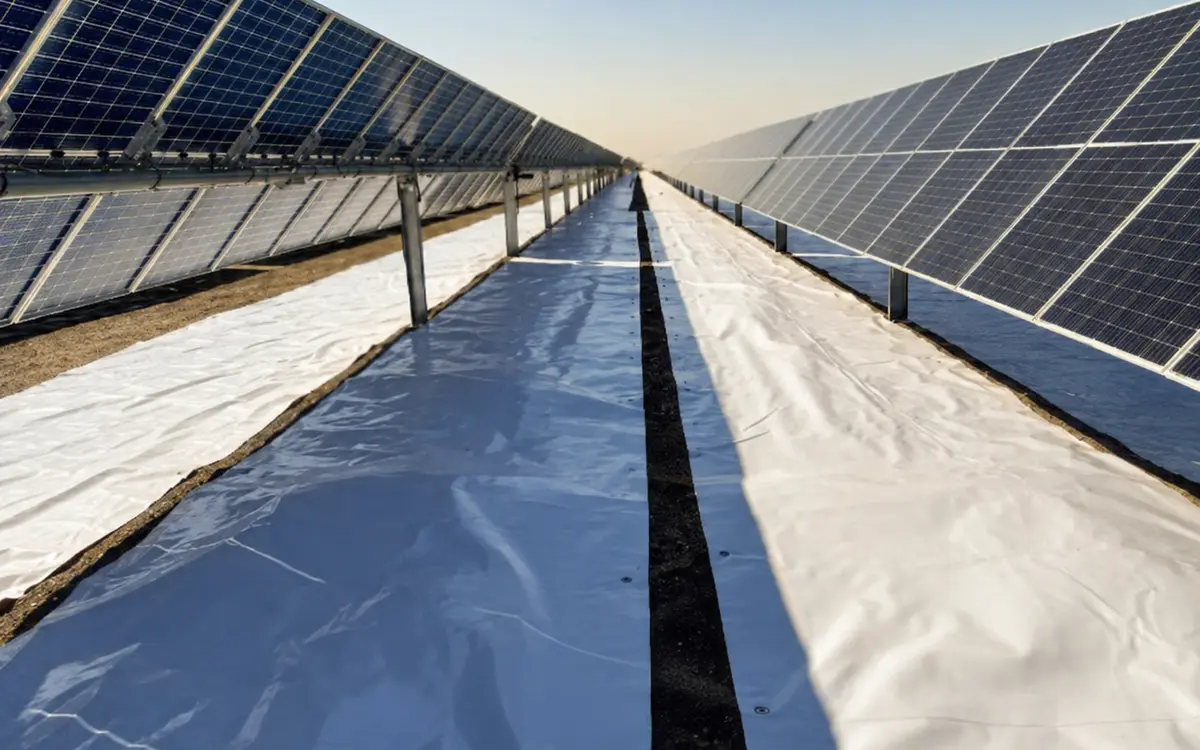
02 · United Arab Emirates
Abu Dhabi Masdar pilot
2.1 GW host projectPilot launched in October 2023; reported actual gain of 7.31%.
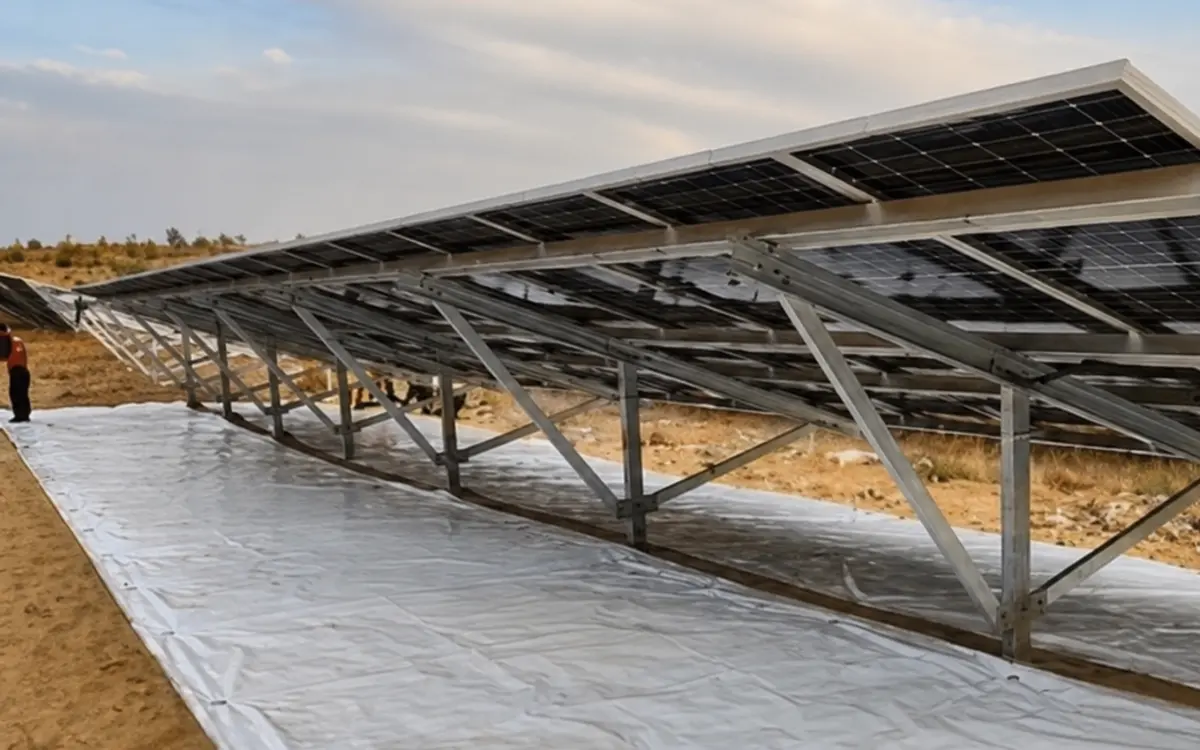
03 · Japan
Japan deployment references
20.2 MW reportedThe dossier reports a 20.2 MW fixed-mount deployment and separately identifies the supplied project image as Kamitakaracho PV.
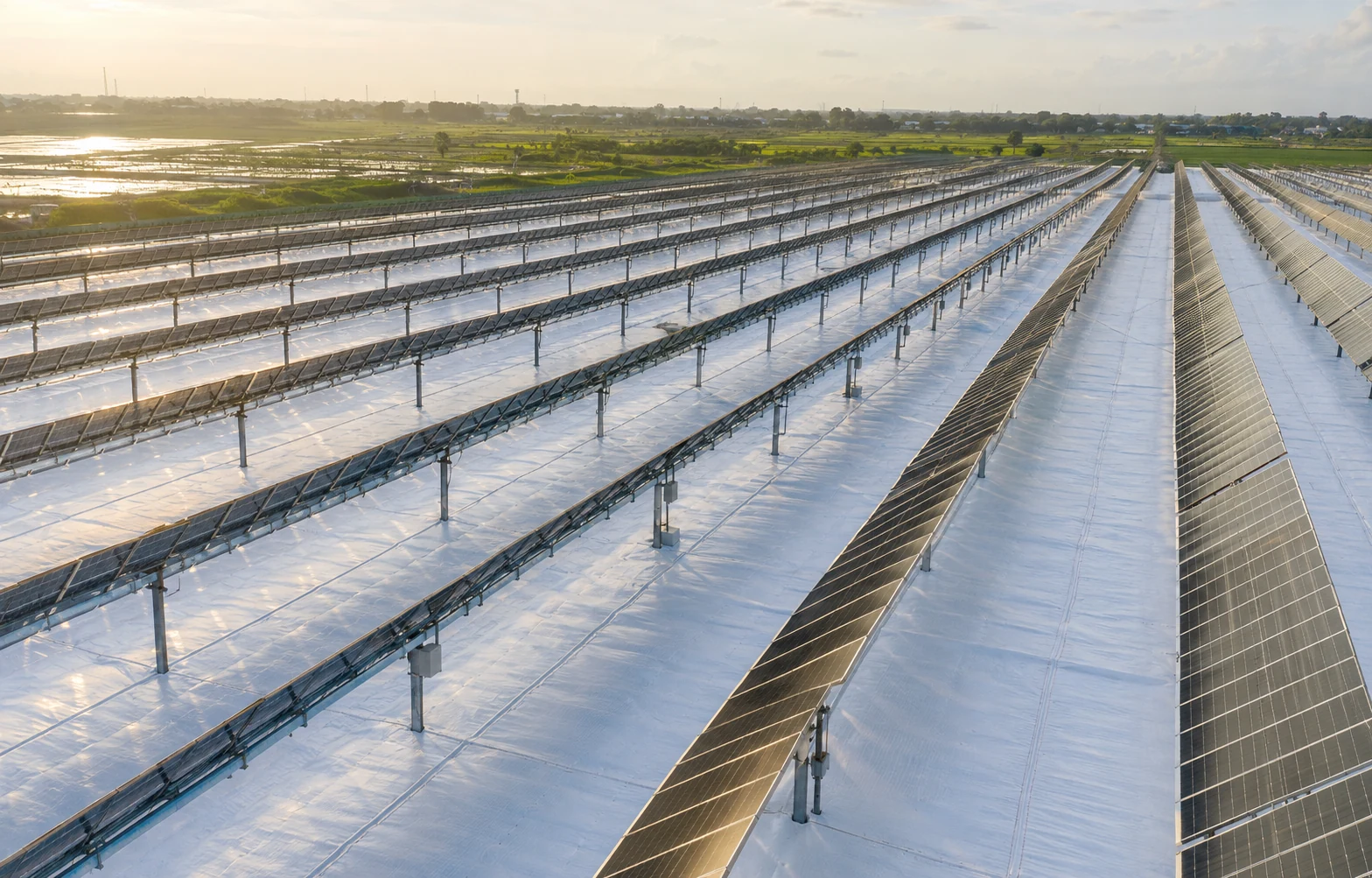
04 · Indonesia
Karawang deployment
25 MWSingle-axis tracker 2P full-coverage installation reported from May 2025.
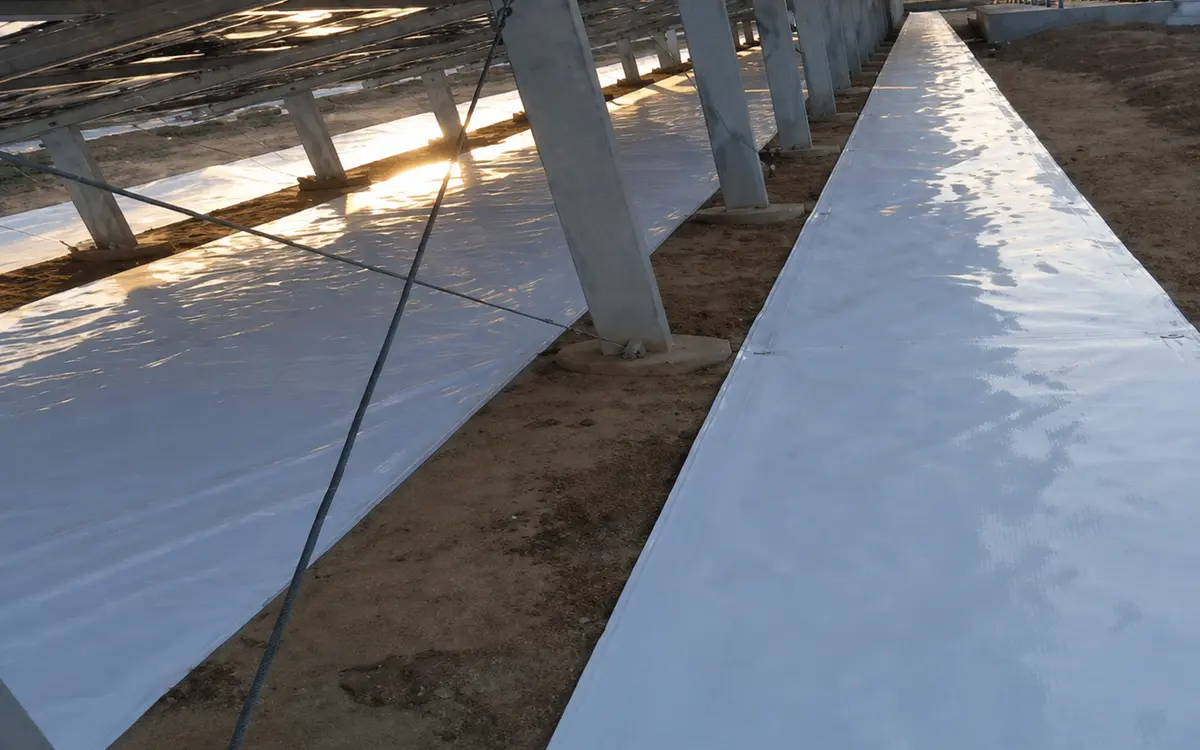
05 · Oman
Ibri Phase II expansion
149 MWExpansion reported from January 2024 with an actual gain of 10.04%.
Additional referenced applications include Japan Kamitakaracho, Oman Amin, Pakistan, Laos, Jordan and India. Project figures are reproduced from the supplied technical dossier and remain subject to project-owner confirmation and operating conditions.
Build your own reference caseScreen the opportunity before detailed simulation.
Create your business case Malaysia policy update
LSS6 changes the design conversation
Solar + BESS makes every additional usable kWh more valuable.
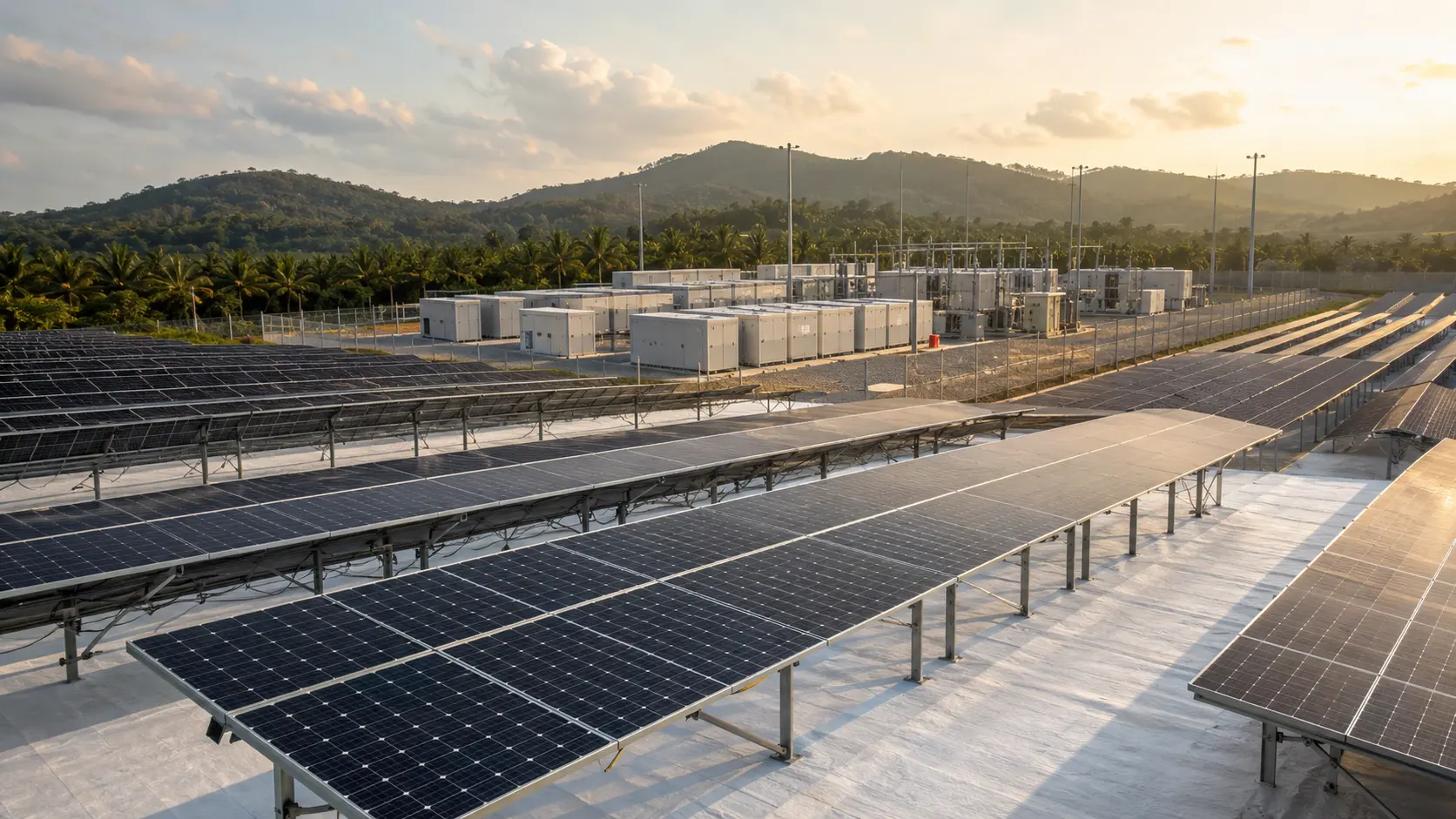
PETRA’s LSS6 announcement pairs 2,500 MW of solar with 1,250 MW of BESS across Packages 1 and 2. The separate 150 MW Bumiputera Package 3 is solar-only. For the two hybrid packages, storage is part of the programme architecture—not an optional afterthought.
Why SunBooster + BESS
Capture more sunlight. Store eligible surplus. Dispatch it later.
SunBooster increases rear-side irradiance and potential bifacial output. A properly designed BESS can then capture part of the eligible midday surplus that might otherwise be inverter-clipped or operationally curtailed, and release it during an approved dispatch window.
Membrane redirects unused sunlight toward the module rear side.
Bifacial modules convert the additional rear-side irradiance into DC energy.
BESS charges from eligible surplus within inverter, PCS and state-of-charge limits.
Stored energy is delivered later within PPA, plant-controller and grid requirements.
Design solar and storage togetherQuantify the value of additional usable generation.
Model SunBooster economics Designed for deployment
Simple installation. Flexible ground fixing.
Soft or sandy soil
Spiral fixing selected to improve hold in loose ground conditions.
Semi-soft soil
U-shaped pinning supports fast installation along membrane edges.
Hard ground
Threaded fixing options adapt the system to firmer terrain.
Maintainable by design
Low-complexity cleaning options, including automated cleaning for large areas.
Ready for constructability review?Match membrane coverage and fixing strategy to the site.
Prepare a technical assessment Project simulator
Convert energy uplift into additional income.
Model geometry, clipping, material quantities, logistics, avoided vegetation-control cost and long-term project returns in MYR or your preferred project currency. See added energy revenue, combined savings, NPV, IRR and payback together.
Cumulative net cash flow
Investment at year zero through year 25
Net cash flow (MYRm)
Gain and reflectance profile
Linear reflectance decay used for screening
Generation gain %Membrane reflectance %
Material and fixing estimate
1P single-axis tracker · portrait module layout
Row length41.69 mTotal rows46Coverage70.8%Membrane area8,878 m²Fixings8,704Containers2
| Membrane | MYR 79,906 |
| Fixings | MYR 10,444 |
| Freight | MYR 42,000 |
| Total installed investment | MYR 192,350 |
|---|
Screening model: Added gross revenue = delivered additional AC energy × entered energy tariff. Combined cash benefit also includes the entered avoided grass-cutting cost for membrane-covered zones, then deducts entered annual O&M. NPV and discounted payback use the selected discount rate. Gain = bifaciality × geometry coupling × coverage × (membrane albedo − ground albedo). AC results include a synthetic hourly clipping model. Vegetation savings require project-specific coverage and O&M validation; final design requires simulation, contract review and engineering approval.
Project assessment
Show us where SunBooster could create additional value.
Share the basic project information and our team can review membrane suitability, potential energy uplift and the preliminary commercial case.
Malaysia · MYRSelected website and calculator market
Official selling company
Solunar Energy Sdn Bhd
Malaysia-based clean-energy technology distributor and system-integration partner supporting project owners, developers and EPCC companies.
Interrogate the resultReview the engineering and commercial assumptions before specifying.
Read the technical questions Questions, answered
Understand the system before you specify it.
What is a solar reflective membrane?+
It is a durable, high-reflectance ground surface installed beneath bifacial PV arrays. It redirects more sunlight toward the rear side of the modules, increasing rear-side irradiance and total energy output.
How much additional generation can SunBooster deliver?+
Reference results indicate approximately 5% to 11%, depending on module bifaciality, row geometry, natural albedo, membrane coverage, inverter clipping and site conditions. Every project should be modelled individually.
Can it be installed on an operating solar farm?+
Yes. SunBooster can be evaluated during project design or as a retrofit after commercial operation, subject to access, terrain, drainage and layout checks.
Does the calculator replace PVsyst?+
No. The simulator is an analytical screening and investment tool. Bankable design should be confirmed through project-specific PVsyst modelling, engineering review and, where appropriate, a field pilot.
How is additional revenue calculated?+
Added gross revenue is additional delivered AC energy multiplied by the project’s realised energy value. Net cash then deducts incremental O&M, while NPV and discounted payback apply the selected discount rate. The tariff, clipping and cost assumptions are editable.
Does a 19.2% IRR mean the solar plant IRR increases by 19.2 percentage points?+
No. The 19.2% figure is the standalone IRR of the SunBooster membrane investment when the Malaysia 1 MW preset includes RM20,000/MWp/year of avoided grass-cutting cost. Set that input to zero and the generation-only case is approximately 6.6%. The change in the host plant’s total project or equity IRR requires its original CAPEX, financing, tax and baseline cash flows.
How does this apply to Malaysian power contracts?+
The value of each additional kWh depends on the project’s PPA or supply arrangement, system access charges, curtailment, losses and settlement terms. SunBooster models the physical uplift and commercial assumptions separately so the project team can test the relevant structure.
Can SunBooster reduce grass-cutting cost?+
The reflective membrane forms a physical barrier over the covered ground, limiting sunlight and space available for grass beneath the array. The Malaysia preset includes an editable RM20,000/MWp/year avoided grass-cutting assumption. Actual savings depend on coverage, perimeter growth, drainage corridors, access roads and the site’s existing vegetation-control contract.
What height and spacing should a Malaysian project use?+
There is no universal row pitch or mounting height for Malaysia. The supplied Malaysia workbook models 4.6–5.4 m membrane coverage across common 1P and 2P layouts, but final geometry must be checked against the actual structure, flood level, tracker movement, rear-side view factor, shading, wind uplift, drainage and maintenance access.
What is the stated service life, and what product warranty applies?+
The supplied project analysis uses an effective service-life basis of more than 10 years and describes a 10-year material-level weathering and anti-ageing rating. The CPVT ageing evidence also includes a note equating the tested Oman ultraviolet exposure to 18 years of direct UV or 28 years outdoors when module shading is considered. These are service-life and accelerated-ageing references—not a warranty promise. The warranty period, covered defects, exclusions, remedies and maintenance conditions must be confirmed in the final project technical and supply agreement.
Bring us your layout
Find the revenue your solar asset may be leaving behind.
Start with a MYR-based screening model, then validate the opportunity with a project-specific technical review.
Request a project assessment