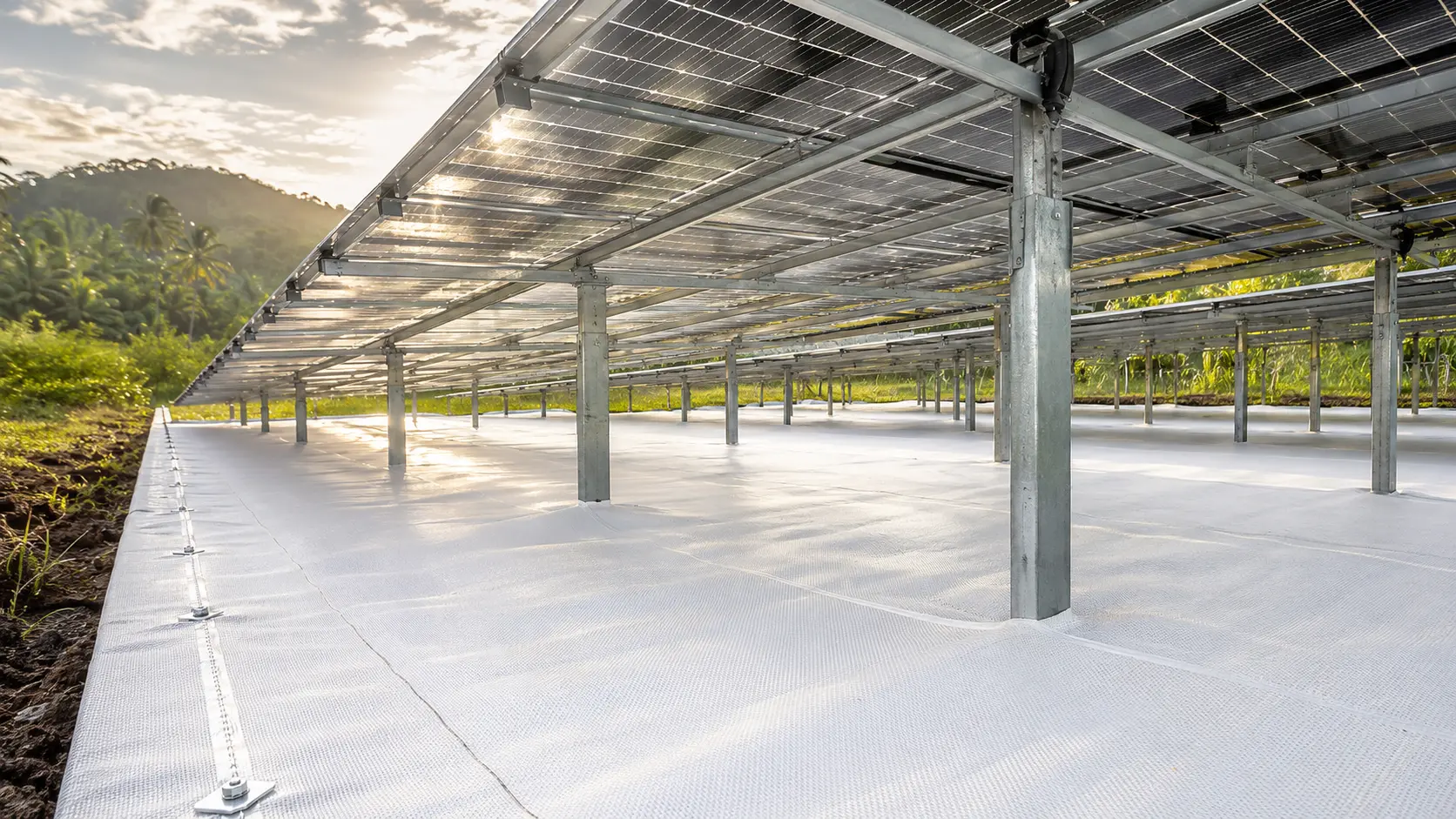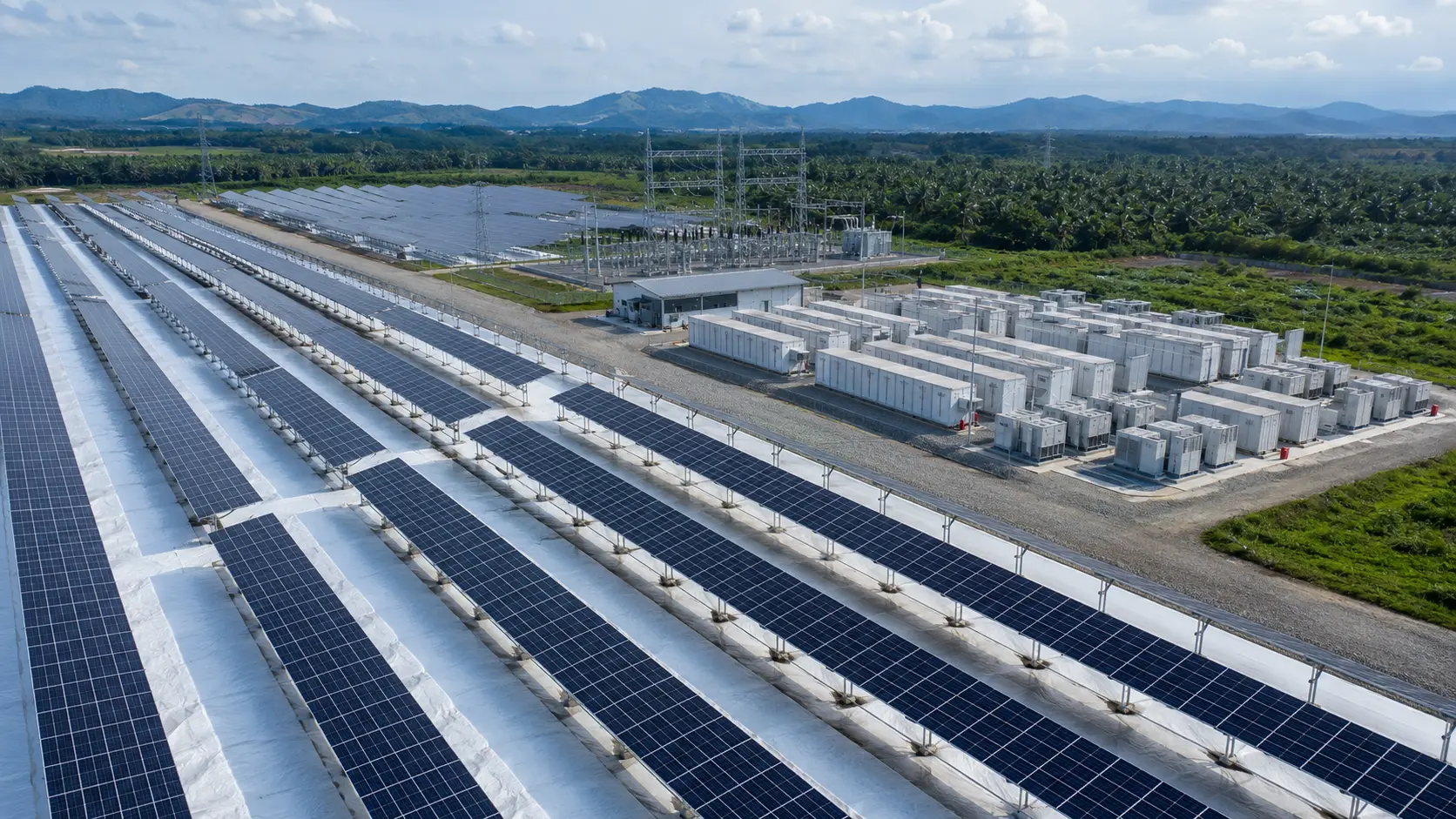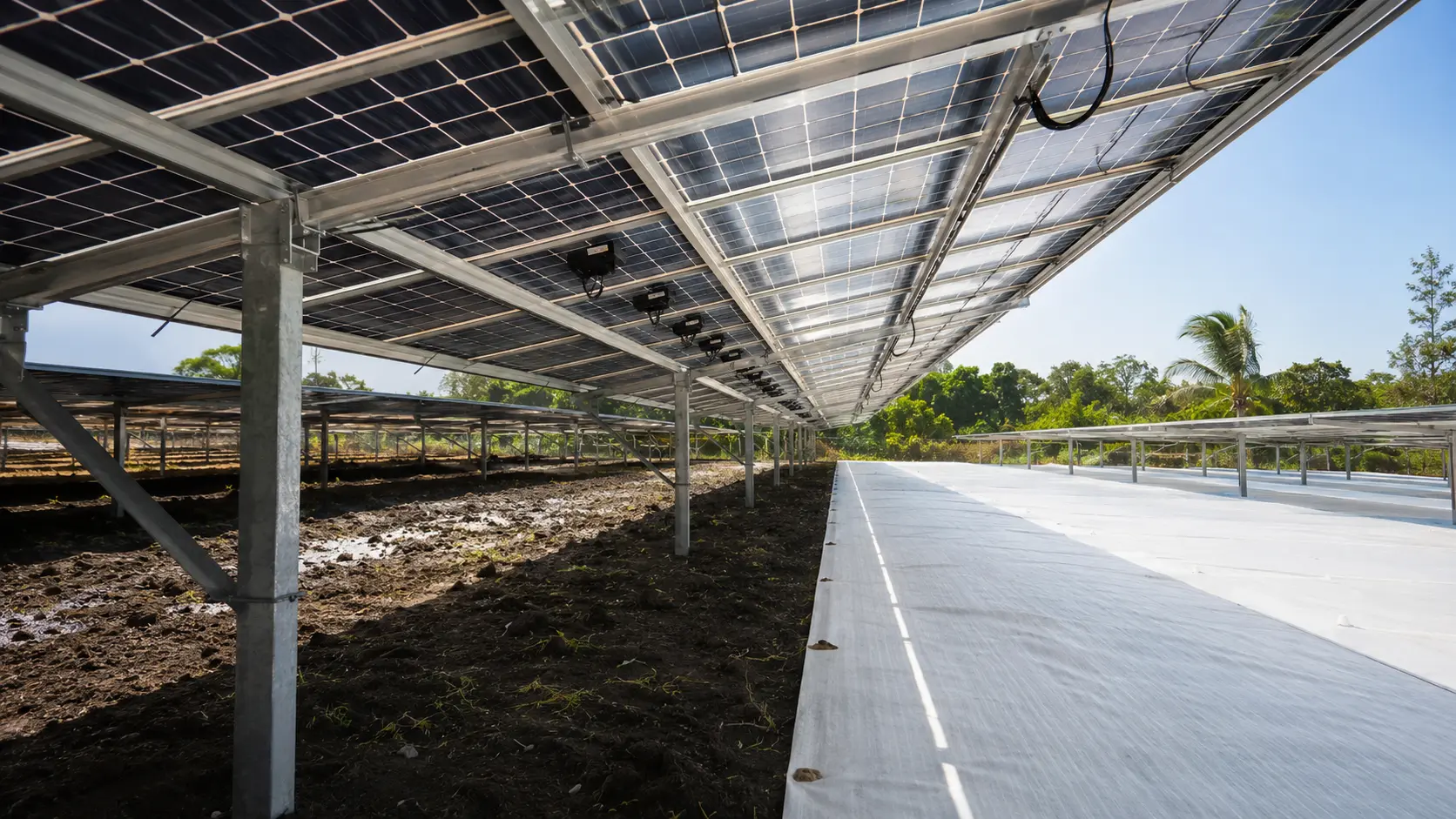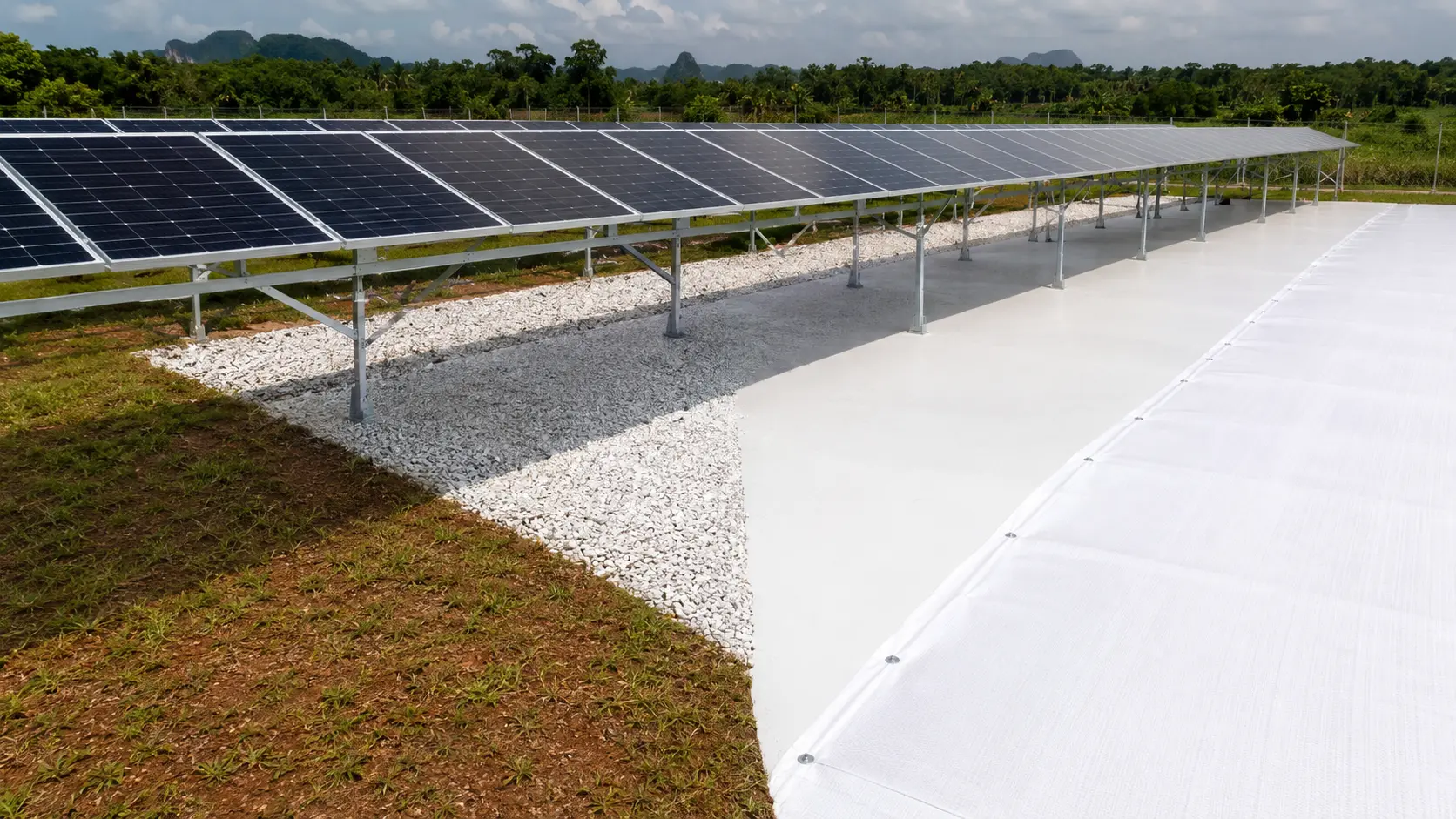
Natural ground is inexpensive but variable; white gravel can be reflective but heavy and prone to contamination; coatings need a suitable substrate and renewal plan; an engineered membrane provides defined coverage and a physical vegetation barrier. The right choice depends on lifetime reflectance, drainage, constructability, cleaning and whole-life cost.
Key takeaways
- Compare aged reflectance, not just a new-surface reading.
- Include transport, substrate preparation and cleaning.
- Check drainage and vegetation at seams and edges.
- Use a common energy model for every alternative.
Natural soil and vegetation
Natural ground has almost no additional material cost, but its reflectance changes with moisture, season and vegetation. Tropical grass can shade the ground plane and increase mowing demand. The baseline should still be measured because the incremental value of any reflector depends on what it replaces.
A low-cost baseline is not always a low whole-life-cost baseline. Repeated mowing, herbicide, access restrictions and safety controls can become a material O&M line item on a large plant.
White gravel or aggregate
Light aggregate can increase reflectance and drain freely, but it adds mass, haulage, spreading and geotechnical considerations. Fine material, dust, algae and soil migration can reduce brightness. Weed growth may continue through gaps unless a separate barrier is installed.
Gravel can suit compact, accessible sites. For utility scale, quantify tonnes per hectare, delivery routes, ground bearing, replenishment and cleaning before comparing it with a roll-based membrane.
Painted or coated surfaces
Coatings can create a continuous bright surface where a stable slab or prepared substrate already exists. On uneven soil, cracking, ponding, adhesion and surface preparation can dominate the result. Recoating intervals and runoff chemistry should be included in the lifecycle plan.
A coating specification should state solar reflectance, weathering, abrasion, slip resistance, substrate moisture limits and repair method. A laboratory reflectance value without a field-maintenance plan is incomplete.
Engineered reflective membrane
A membrane creates a defined optical surface while physically covering the soil. Rolls can be arranged around posts and access zones, and damaged sections can be replaced locally. Performance depends on seam layout, tension, anchoring, wind design, drainage and resistance to UV, heat, salt, sand and handling.
The decision should be made on net present value per additional delivered megawatt-hour, including vegetation savings where defensible. A membrane is not automatically best everywhere; it is strongest where the optical and operational benefits share the same covered area.
Frequently asked questions
Questions asset owners and EPCC teams ask
Which surface has the highest reflectance?+
That depends on the exact product and its condition. Compare measured spectral or solar reflectance after representative weathering, dust and cleaning—not colour alone.
Can different treatments be combined?+
Yes. Projects may use membrane in high-value optical zones, gravel at drains or equipment pads, and natural vegetation at ecological buffers. The model should use the actual coverage map.
Sources and further reading
External technical and policy links are provided for due diligence. Supplied-reference project claims should be verified against full reports before investment use.
Engineering and investment note: This article is educational content, not a performance guarantee, tender interpretation or investment recommendation. Project results depend on site geometry, measured conditions, equipment, contracts and final engineering.