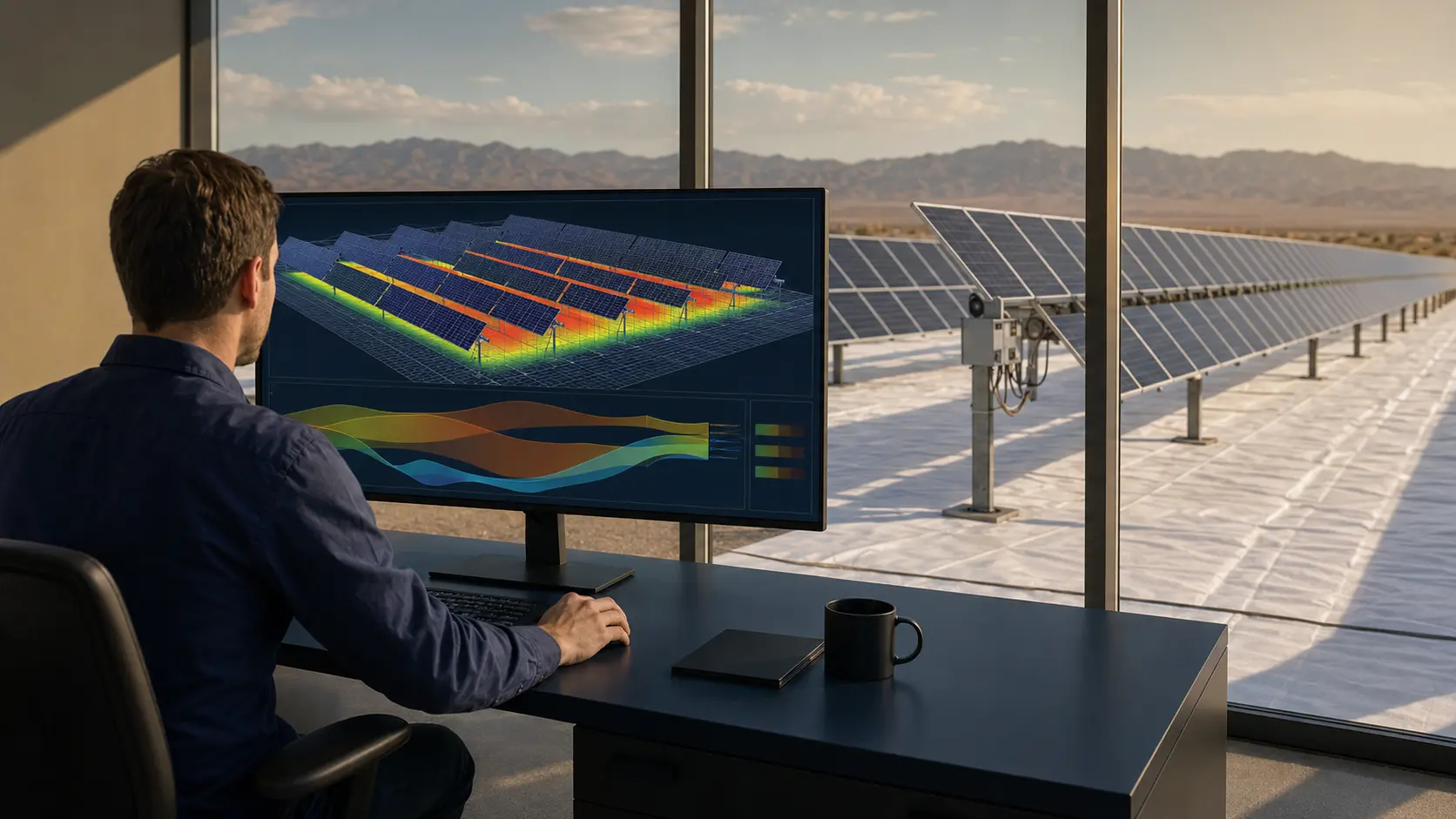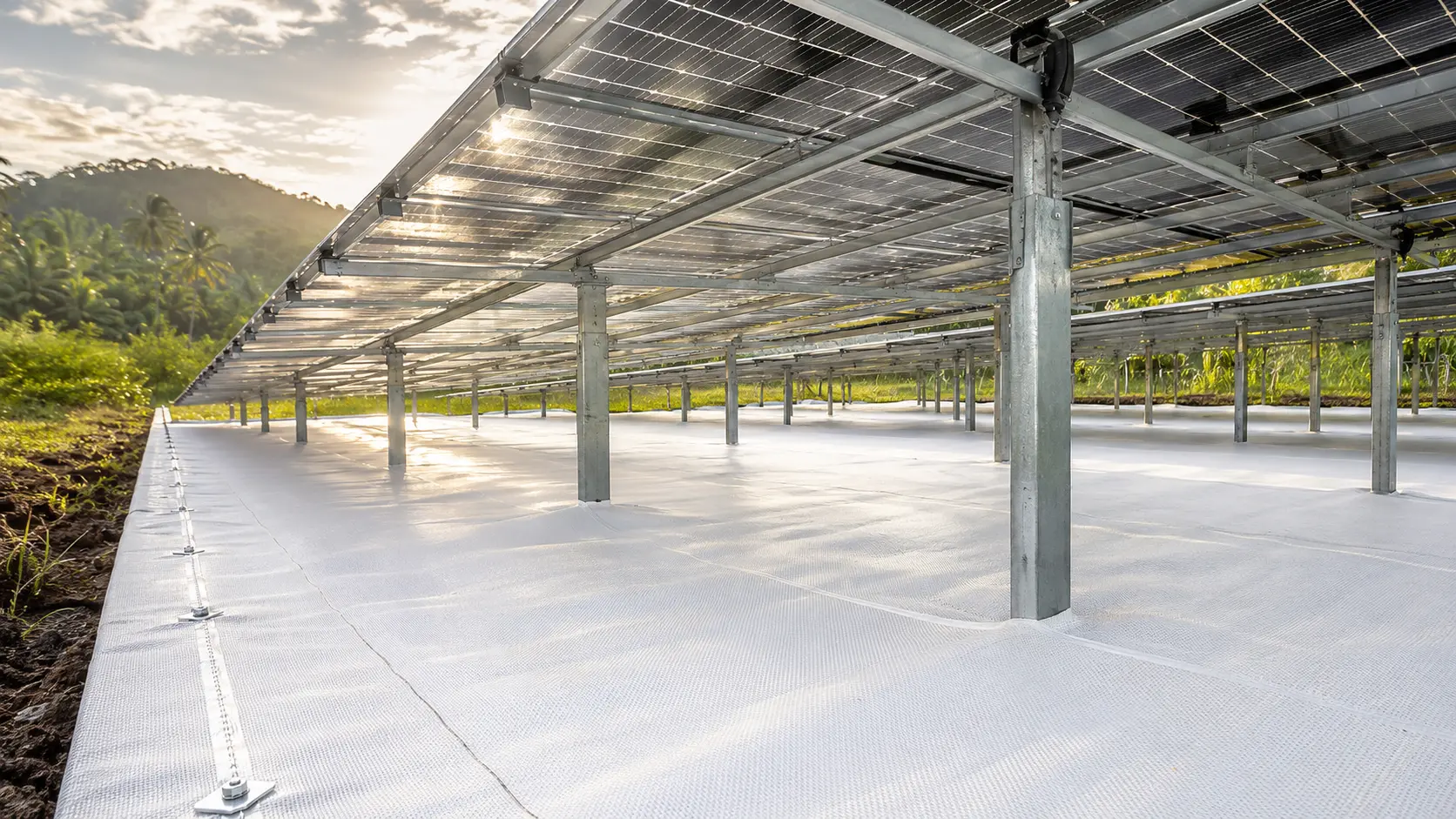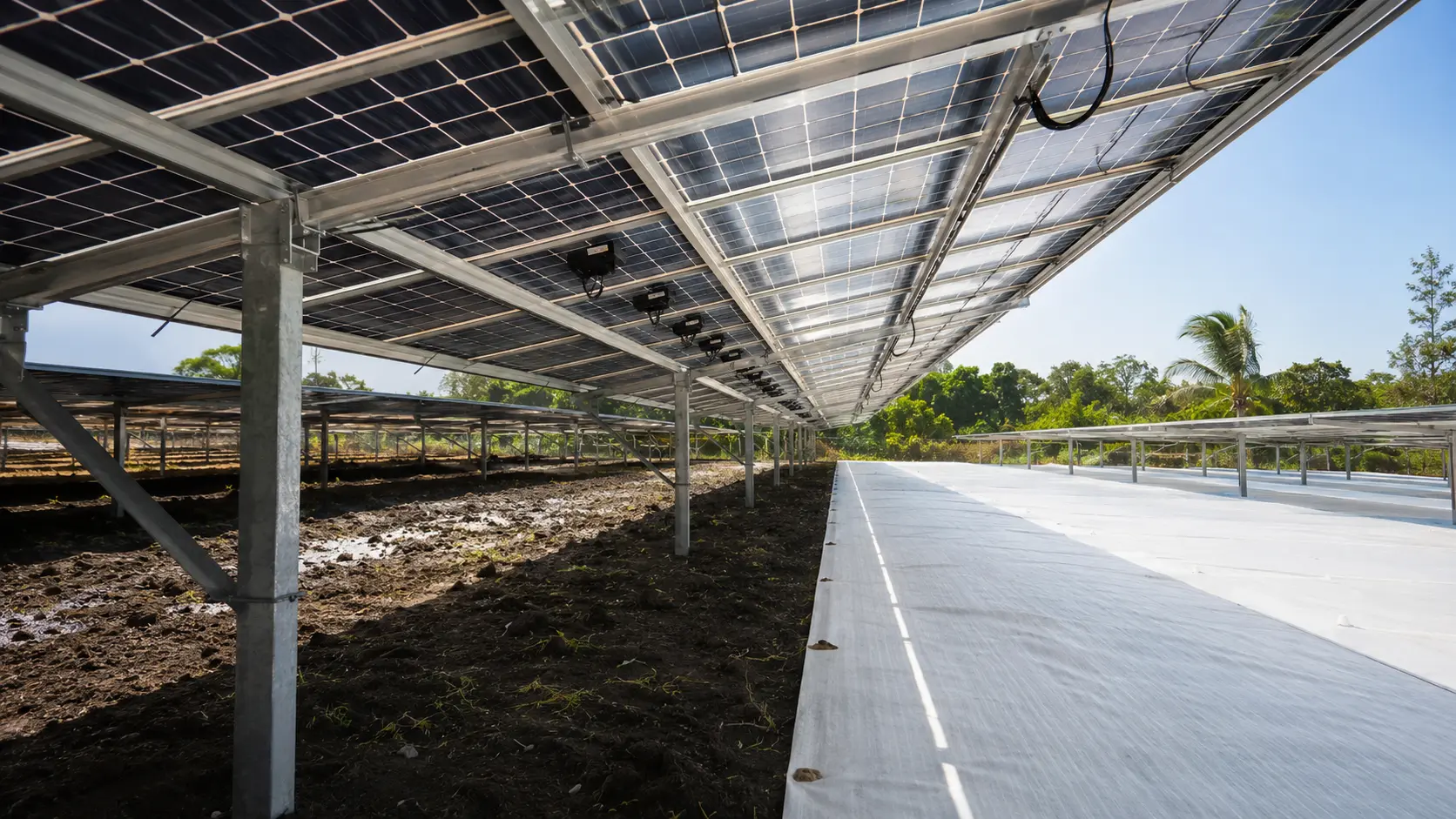
Albedo is the fraction of incoming sunlight reflected by a surface. For bifacial PV, the relevant albedo is the ground directly visible to the rear of the modules. Higher ground reflectance can increase rear-side irradiance, but the usable gain still depends on array height, pitch, shading, module bifaciality and electrical limits.
Key takeaways
- Albedo is a ratio, not an energy-gain percentage.
- The ground under the array is modelled separately from far-field terrain.
- View factor determines how much reflected light reaches the module.
- Seasonal, wet and aged conditions should be considered.
What does albedo measure?
Albedo compares reflected irradiance with the irradiance received by the surface. A value of 0.20 means roughly one fifth is reflected under the measurement conditions; it does not mean the PV system gains 20%. Only part of that reflected energy reaches the rear cells, and only part of the rear-side DC gain survives system losses.
For bifacial modelling, use the albedo of the ground beneath and between rows. PVsyst distinguishes this from the far-field project albedo used in front-side transposition. Mixing the two can produce a misleading simulation.
Why geometry matters as much as reflectance
A bright surface hidden from the module contributes little. Height, pitch, table width, tilt, tracker position, post and torque-tube shading, and membrane coverage influence the rear-side view factor. The same membrane can therefore perform differently under a low fixed-tilt table and a higher single-axis tracker.
Non-uniform rear irradiance also matters. Bright regions and structural shadows can create mismatch across cells and modules. A credible model uses the actual structure-shading factor and electrical configuration instead of multiplying front-side yield by a single albedo uplift.
How should albedo be measured and modelled?
An albedometer pairs upward- and downward-facing irradiance sensors. Long-term measurements are preferable because wetness, dust, biological growth, cleaning and surface ageing can change reflectance. Where direct data are not available, use a documented assumption and sensitivity range.
Model at least the natural-ground case, the proposed clean membrane case and a degraded or soiled case. Monthly albedo values can represent seasonal changes, while an hourly or sub-hourly series is useful when monitoring data exist.
What should investors ask for?
Ask for the assumed clean and aged reflectance, the coverage percentage, the geometry used, the module bifaciality factor and the treatment of clipping. A reported optical reflectance result is useful material evidence, but it does not replace a project energy model.
The most persuasive business case traces every step: ground irradiance, reflected irradiance, rear-side contribution, incremental DC yield, incremental delivered AC energy and finally realised cash revenue.
Frequently asked questions
Questions asset owners and EPCC teams ask
Is higher albedo always better?+
Optically, higher reflectance usually increases the available rear-side light, but commercial value can be limited by shading, poor view factor, clipping, curtailment, cost or durability.
What is a normal natural-ground albedo?+
It varies by surface and condition. PVsyst lists typical grass values around 0.15–0.25, but recommends site-specific measurement for important bifacial projects.
Sources and further reading
External technical and policy links are provided for due diligence. Supplied-reference project claims should be verified against full reports before investment use.
Engineering and investment note: This article is educational content, not a performance guarantee, tender interpretation or investment recommendation. Project results depend on site geometry, measured conditions, equipment, contracts and final engineering.