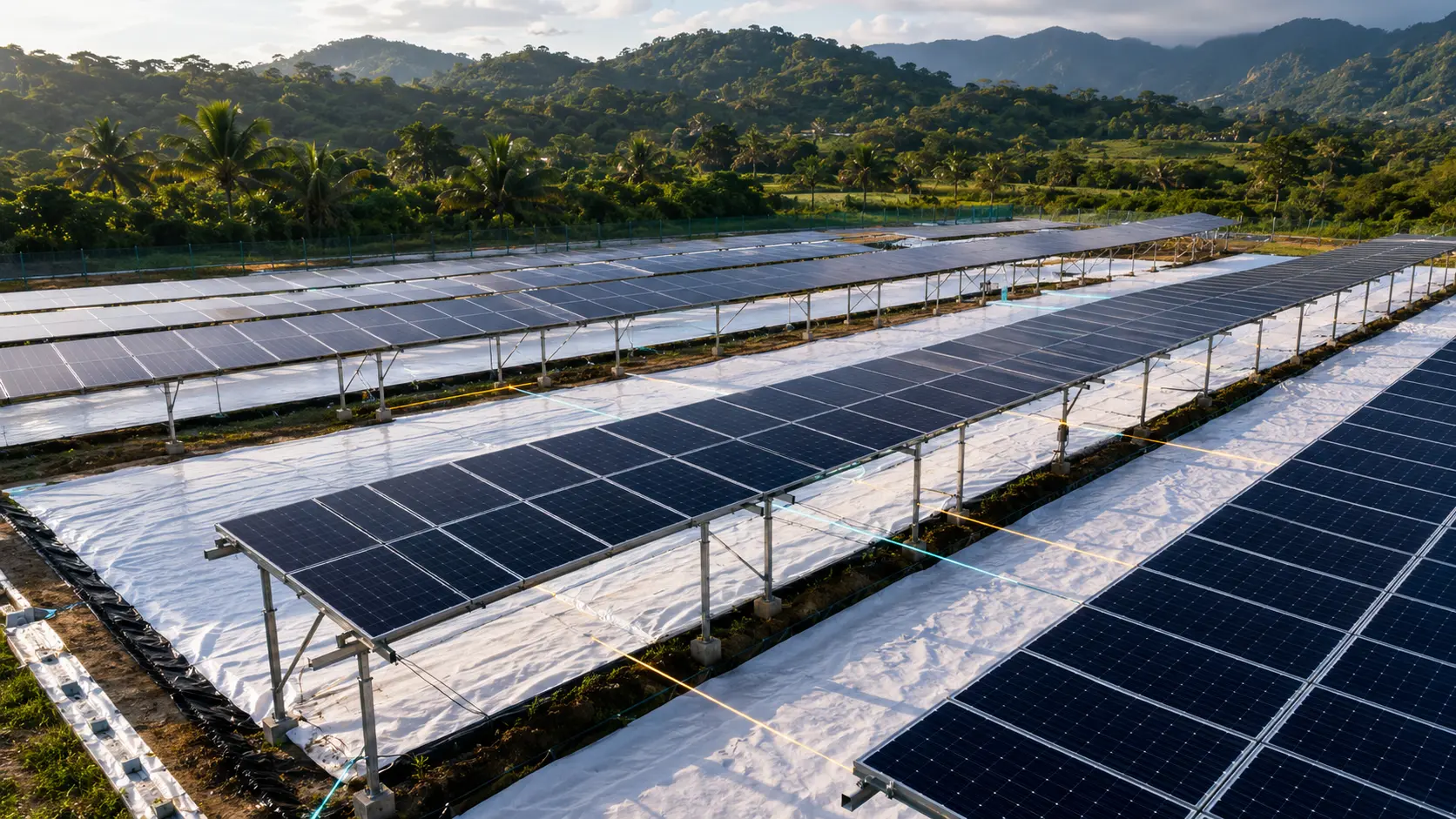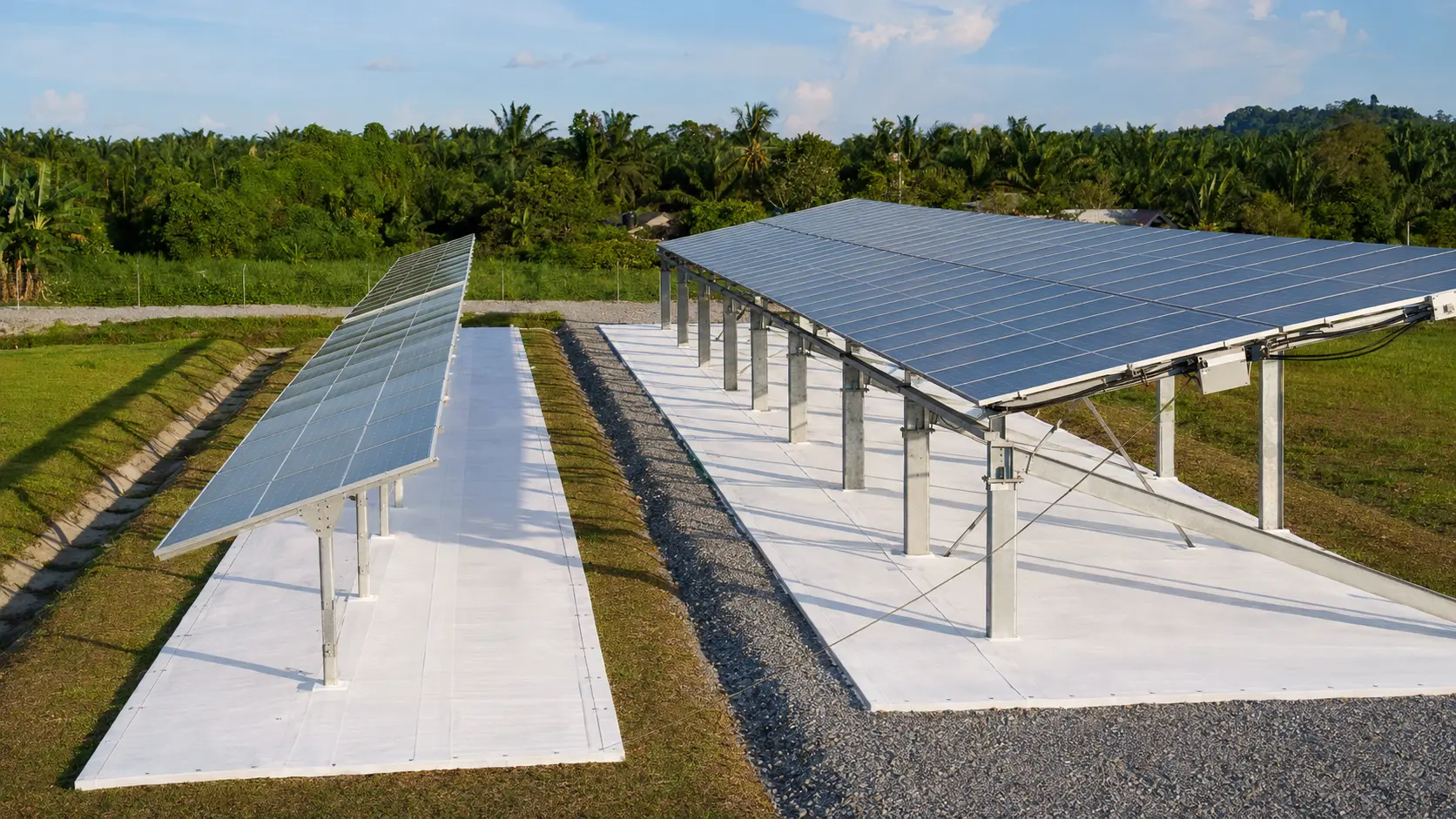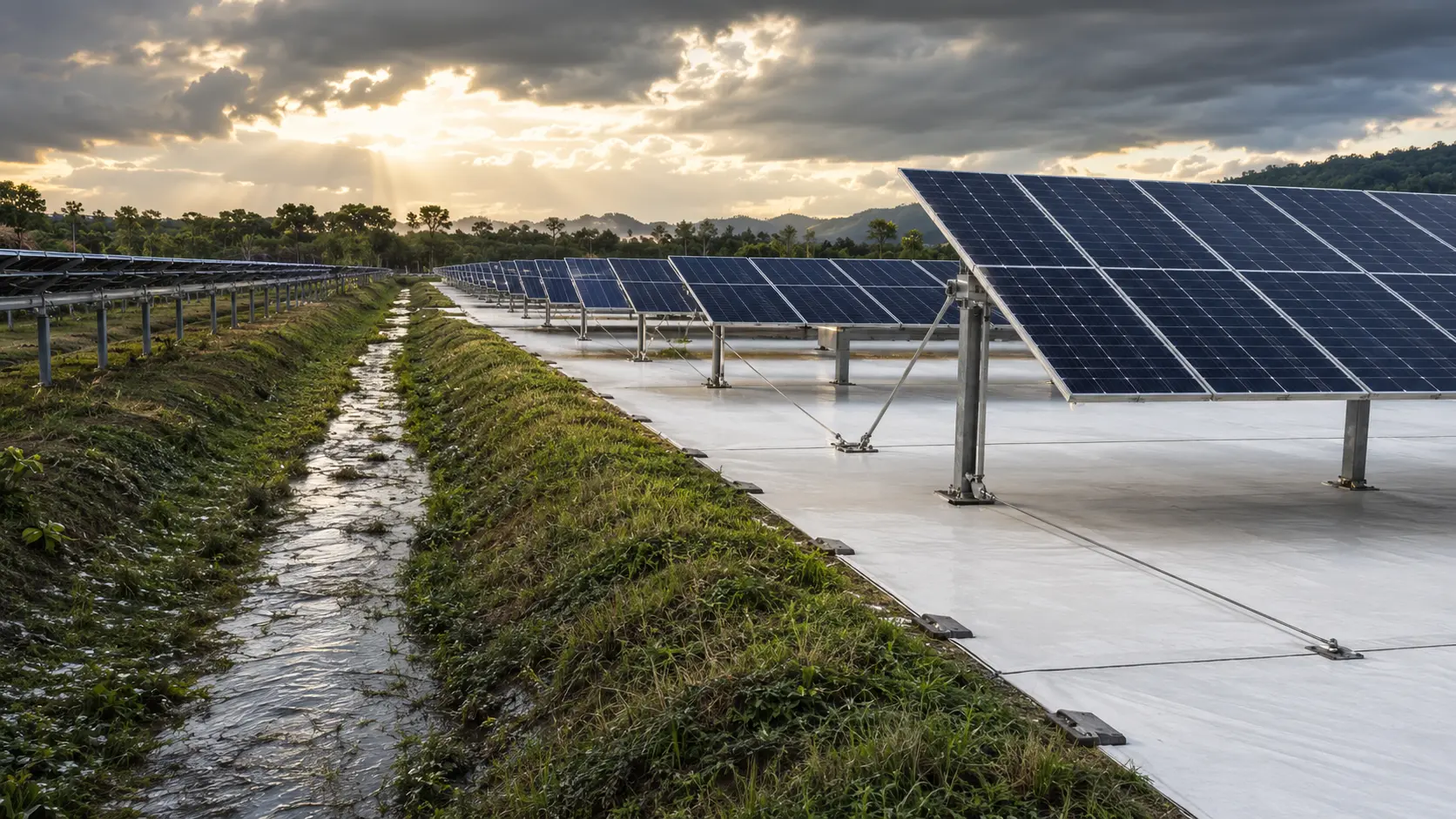
In tropical solar farms, a reflective membrane must be designed as a civil and mechanical system as well as an optical surface. It should preserve the drainage strategy, remain above or tolerate defined flood conditions, resist wind uplift through verified anchors and avoid concentrating runoff or erosion at edges.
Key takeaways
- Never cover a drainage route without redesign.
- Check flood, wind and soil pull-out together.
- Edge and corner zones need special attention.
- Inspect after extreme weather.
Map water before drawing membrane
Overlay the grading plan, catchments, swales, culverts, detention features and flood levels on the proposed coverage. Identify sheet-flow directions and areas of ponding or erosion. The membrane should follow a drainage concept—not force water to find a new path in operation.
Detail transitions at swales and low points. Controlled gaps may be necessary, but openings must not become tear starters or uncontrolled uplift edges.
Design for wind as a system
Wind pressure acts on the exposed area, especially at perimeters, corners, changes in grade and loose edges. Fixing density, anchor type, overlap, seam strength and membrane tension work together. A material tensile test alone does not prove site resistance.
Use the project's design wind speed, terrain category and safety factors. Verify pull-out capacity in representative wet and dry soil, and account for installation tolerances and degradation.
Prepare the ground
Remove sharp debris, manage protruding roots and correct local depressions that would trap water. Ground preparation should avoid unnecessary ecological disturbance while creating a stable, inspectable surface.
In flood-prone areas, consider buoyancy, debris impact, sediment deposition and access after inundation. The design response may be reduced coverage, reinforced edges or exclusion zones rather than simply more anchors.
Operate for resilience
Create inspection triggers for storms, flooding and nearby civil works. Check edges, seams, tension, scouring, sediment and blocked drainage. Log repairs so recurring failure patterns can be engineered out.
Optical performance and physical condition should be reviewed together: a secure membrane covered by silt may remain mechanically sound but deliver less reflected energy.
Frequently asked questions
Questions asset owners and EPCC teams ask
Is a reflective membrane waterproofing?+
It should not be treated as the site's waterproofing or drainage liner unless specifically engineered for that function. Its primary role is reflectance and ground coverage.
Can standard fixing spacing be used everywhere?+
No. Fixing design depends on wind zone, edge exposure, soil pull-out, membrane properties, drainage and geometry.
Sources and further reading
External technical and policy links are provided for due diligence. Supplied-reference project claims should be verified against full reports before investment use.
Engineering and investment note: This article is educational content, not a performance guarantee, tender interpretation or investment recommendation. Project results depend on site geometry, measured conditions, equipment, contracts and final engineering.