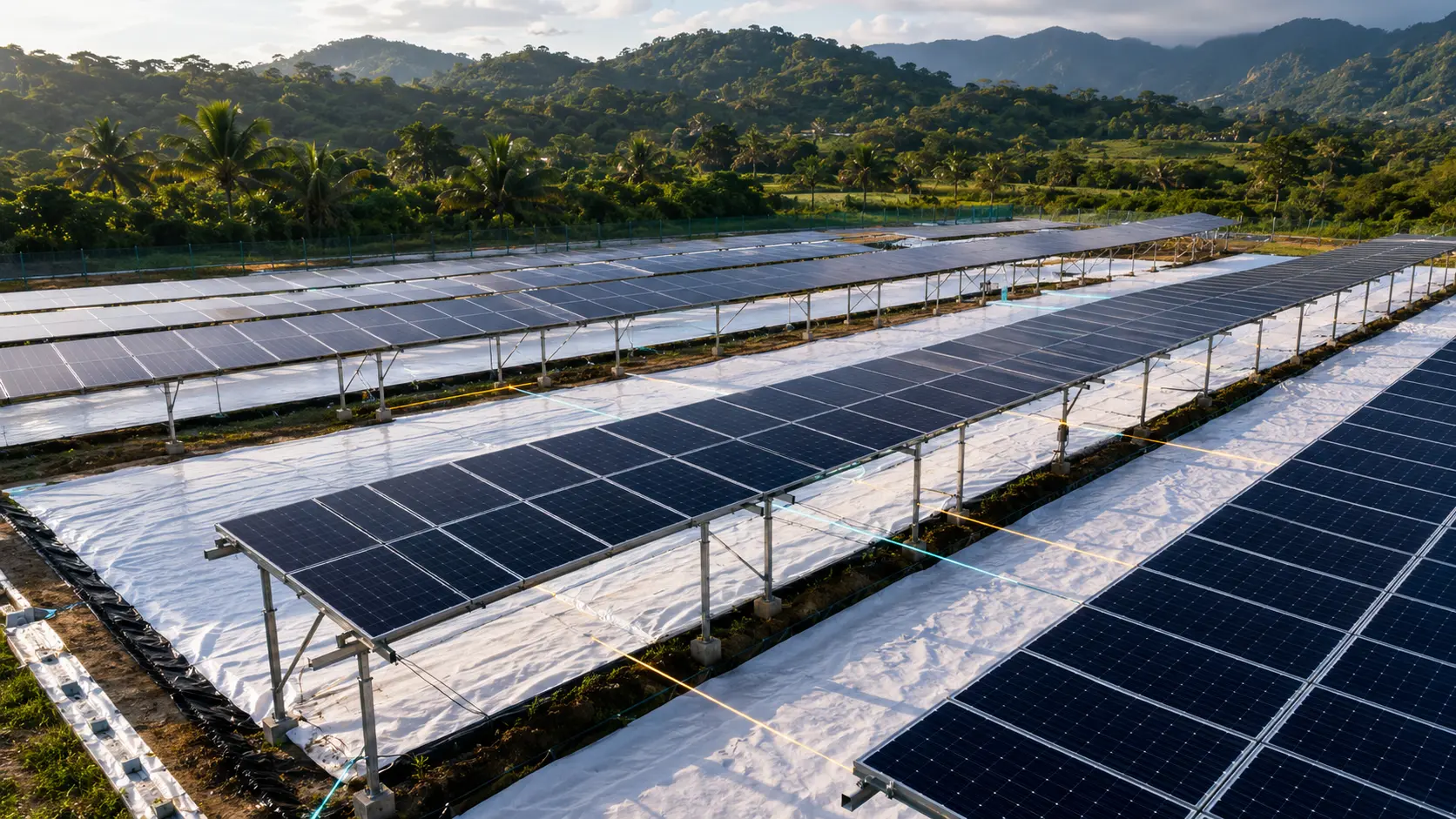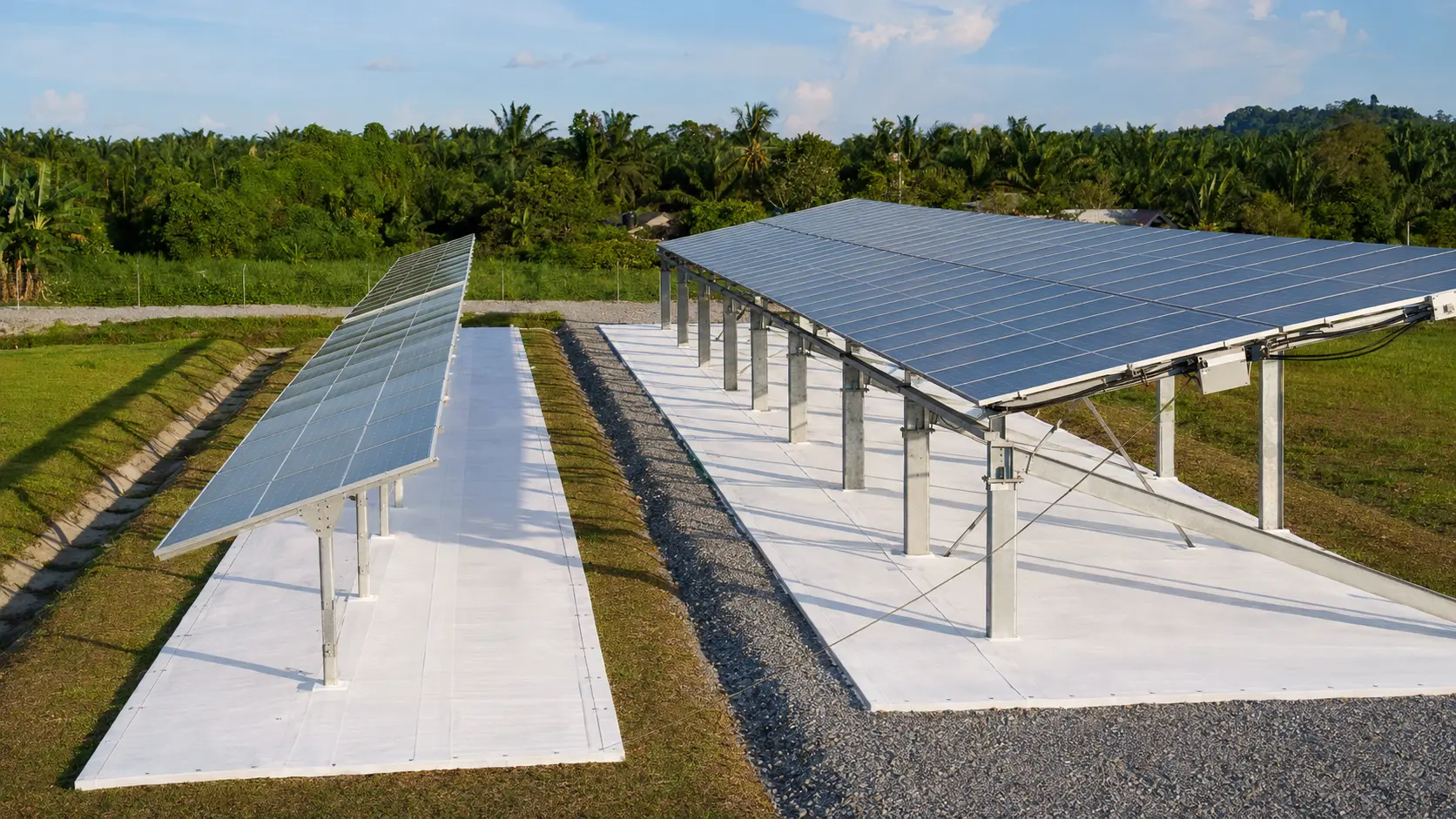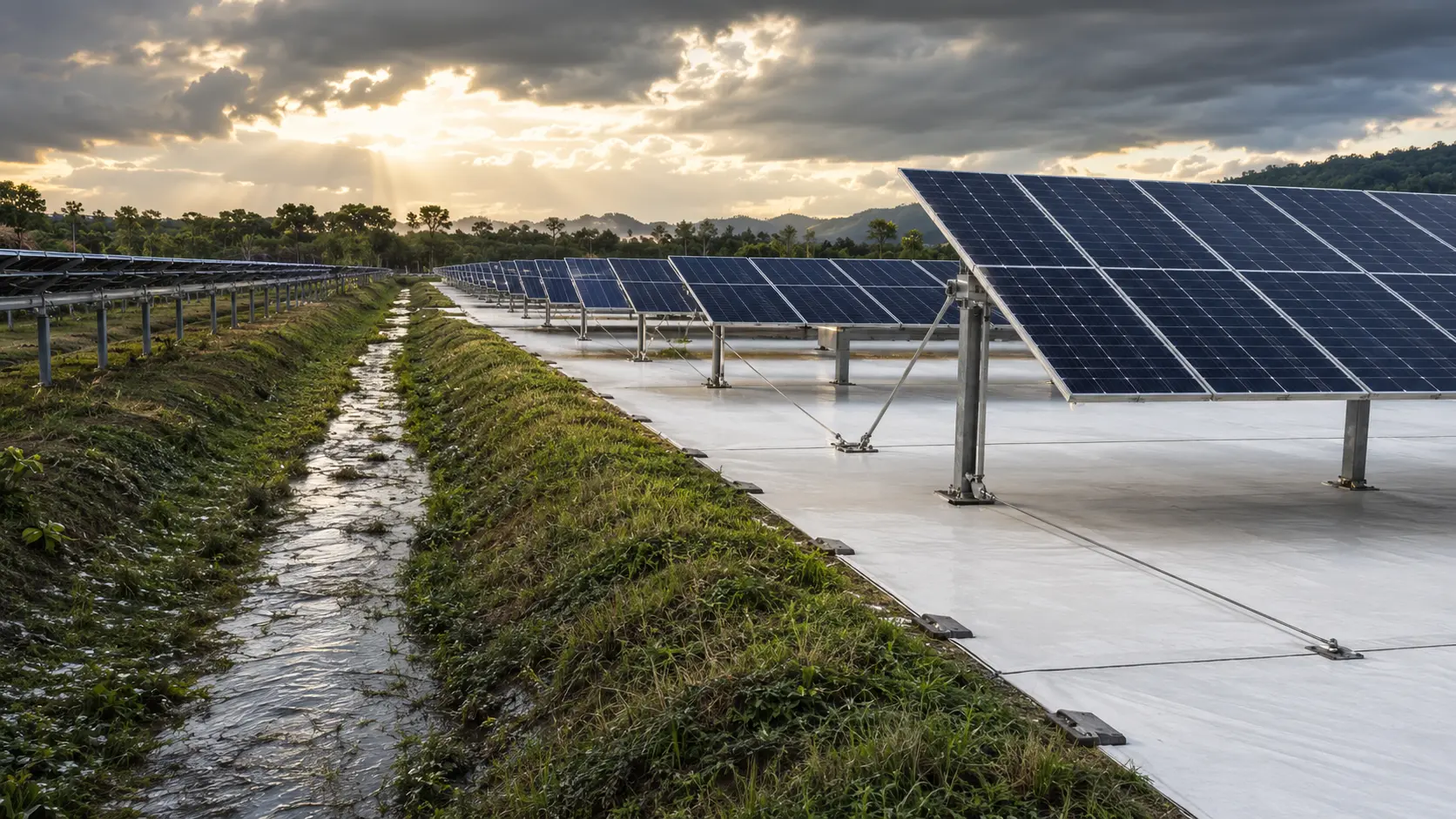
For single-axis trackers, reflective membrane design must follow the full rotation and stow envelope, not only the noon position. Coverage, seams and anchors must avoid drive components, posts, cabling and maintenance routes while the energy model accounts for changing rear-side view factor throughout the day.
Key takeaways
- Check every tracker angle and emergency stow position.
- Keep drive and post zones serviceable.
- Model hourly gain and clipping.
- Design anchors for wind and wet ground.
Design to the moving structure
Trackers change which ground zones receive direct sunlight and which zones the rear side sees. A membrane layout that appears ideal at one angle may be shaded or inaccessible at another. Review rotation limits, backtracking, stow, slew clearance and maintenance lockout positions.
Coordinate the strips with pile lines, torque tubes, motors, dampers, bearings, harnesses and ground-level boxes. Avoid creating a surface that hides defects or prevents safe access.
Represent tracker behaviour in the energy model
Use the actual axis orientation, pitch, collector width and tracking strategy. Check whether the model's regular infinite-row assumptions are appropriate for the block. Structure shading and non-uniform rear irradiance should be included.
Because tracker production is concentrated around high-irradiance periods, compare hourly incremental DC power with inverter headroom. A strong optical gain can be clipped if the DC/AC ratio is already aggressive.
Civil and mechanical integration
Tracker fields are exposed to wind and often use long continuous rows. Membrane seams and anchors should follow a project-specific uplift design, with attention to edge zones, soil pull-out resistance, thermal movement and water flow.
Do not bridge swales or block designed sheet flow. Detail controlled drainage openings and erosion protection without turning the membrane into a sail or pond liner.
Commissioning and O&M
Inspect tension, seams, perimeter anchors and clearances before tracker movement. Photograph a representative sample, record roll and fixing batches, and verify that no sharp hardware contacts the material.
During operation, inspect after severe wind or flooding and align cleaning with measured reflectance loss. A condition-based plan is more credible than promising a fixed cleaning interval everywhere.
Frequently asked questions
Questions asset owners and EPCC teams ask
Can membrane be installed under an operating tracker?+
Potentially yes, with safe work planning, tracker lockout, access and clearance controls. The installation sequence must be approved by the plant and tracker stakeholders.
Should membrane cover the central pile line?+
It depends on the design. Split-strip layouts can preserve pile and drive access while still covering high-value reflective zones.
Sources and further reading
External technical and policy links are provided for due diligence. Supplied-reference project claims should be verified against full reports before investment use.
Engineering and investment note: This article is educational content, not a performance guarantee, tender interpretation or investment recommendation. Project results depend on site geometry, measured conditions, equipment, contracts and final engineering.