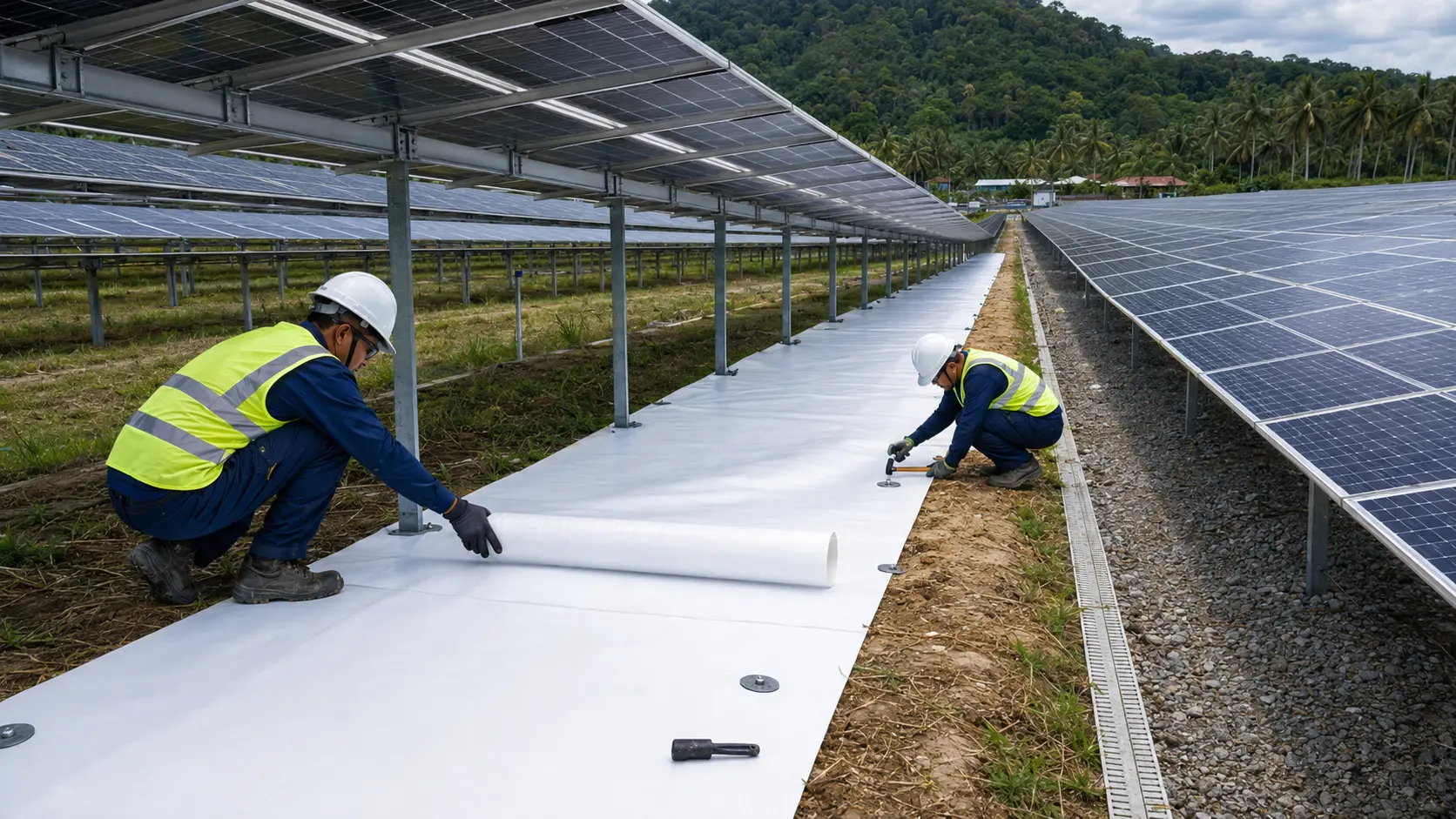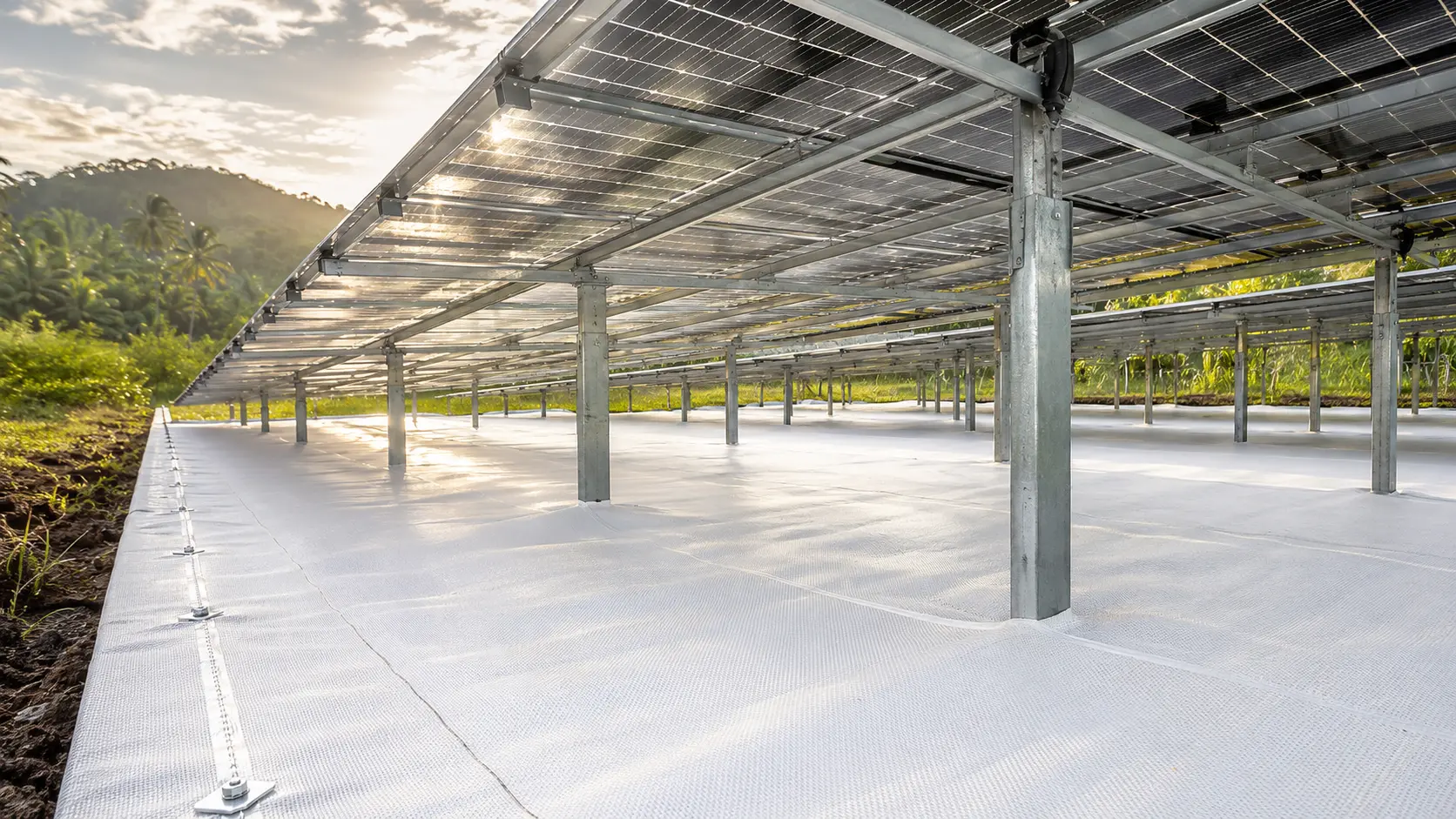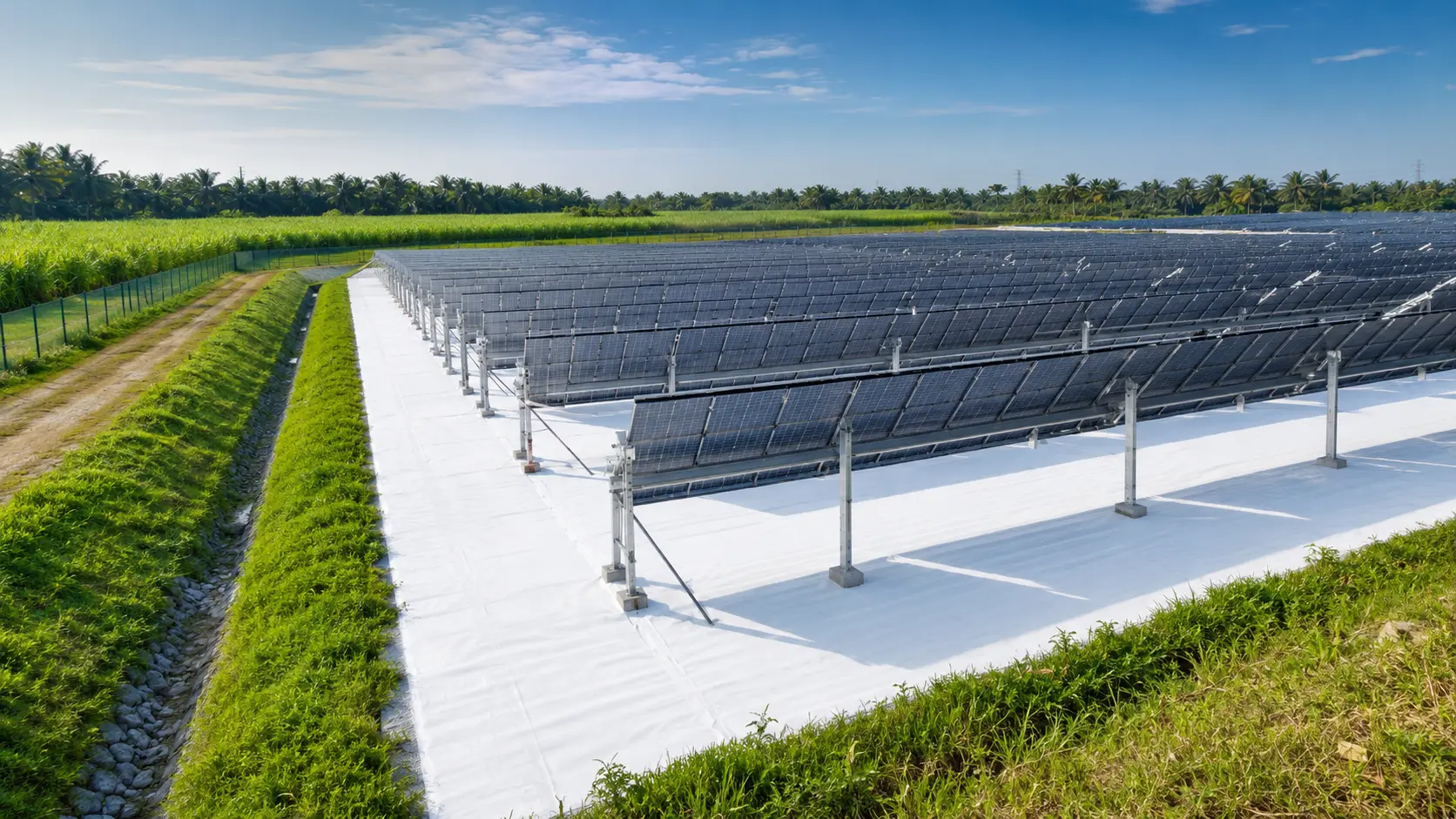
A reflective membrane suppresses vegetation in the zones it physically covers by limiting light and growing space. It can reduce repeated mowing and spot-herbicide demand beneath bifacial rows, but it does not eliminate vegetation management across drains, roads, perimeters and uncovered ecological areas.
Key takeaways
- Treat membrane as one zone in an integrated plan.
- Measure avoided cuts and labour by area.
- Keep drains and ecological buffers functioning.
- Do not promise zero vegetation everywhere.
Why vegetation is an energy and safety issue
Tall grass can shade lower module edges, interfere with sensors, hide cable or foundation defects and restrict access. In hot, wet climates it can return quickly after cutting. Repeated work adds cost, traffic and exposure hours inside the plant.
The goal is controlled vegetation, not bare ground at any environmental cost. Erosion, biodiversity, runoff and chemical use must be managed as part of the plant's environmental plan.
How physical coverage changes the task
A membrane blocks much of the sunlight reaching covered soil and physically occupies the growing surface. Crews no longer need to cut the same area at the same frequency, and scattered growth can be easier to identify at seams or edges.
Savings depend on effective coverage, edge detailing, pre-existing rhizomes and the maintenance standard. Aggressive species can emerge at openings, so commissioning should include treatment and inspection of seams and penetrations.
Design the remaining vegetation zones
Map access roads, swales, cable corridors, fire breaks, equipment pads, ecological buffers and perimeter strips. Decide whether these areas are mown, planted with low-growth species, grazed where appropriate or managed through targeted manual methods.
A good plan reduces blanket intervention. It specifies acceptable height, inspection frequency and triggers for action by zone.
Quantify the saving honestly
Establish the historical cost per cut, cuts per year, treated area, labour hours, equipment, fuel, herbicide and supervision. Allocate only the cost avoided in covered zones and retain a realistic allowance for edge and drain work.
SunBooster's Malaysia calculator uses an editable RM20,000 per MWp annual avoided grass-cutting assumption supplied by the user. It is a scenario input, not a universal benchmark. Replace it with the plant's contract or invoices.
Frequently asked questions
Questions asset owners and EPCC teams ask
Will reflective membrane stop all grass?+
No. It suppresses growth in the covered area. Seams, penetrations, edges, drains and uncovered zones still require inspection and management.
Does it eliminate herbicide?+
It can reduce the need for repeated blanket or spot treatment in covered zones, but any chemical-use claim must follow the actual site plan and environmental requirements.
Sources and further reading
External technical and policy links are provided for due diligence. Supplied-reference project claims should be verified against full reports before investment use.
Engineering and investment note: This article is educational content, not a performance guarantee, tender interpretation or investment recommendation. Project results depend on site geometry, measured conditions, equipment, contracts and final engineering.