Grass-cutting cost should be calculated from the actual treated area, cutting frequency, labour, equipment, fuel, supervision and access constraints—not from MWp alone. SunBooster's Malaysia screening model uses an editable RM20,000 per MWp per year avoided-cost assumption. Asset owners should replace it with their own invoices or contract rates.
Key takeaways
- Use actual contract data where available.
- Separate covered and uncovered zones.
- Include safety, access and mobilisation.
- Treat RM20,000/MWp-year as an editable scenario.
Why cost per MWp can hide the real drivers
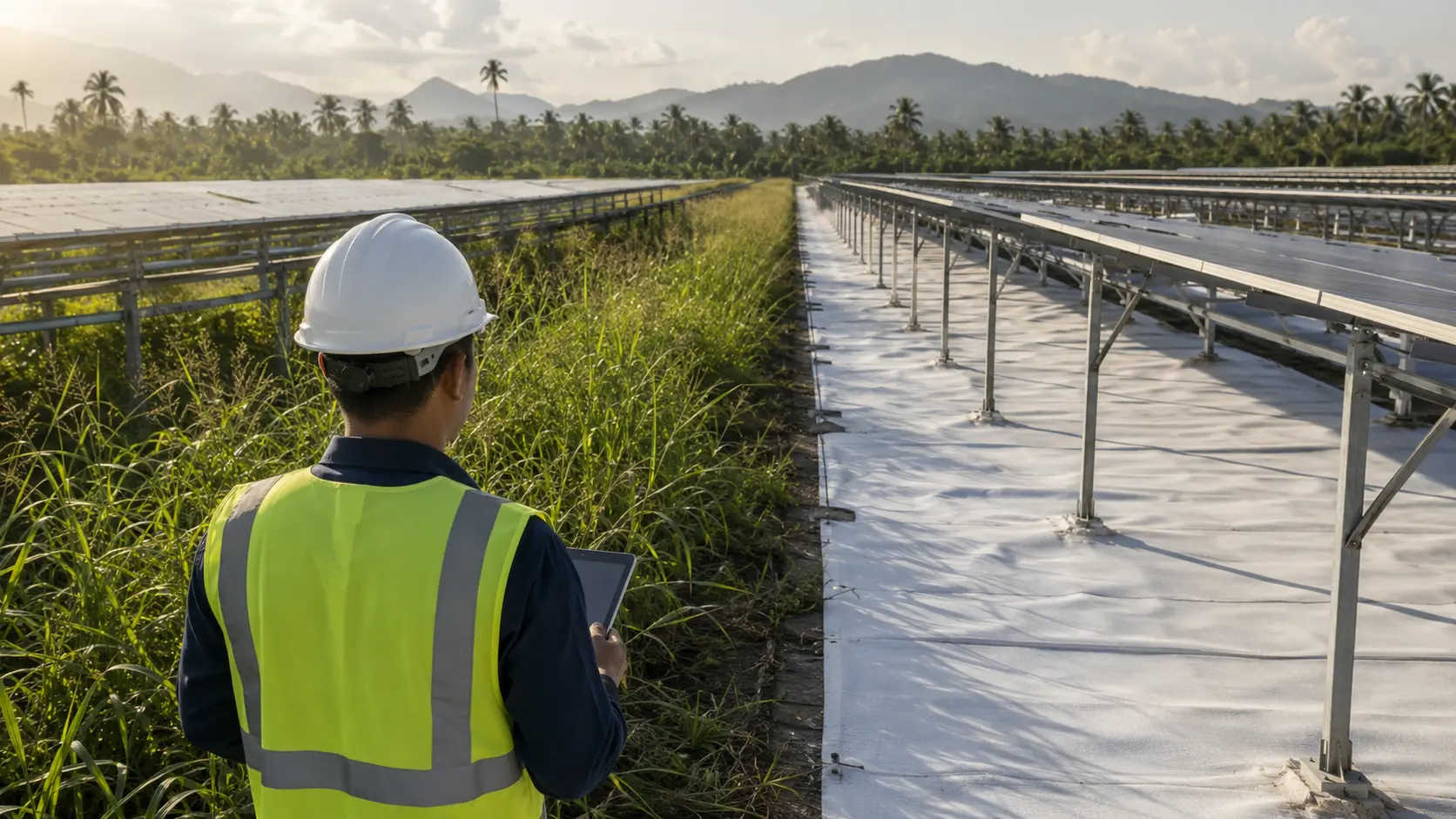
Vegetation work follows hectares, terrain and growth rate more directly than electrical capacity. Two 50 MWp plants can have different land density, drainage, slopes and access. A convenient RM/MWp metric should therefore be traced back to area and activity.
Record the maintained hectares, cuts per year and all-in cost per cycle. Then reconcile the total with plant capacity for investment modelling.
What belongs in the all-in cost?
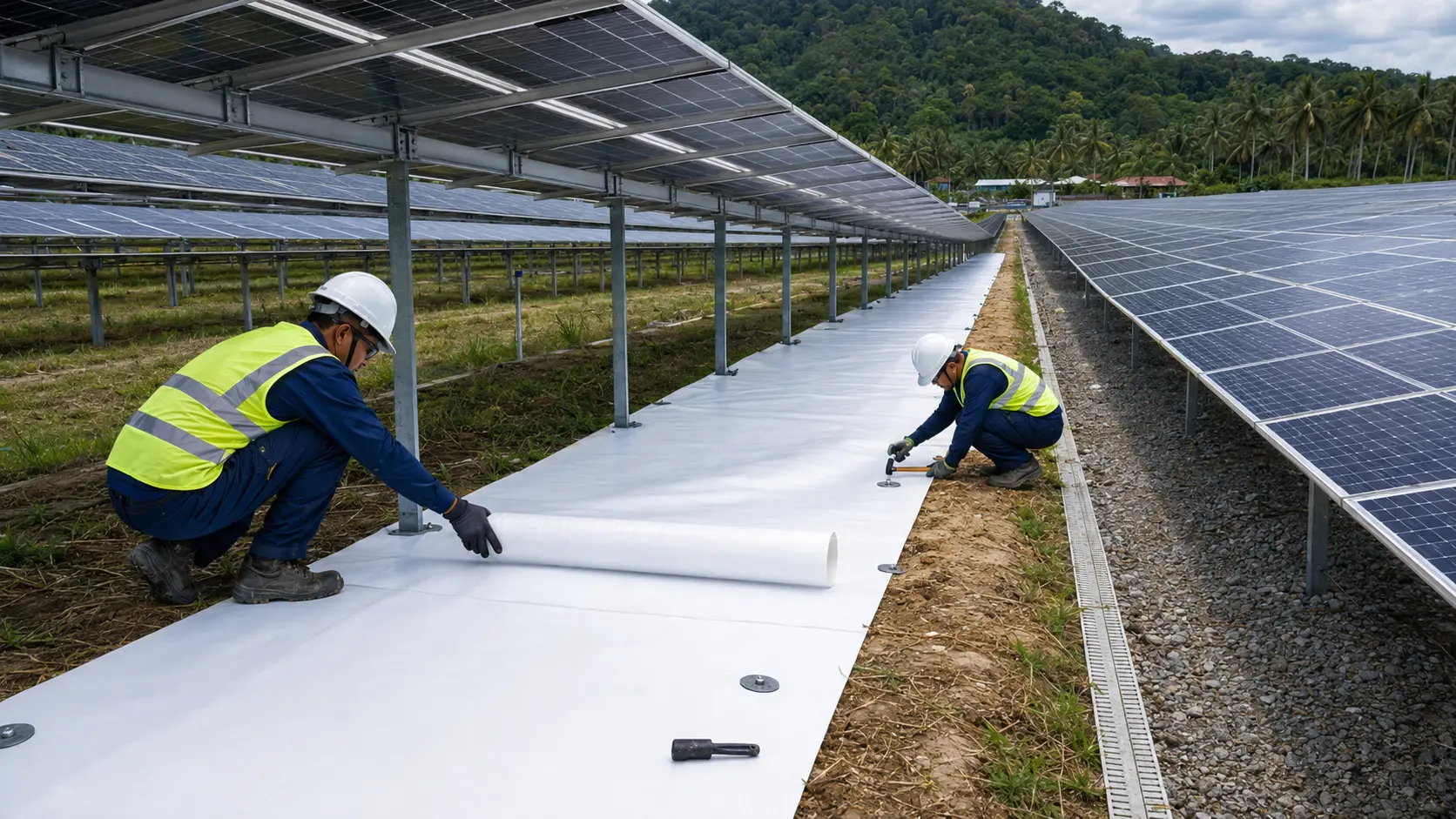
Include contractor labour, brush cutters or mowing equipment, fuel, mobilisation, PPE, site induction, spot herbicide where used, supervision, permit controls and waste handling. Add the productivity loss from working around piles, cables, drains and low module edges.
Also consider operational risk: delayed cutting can shade modules, block access or create fire-loading concerns. These impacts are harder to price but relevant to service-level design.
How reflective coverage changes the calculation
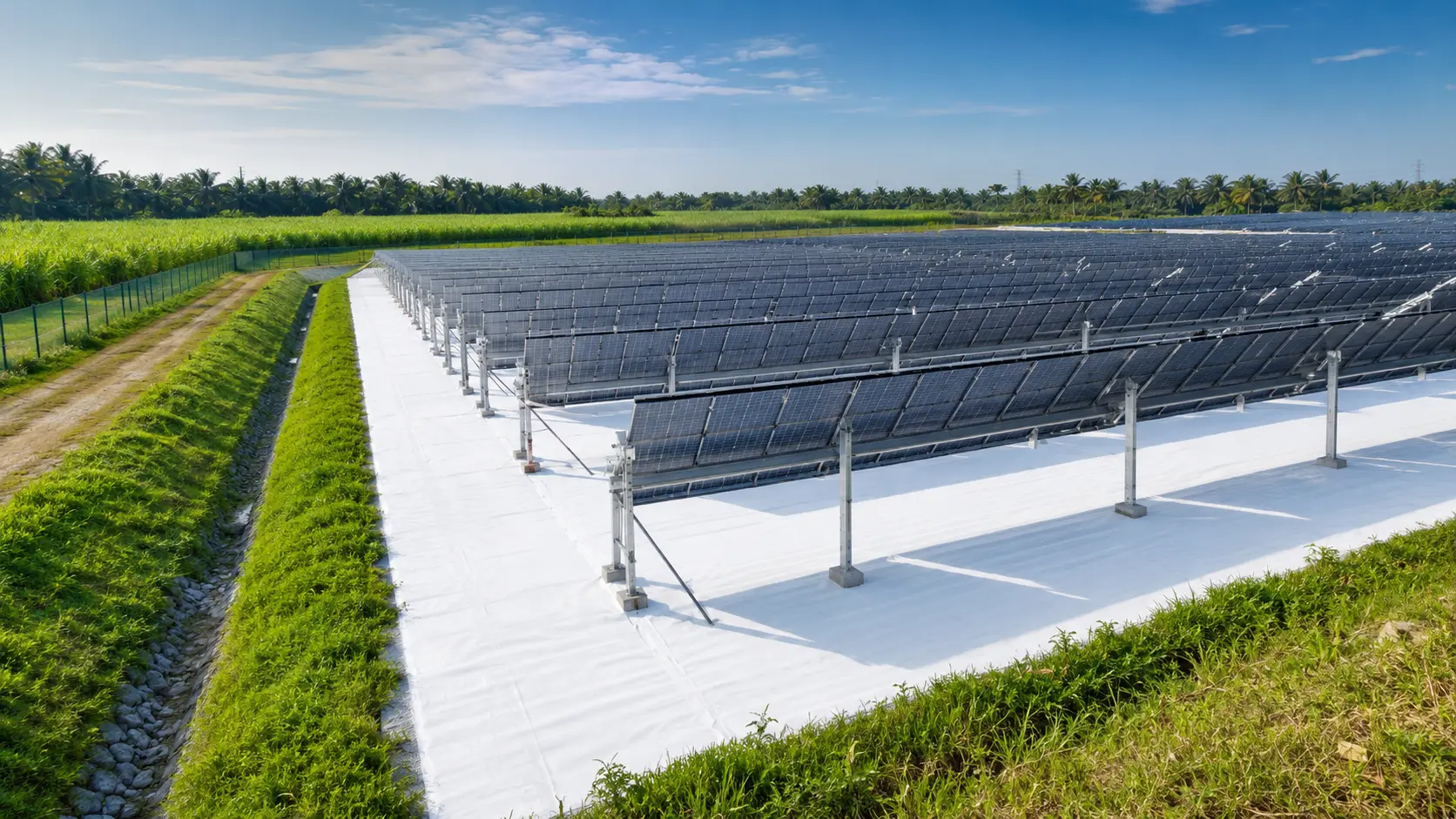
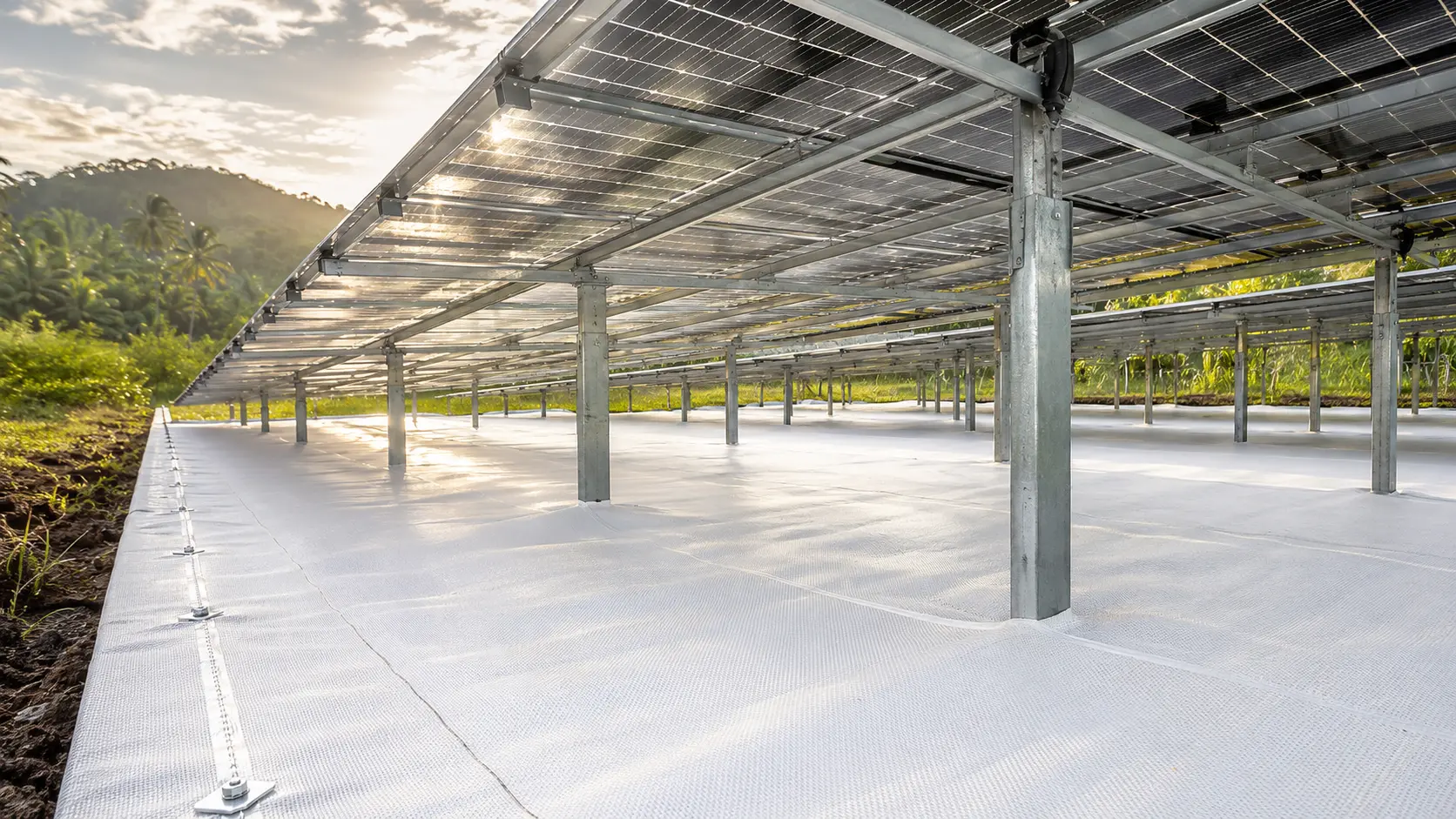
Divide the plant into covered optical zones and remaining vegetation zones. Apply the expected reduction only where the membrane physically suppresses growth. Retain allowance for seams, perimeters, drains, roads and equipment pads.
The gross saving is avoided cost minus membrane inspection, cleaning and repair. Use a ramp-up year if crews still need corrective work around newly installed edges.
Build a defendable 25-year forecast
Start with the current annual contract, escalation, expected coverage and residual work. Include membrane O&M and periodic replacement or repair assumptions. Discount the net saving with the same discipline used for energy cash flow.
Run zero-saving, partial-saving and target-saving cases. If the investment only works at a perfect 100% vegetation saving, it is not a resilient business case.
Frequently asked questions
Questions asset owners and EPCC teams ask
Is RM20,000 per MWp a guaranteed saving?+
No. It is the user-supplied Malaysia preset assumption. Actual saving depends on site area, frequency, coverage and the existing vegetation contract.
Should vegetation savings be added to energy revenue?+
They can be combined in project cash flow if they are incremental, evidenced and net of new membrane O&M. Keep both value streams visible for due diligence.
Sources and further reading
External technical and policy links are provided for due diligence. Supplied-reference project claims should be verified against full reports before investment use.
Engineering and investment note: This article is educational content, not a performance guarantee, tender interpretation or investment recommendation. Project results depend on site geometry, measured conditions, equipment, contracts and final engineering.