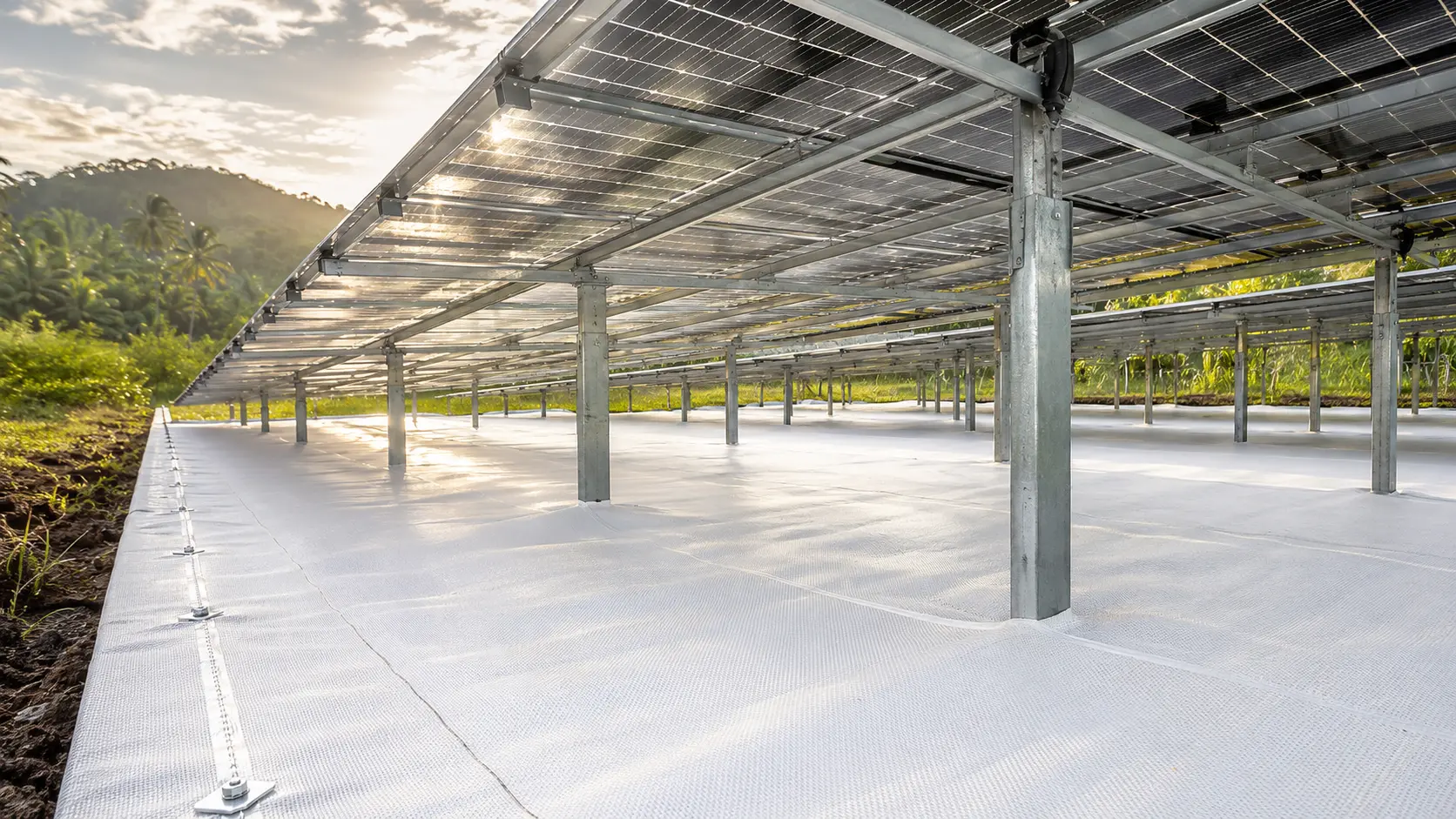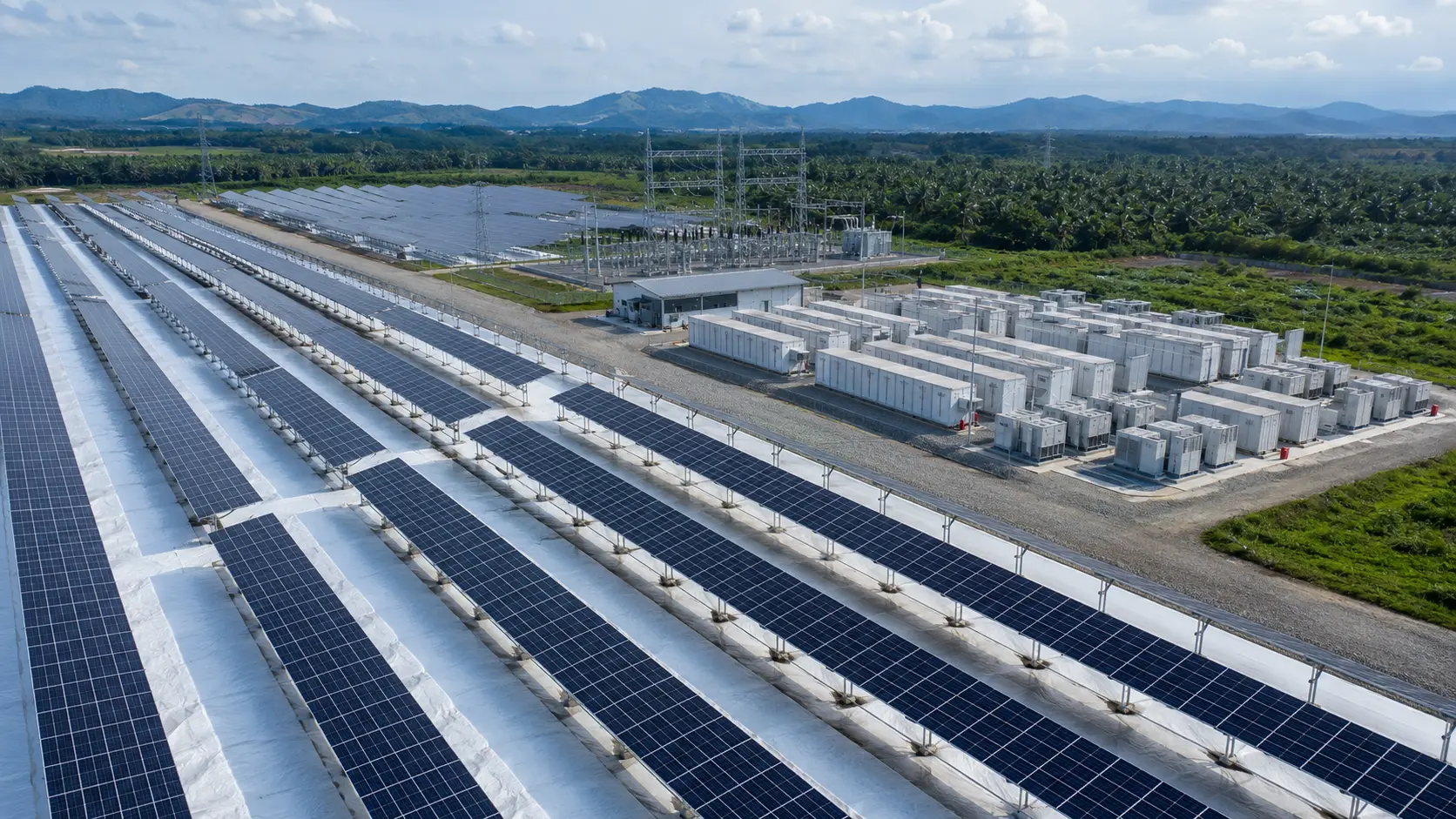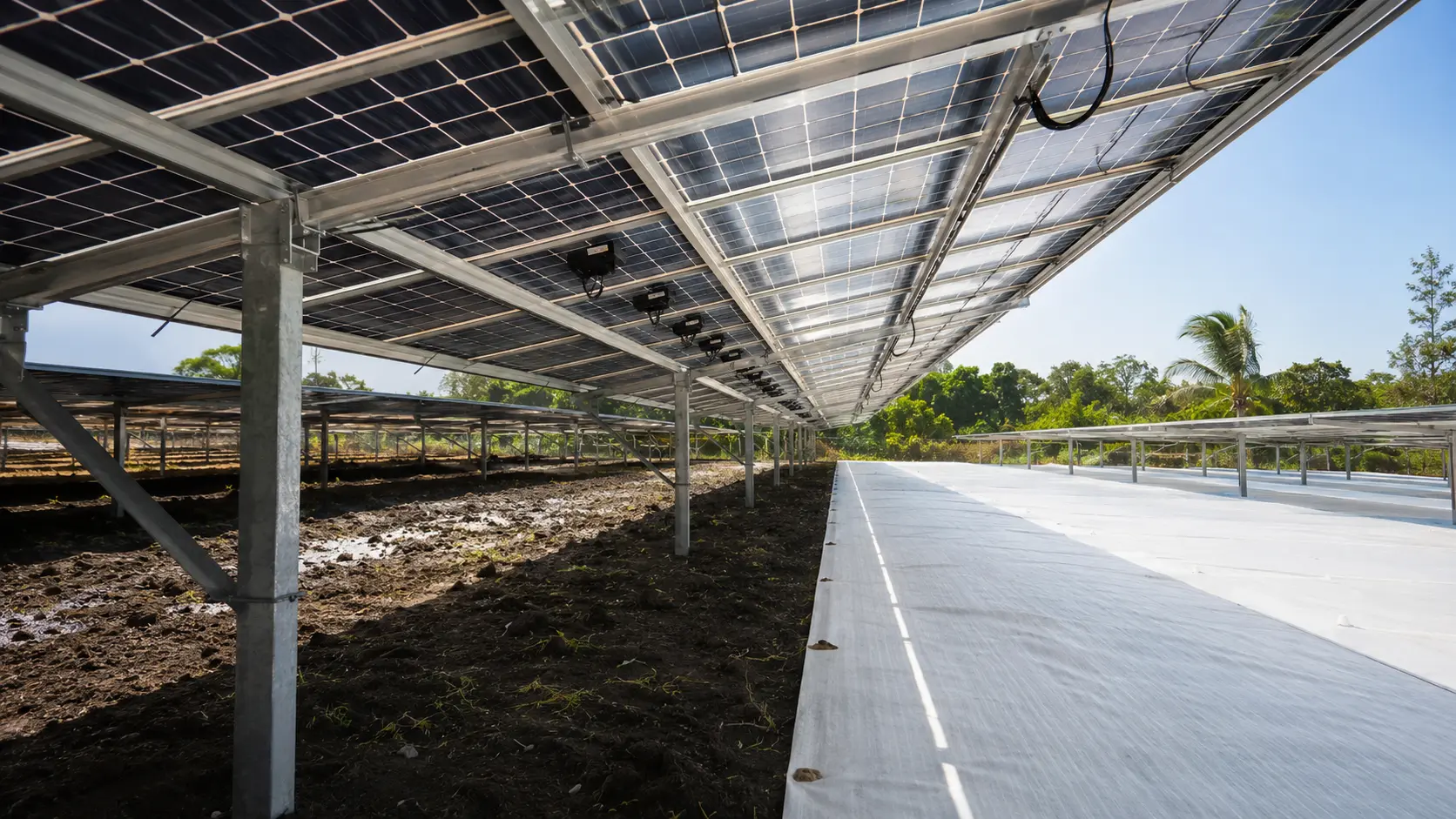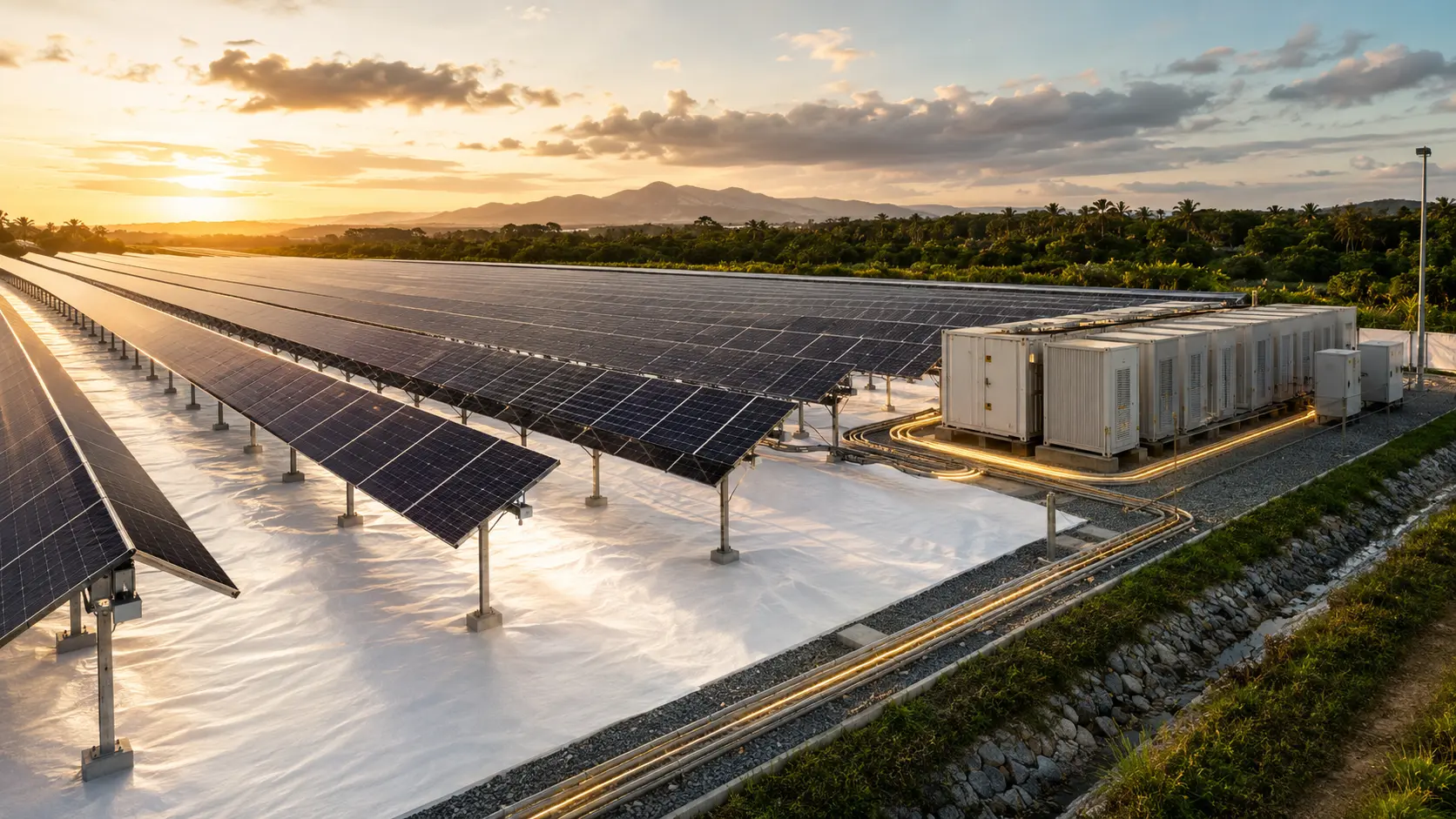
A reflective membrane increases the solar energy available to a bifacial array; a BESS can shift some of the resulting energy to a more useful time. The technologies are complementary when storage has charge headroom and the plant controls permit capture. Their combined value must be tested in an hourly co-optimised model.
Key takeaways
- Membrane creates energy; BESS shifts energy.
- Co-optimise hourly dispatch and clipping.
- Include round-trip loss and degradation.
- Follow interconnection and safety rules.
Two technologies, different jobs
The membrane changes the optical environment and can increase module output. The BESS does not create energy; it stores part of the production and releases it later. Combining them is useful when extra production would otherwise be clipped, curtailed or less valuable at the time it occurs.
Keep the causal chain clear in every model so the same kilowatt-hour is not counted twice.
Model the combined system hourly
Use base and reflective PV profiles at the inverter or point-of-interconnection boundary. Simulate BESS charge power, energy capacity, state-of-charge window, auxiliary load, conversion loss, round-trip efficiency and dispatch objective.
Compare exported energy, curtailed energy, cycles, degradation and revenue—not only battery throughput. A strategy that captures more solar may also increase battery wear.
Malaysia LSS6 context
PETRA announced on 16 July 2026 that LSS6 Packages 1 and 2 comprise 2,500 MW of solar paired with 1,250 MW of BESS capacity: 2,200 MW solar plus 1,100 MW BESS in Package 1, and 300 MW solar plus 150 MW BESS in Package 2. A separate 150 MW Package 3 is solar-only.
This creates a timely design question for developers: if additional bifacial production is available, can the hybrid plant convert more of it into dispatchable, settled energy within the RFP and grid requirements? The answer needs project controls and contract review.
Engineering and safety boundaries
Coordinate PV, DC collection, inverters, transformers, power-plant controller and BESS architecture. Study protection, harmonics, thermal management, fire strategy, emergency response, drainage and access as an integrated facility.
The Energy Commission's BESS safety guidance is an important current reference. Tender and design teams should use the issued requirements and project-specific approvals rather than treating storage as an optional software layer.
Frequently asked questions
Questions asset owners and EPCC teams ask
Is BESS compulsory for every LSS6 package?+
PETRA's July 2026 announcement pairs Packages 1 and 2 with BESS. Package 3 is a separate 150 MW solar-only Bumiputera programme.
Does adding BESS guarantee more revenue from membrane?+
No. Value depends on charge headroom, dispatch, efficiency, degradation, settlement and interconnection rules.
Sources and further reading
External technical and policy links are provided for due diligence. Supplied-reference project claims should be verified against full reports before investment use.
Engineering and investment note: This article is educational content, not a performance guarantee, tender interpretation or investment recommendation. Project results depend on site geometry, measured conditions, equipment, contracts and final engineering.