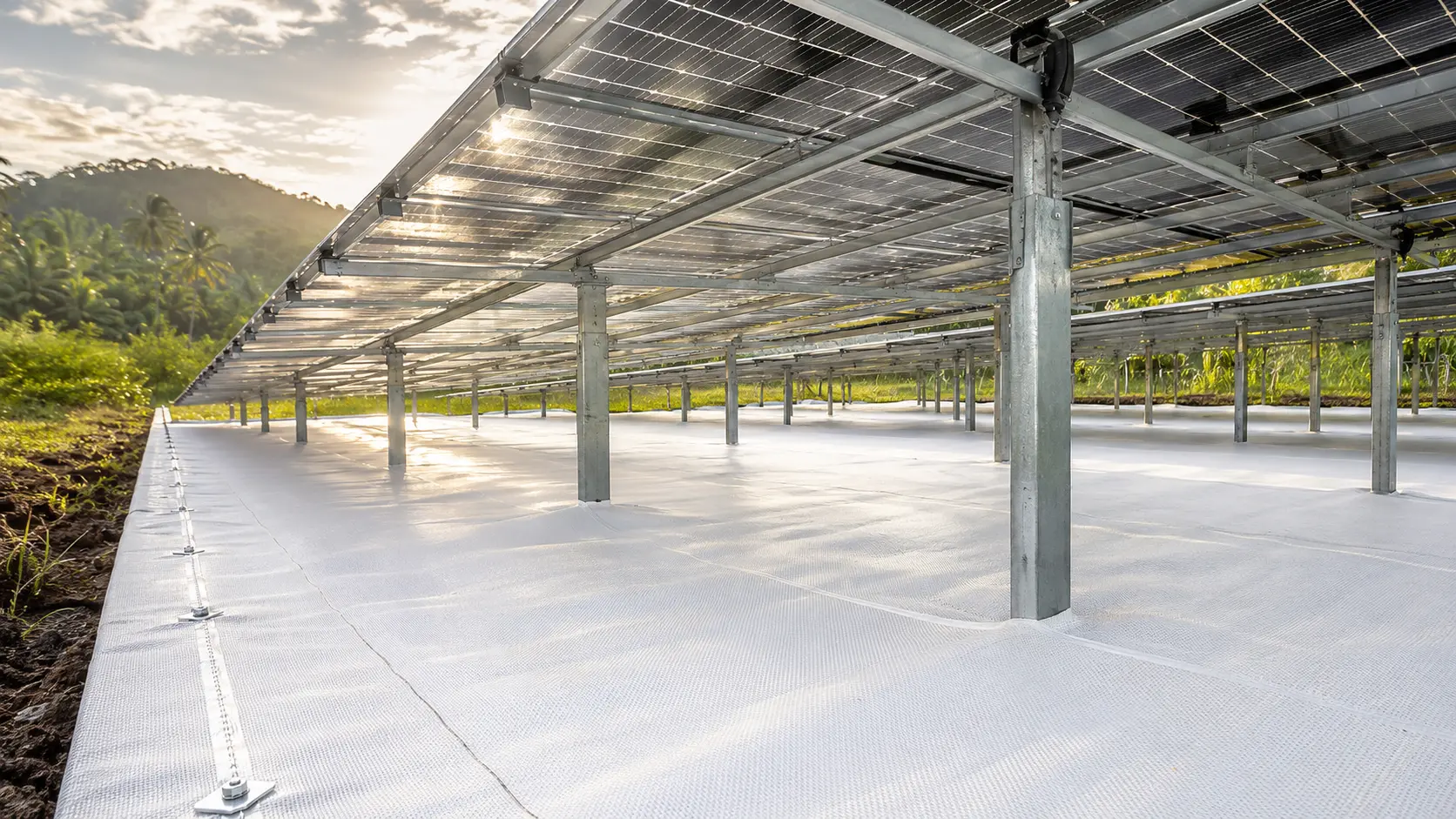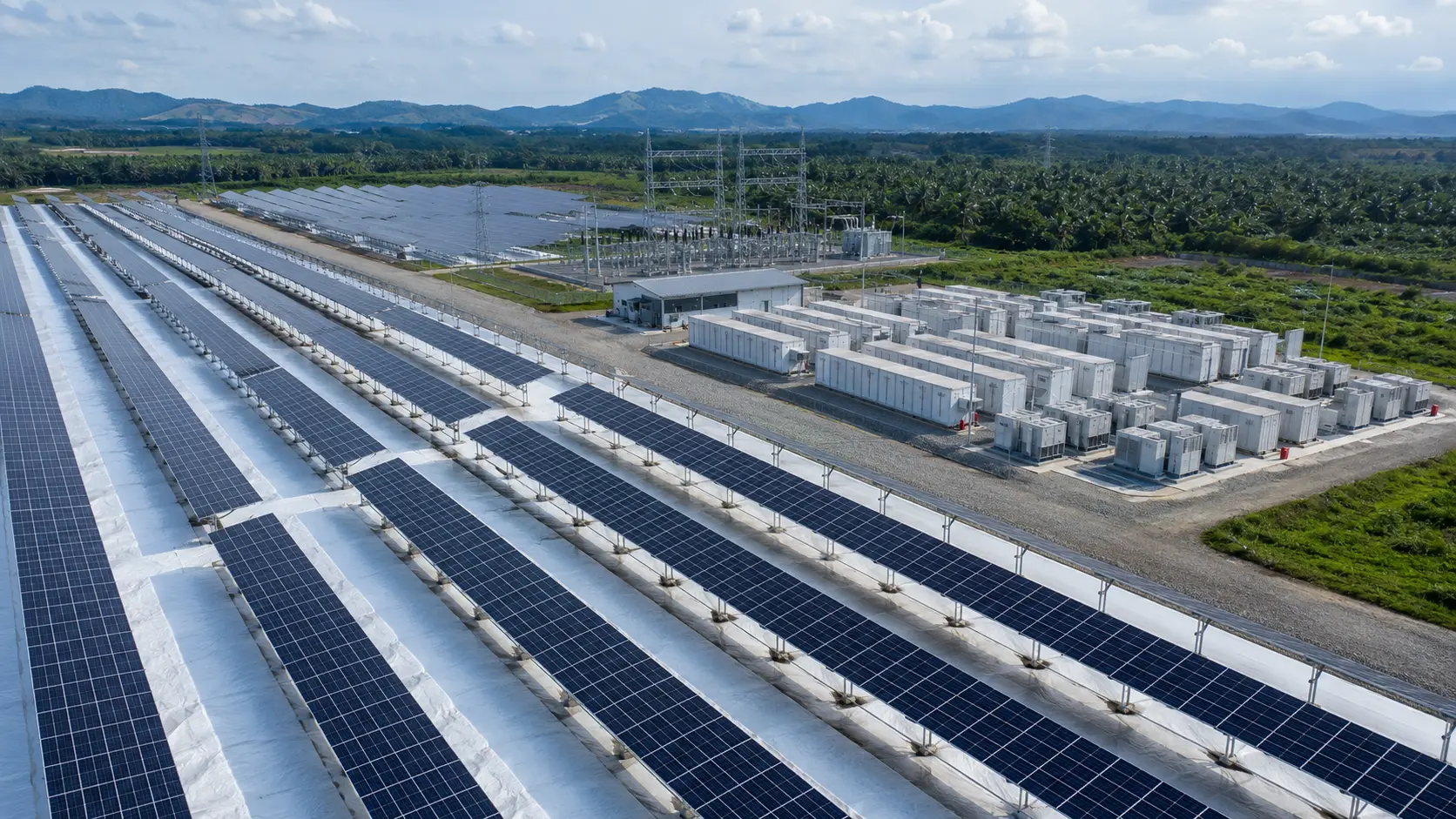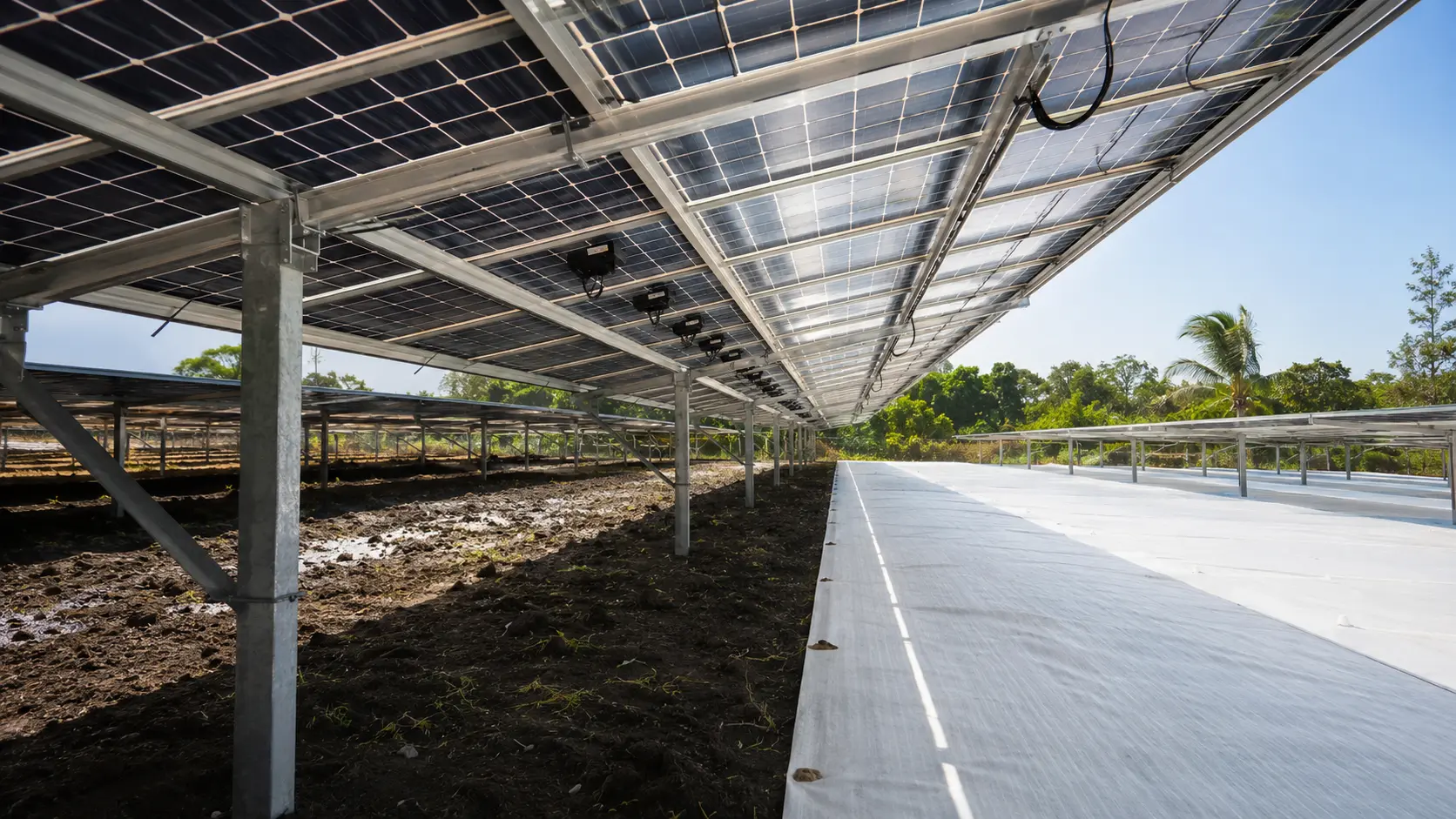
Reflectance testing describes optical potential; UV, heat, humidity, salt, dust and abrasion tests explore durability; tensile, tear and bursting tests address handling and mechanical resistance; restricted-substance and flame tests address compliance and safety. Each report proves only its stated sample, method and conditions.
Key takeaways
- A test report is narrower than a system certification.
- Read method, duration and result together.
- Match report sample to supplied product.
- Translate laboratory evidence into site design.
Optical performance
Solar or spectral reflectance tests quantify how much incoming radiation the sample reflects under laboratory conditions. The supplied technical dossier references an 88.58% result. Buyers should confirm wavelength range, specimen condition, calibration and whether the value is hemispherical or otherwise defined.
Optical evidence supports the albedo input but does not itself predict AC energy. Coverage, geometry, module response and electrical losses remain separate.
Accelerated weathering
UV, damp heat, thermal cycling, salt mist, dust and sand abrasion expose samples to controlled stresses. Changes in reflectance, strength or appearance indicate relative resistance under the protocol. They do not reproduce every interaction of decades in a tropical field.
The dossier references methods from IEC 61215-2, IEC 61701 and IEC 60068-2-68, among others. Verify duration, severity, preconditioning and pass criteria in the full reports.
Service life, weather resistance and warranty are different
The supplied Malaysia project analysis uses an effective service-life basis of more than 10 years and labels the material with a 10-year weathering and anti-ageing rating. A CPVT reflectance-ageing note in the technical dossier states that the referenced Oman ultraviolet exposure is equivalent to 18 years of direct UV, or 28 years outdoors when module shading is considered.
These figures support durability assessment, but they are not interchangeable with a contractual warranty or a guaranteed field life. The formal technical and supply agreement should define the warranty period, covered defects, exclusions, inspection and maintenance duties, response time and available remedy.
Mechanical and safety evidence
Tensile, tear and bursting results help engineers evaluate handling, tension and local damage resistance. Field uplift capacity also depends on seams, fixings, soil, edge conditions and installation quality. Flame and restricted-substance screening address different questions and should not be conflated with weather durability.
SunBooster's evidence page identifies TÜV SÜD, SGS, CPVT, ZTT and Zhejiang Max Testing as report issuers referenced in the supplied dossier, with explicit language that names do not imply blanket brand endorsement.
How to close the evidence chain
Obtain full reports, report numbers, sample descriptions, dates, laboratories and accreditation scope. Compare the sample construction with the offered roll specification and factory quality records. Where the white-label supply chain changes names, preserve traceability rather than relying on brand presentation.
Finally, connect material evidence to project design: an 88% reflector with inadequate anchoring or blocked drainage is not a reliable system.
Frequently asked questions
Questions asset owners and EPCC teams ask
Is SunBooster certified by TÜV SÜD?+
The supplied dossier references TÜV SÜD material test reports. That should not be presented as blanket certification or endorsement of the SunBooster brand; full report and sample traceability must be verified.
Which test proves 25-year life?+
No single accelerated test automatically proves a fixed field life. Durability confidence comes from a relevant test programme, material traceability, design, field evidence, warranty and maintenance plan.
What lifespan and warranty does the supplied evidence state?+
The supplied project analysis uses a service-life basis of more than 10 years and a 10-year material-level weathering rating. The warranty duration remains subject to the final project technical and supply agreement. Accelerated-ageing equivalence should not be presented as a warranty.
Sources and further reading
External technical and policy links are provided for due diligence. Supplied-reference project claims should be verified against full reports before investment use.
Engineering and investment note: This article is educational content, not a performance guarantee, tender interpretation or investment recommendation. Project results depend on site geometry, measured conditions, equipment, contracts and final engineering.