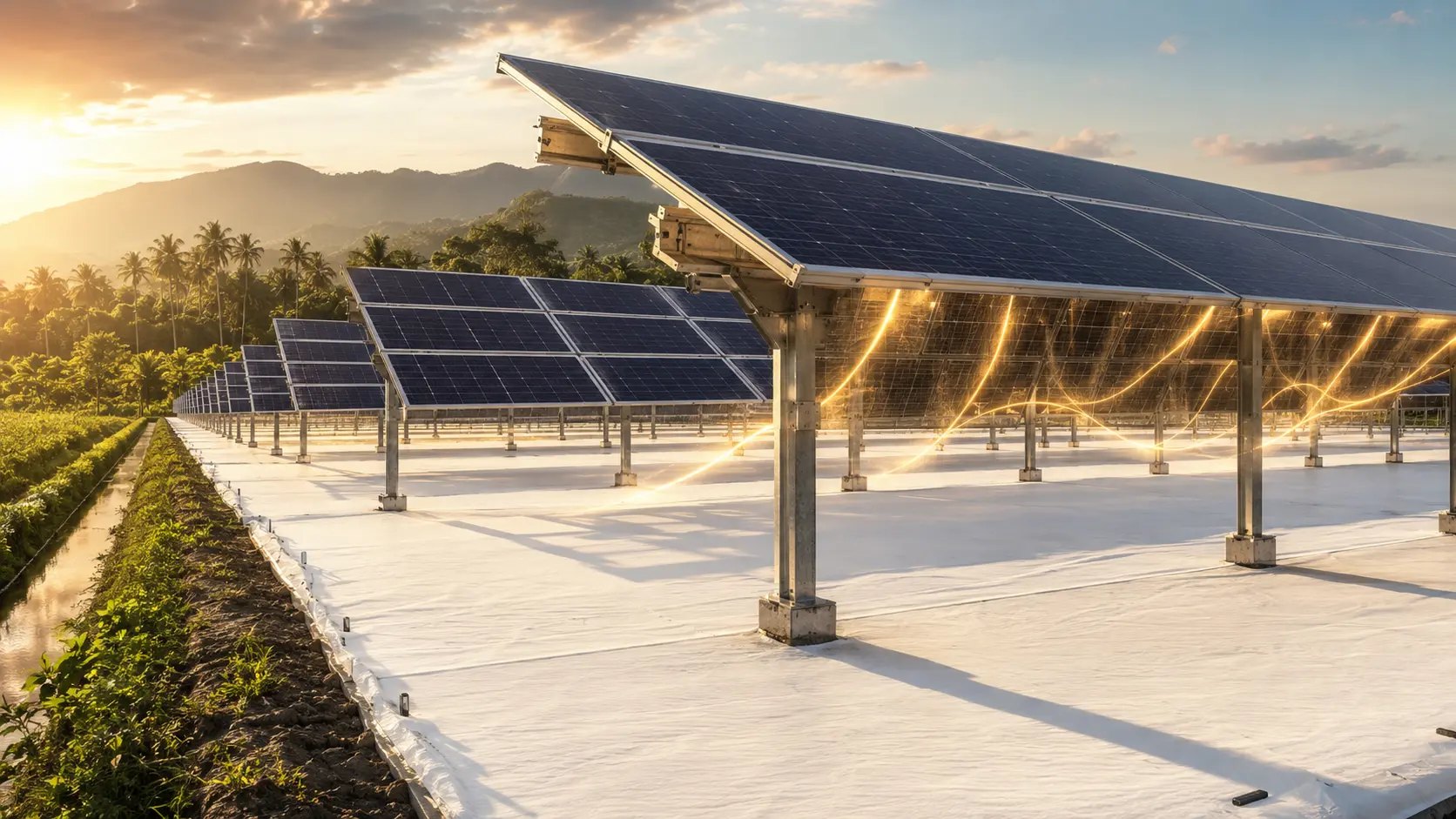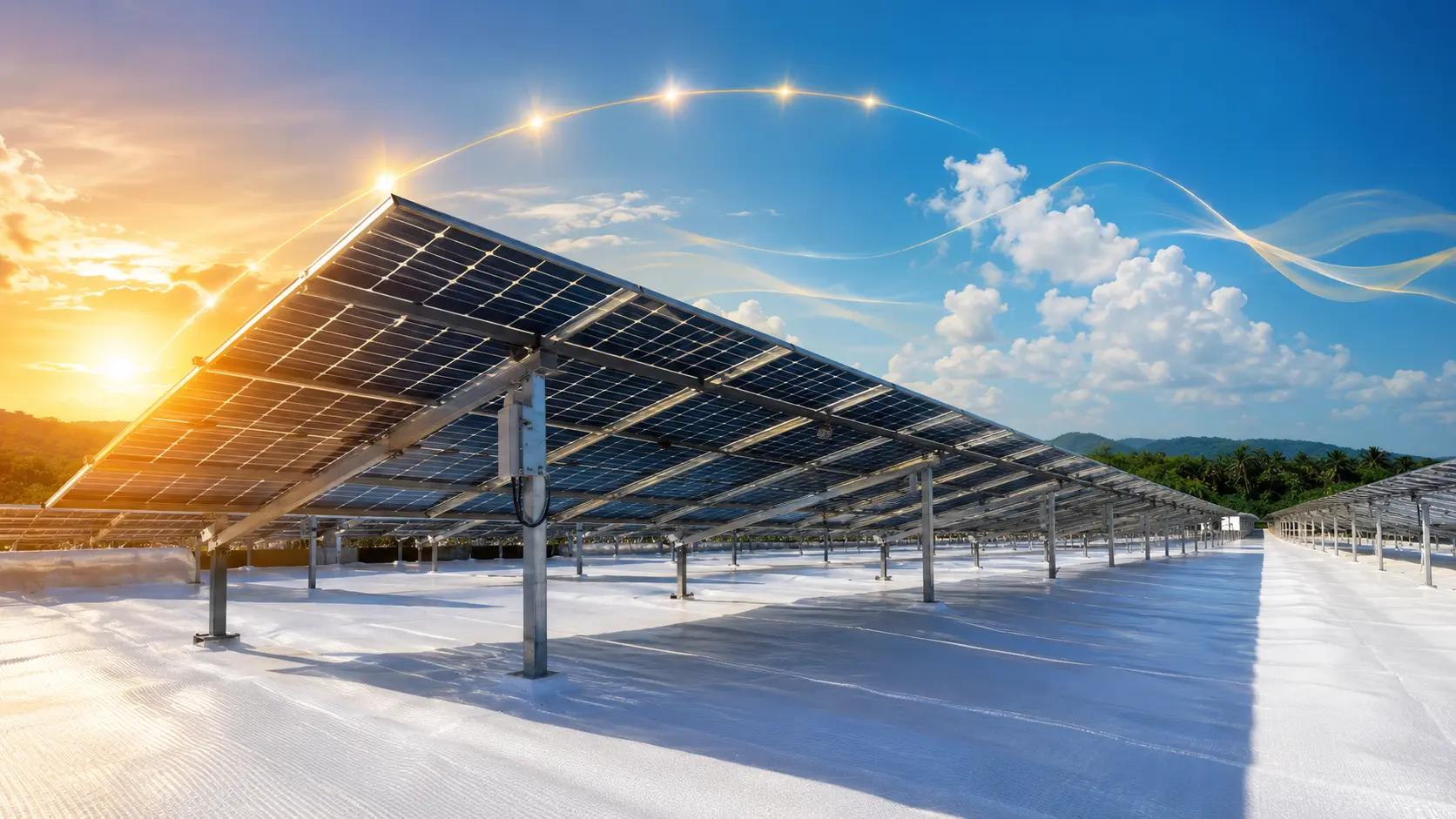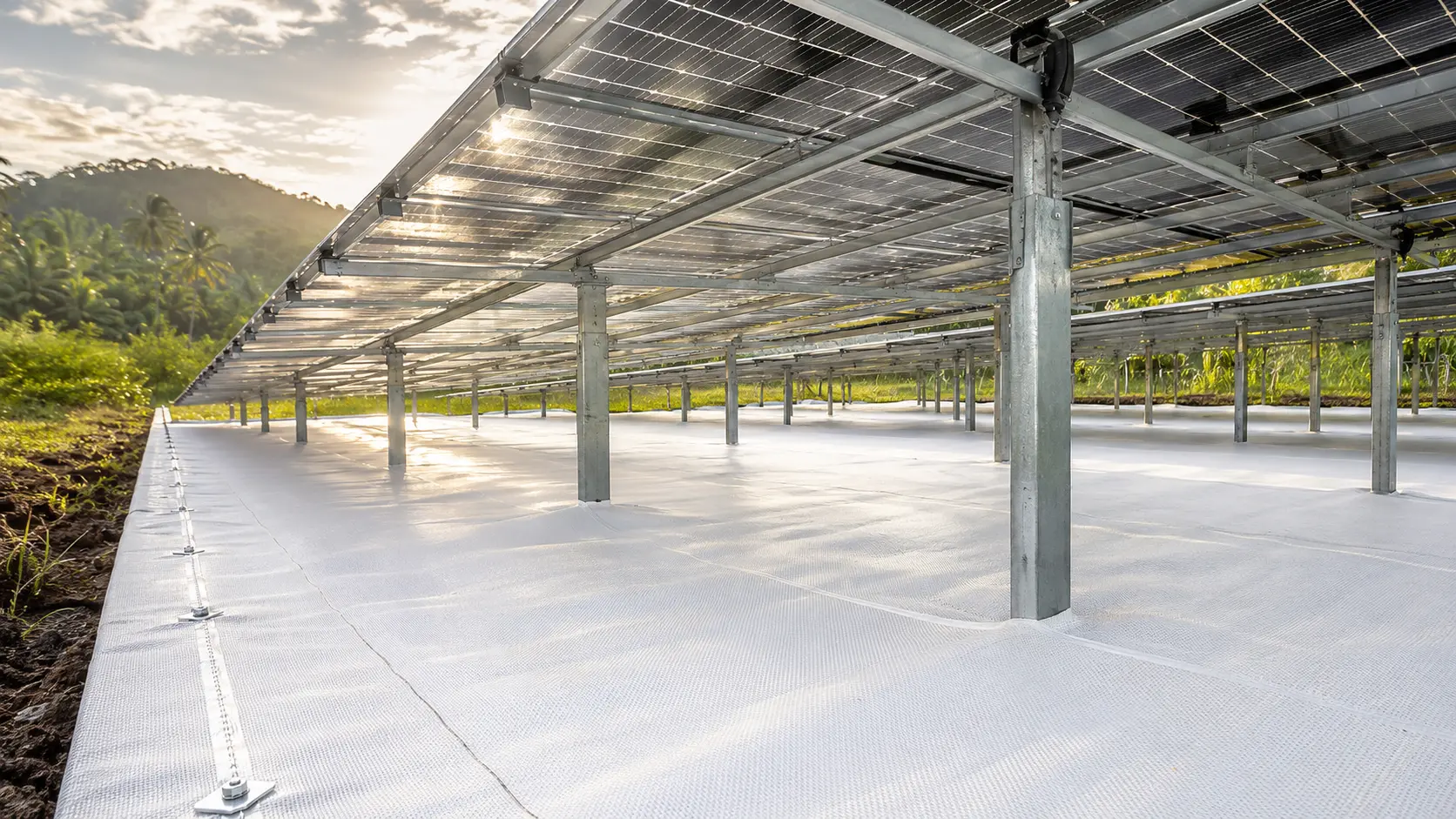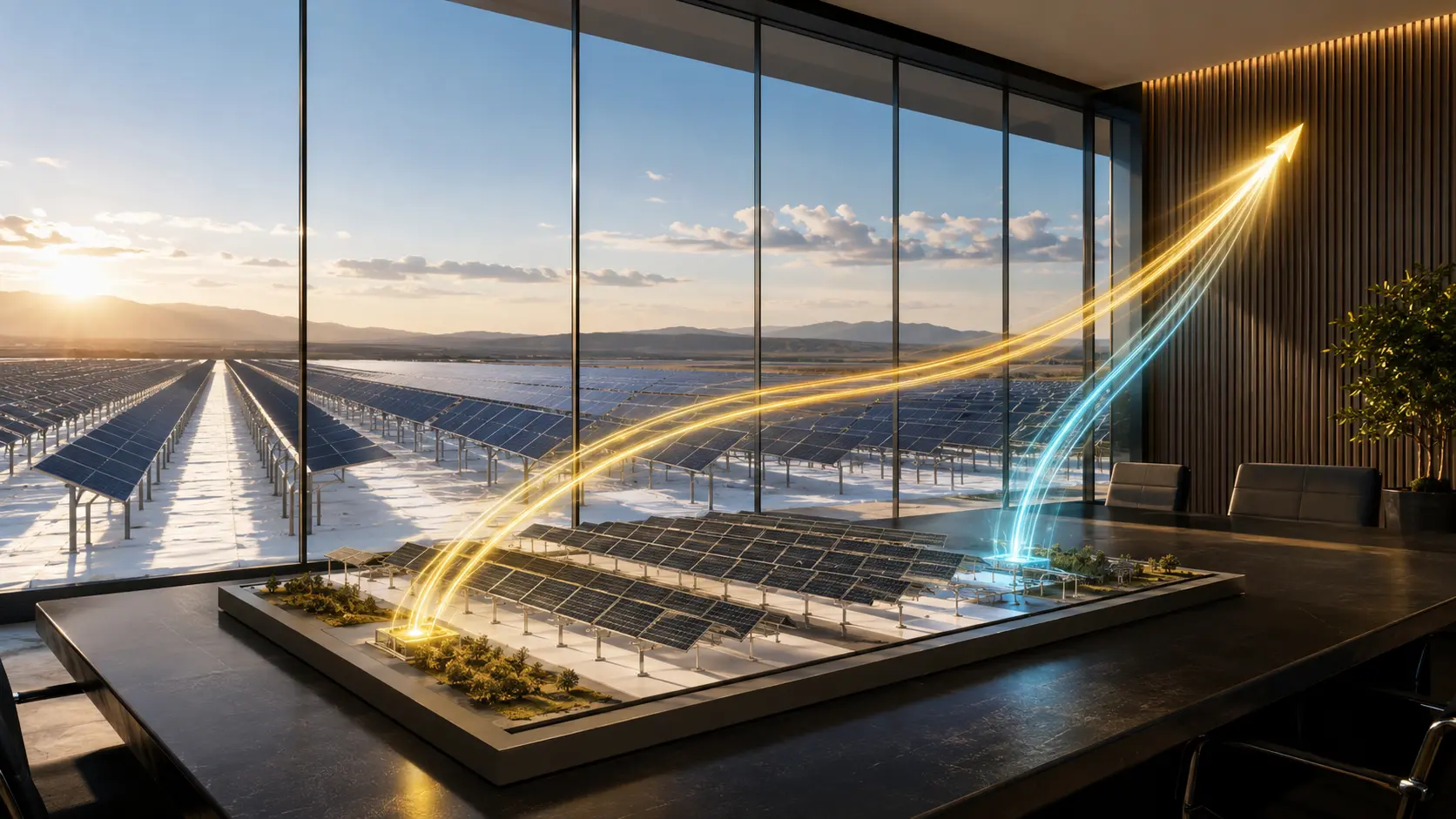
Reflective membrane ROI comes from incremental delivered-energy revenue plus defensible O&M savings, less installed cost and incremental maintenance. In the editable Malaysia preset, 1 MWp at RM0.20/kWh, 1,400 hours and 7.36% AC uplift produces about RM20,608 of year-one energy revenue; adding RM20,000 of grass-cost savings gives RM40,608 gross benefit before membrane O&M.
Key takeaways
- Separate energy and O&M value streams.
- Use delivered AC energy, not only DC gain.
- IRR of the membrane is not the plant IRR uplift.
- Show assumptions beside every headline figure.
Calculate year-one energy revenue
For a screening case, multiply MWp by equivalent full-load hours, modelled AC uplift and realised tariff. At 1 MWp, 1,400 hours, 7.36% and RM0.20/kWh, the result is approximately 103,040 additional kWh and RM20,608 gross revenue.
Use the settlement value actually earned by incremental energy. PPA tariff, avoided retail cost, merchant price and curtailed energy are not interchangeable.
Add only defensible operating savings
Vegetation, cleaning, access or other savings should be based on existing costs and covered zones. Deduct new inspection, cleaning and repair. Avoid double counting a cost already excluded from the base plant model.
The Malaysia preset adds an editable RM20,000/MWp-year vegetation saving and RM1,200/MWp-year membrane O&M. That produces a combined screening case, not a universal forecast.
Move from payback to lifecycle return
Simple payback divides installed investment by early annual net benefit and ignores the time value of money. NPV discounts each year's cash flow; IRR is the discount rate that makes NPV zero. Include degradation, escalation, replacement, tax and financing where relevant.
The preset's approximately 4.98-year simple payback and 19.2% standalone IRR include grass savings. With grass savings set to zero, the generation-only case is materially weaker. Neither result means the host plant's IRR increases by the same number of percentage points.
Ask the investment-committee questions
What is the downside AC uplift? How much gain is clipped or curtailed? What reflectance is assumed after ageing? Which costs are quoted versus estimated? What is the warranty and repair plan? Can a pilot verify the key risks?
Present a waterfall from optical gain to net cash. A transparent model is more persuasive than an aggressive headline because the decision-maker can see which assumption matters most.
Frequently asked questions
Questions asset owners and EPCC teams ask
What tariff does the Malaysia model assume?+
RM0.20 per kWh in the current preset. It is editable and should be replaced with the project's realised energy value.
What does 19.2% IRR refer to?+
It is the standalone return of the membrane investment under the combined preset, including the editable grass-cost saving. It is not the total plant or equity IRR.
Sources and further reading
External technical and policy links are provided for due diligence. Supplied-reference project claims should be verified against full reports before investment use.
Engineering and investment note: This article is educational content, not a performance guarantee, tender interpretation or investment recommendation. Project results depend on site geometry, measured conditions, equipment, contracts and final engineering.