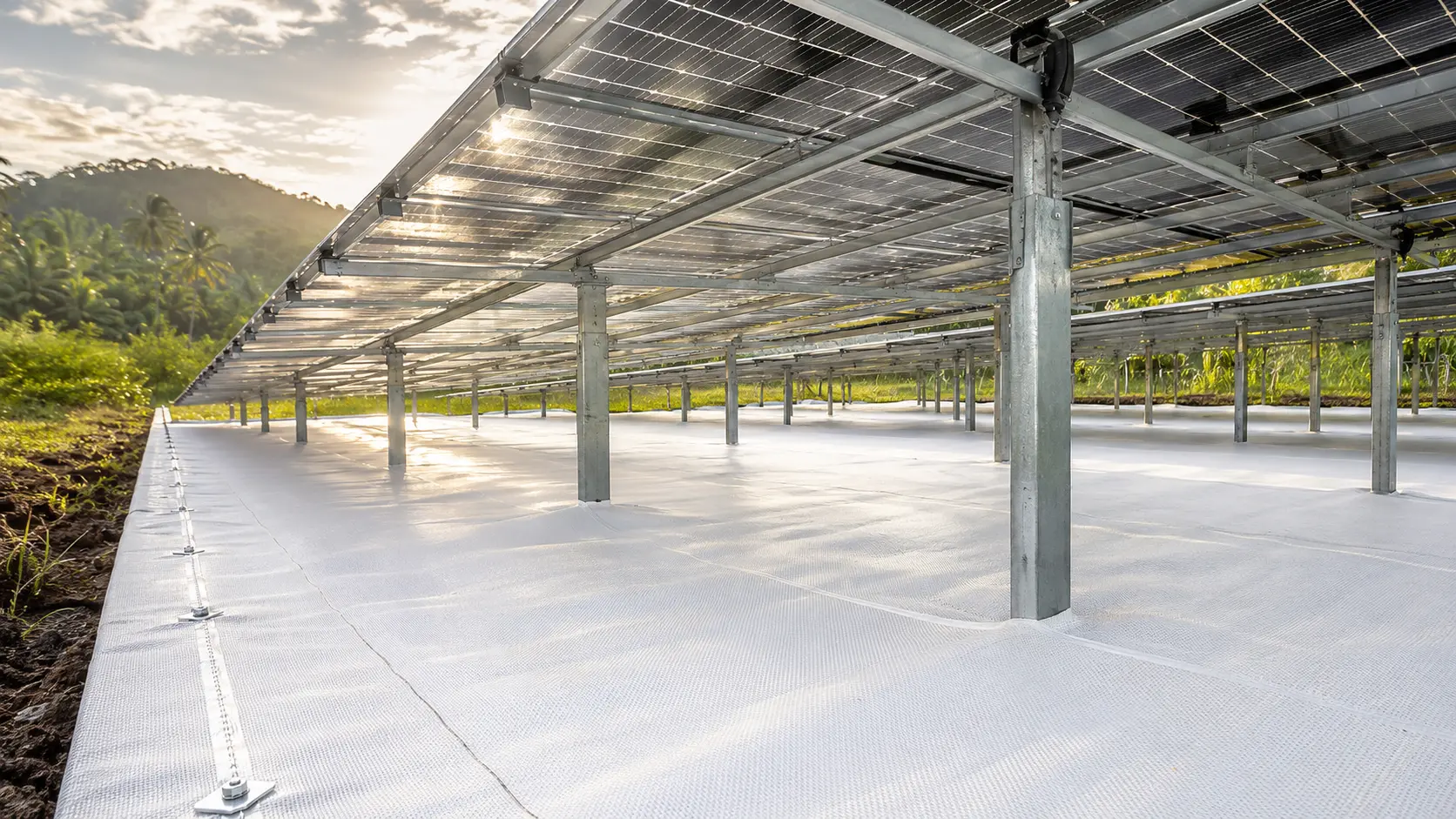
Reference projects and models can show single-digit or low-double-digit uplift, but there is no universal percentage. SunBooster screens a 5–11% project-dependent range and uses 7.36% in its Malaysia preset. For 1 MWp at 1,400 equivalent full-load hours, 7.36% equals about 103 MWh of additional AC energy in year one.
Key takeaways
- Uplift must be defined at DC or delivered AC level.
- One MWp × 1,400 hours × 7.36% ≈ 103 MWh.
- Clipping and curtailment can reduce sellable gain.
- Run downside, base and upside cases.
Start with a clear energy equation
Baseline annual AC energy can be approximated as installed MWp multiplied by equivalent full-load hours. The incremental energy is baseline energy multiplied by the modelled AC uplift. For the Malaysia screening case: 1 MWp × 1,400 MWh/MWp-year × 7.36% equals approximately 103 MWh in year one.
This arithmetic is a communication tool, not a substitute for hourly simulation. Peak sun hours, equivalent full-load hours and meteorological irradiation are related concepts but should not be casually interchanged in a bankable model.
Why project results vary
Optical drivers include baseline albedo, membrane reflectance, coverage, height, pitch, tilt or tracker position, module transparency and bifaciality. Electrical drivers include DC/AC ratio, inverter efficiency, clipping, cable losses and mismatch. Commercial drivers include curtailment and settlement rules.
A plant with excellent rear irradiance but heavy midday clipping may show a strong DC gain and a modest AC gain. A solar-plus-storage project may capture more of that otherwise constrained production, subject to the BESS power, energy, state-of-charge and round-trip-efficiency limits.
How to use reference evidence responsibly
A reference project demonstrates that the mechanism can work under defined conditions. It does not guarantee the same percentage at another latitude, layout or operating point. Compare measurement boundaries, weather normalisation, control blocks, cleaning, availability and whether curtailment periods were excluded.
SunBooster presents supplied dossier references as technical context and clearly labels its calculator as a screening model. Procurement should require traceable reports, matched sample identity and project-specific simulation.
Build a decision range
Use a downside case with lower aged albedo, partial coverage and conservative AC conversion; a base case supported by engineering; and an upside case that remains physically plausible. Apply degradation and incremental O&M over the analysis period.
Then test the break-even uplift: the percentage at which discounted energy and O&M benefits equal installed cost. This is often more useful to an investment committee than one headline forecast.
Frequently asked questions
Questions asset owners and EPCC teams ask
Is 7.36% guaranteed?+
No. It is the editable AC-uplift assumption in the Malaysia screening preset. Final value requires project-specific simulation, engineering and ideally field validation.
Does 7.36% more energy mean 7.36 percentage points more project IRR?+
No. Energy uplift and total project IRR are different metrics. The IRR impact depends on the plant's complete financing, tax, cost and revenue cash flows.
Sources and further reading
External technical and policy links are provided for due diligence. Supplied-reference project claims should be verified against full reports before investment use.
Engineering and investment note: This article is educational content, not a performance guarantee, tender interpretation or investment recommendation. Project results depend on site geometry, measured conditions, equipment, contracts and final engineering.