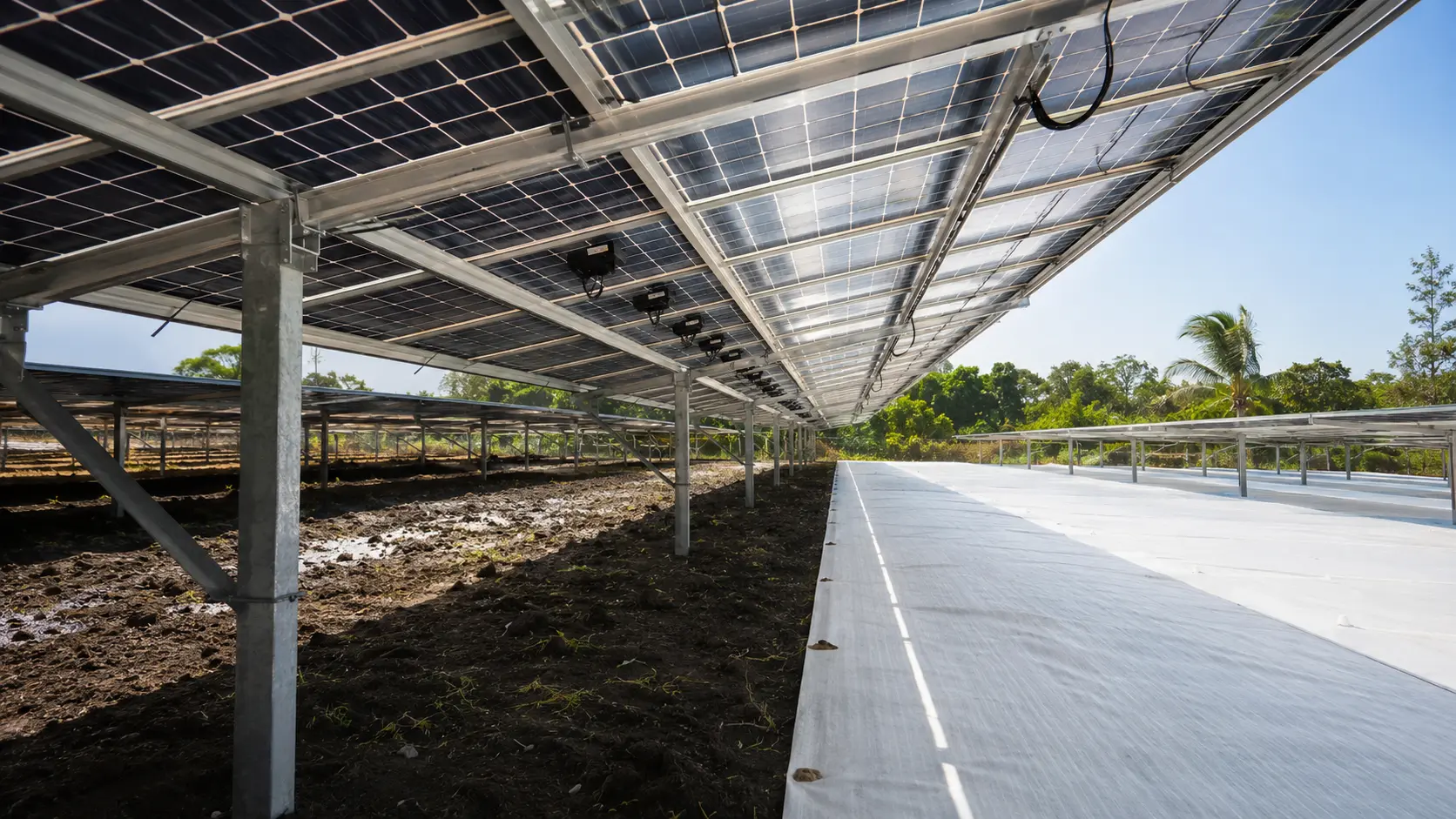
A bankable reflective-membrane procurement should connect the offered product to traceable test samples, aged optical performance, mechanical and environmental evidence, project-specific design, quality control and measurable acceptance. A logo wall or headline reflectance number is not enough without report numbers, sample identity and scope.
Key takeaways
- Verify the exact offered product against test samples.
- Ask for aged as well as initial reflectance.
- Make design and installation responsibilities explicit.
- Define acceptance and remedy before award.
Optical and energy questions
What reflectance metric, spectrum and test method are used? Is the reported value initial, cleaned, aged or field-soiled? What albedo enters the energy model, over what coverage, and how is non-uniform rear irradiance treated?
Require base and intervention cases, input files, loss diagrams, AC uplift, clipping and curtailment treatment. State whether output is a forecast, pilot result or operating measurement.
Material and durability questions
Request UV, damp heat or thermal cycling, salt mist, dust or abrasion, tensile, tear, bursting, flame and restricted-substance evidence relevant to the site. Confirm sample construction, thickness, roll size, manufacturer batch and relationship to the supplied product.
Ask how reflectance and strength change after ageing, how seams are qualified and how damage is repaired.
Design and delivery questions
Define who owns drainage, wind uplift, anchoring, soil pull-out, coverage drawings, quantities, wastage, installation method and interface with the structure supplier. Require method statements and inspection-and-test plans before site work.
Separate product warranty from energy performance. Clarify exclusions, maintenance obligations, spare rolls, response times and remedy limits.
Acceptance checklist
Approve submittals, samples and pilot area. Inspect ground preparation, roll and fixing batch, seams, tension, clearances, drainage and completion records. Measure initial reflectance or albedo using an agreed method.
For performance acceptance, predefine the control, sensors, data-quality rules, normalisation, test period and uncertainty. Ambiguity after installation creates avoidable disputes.
- Traceable reports
- Project energy model
- Stamped civil/mechanical design
- Installation QA records
- Measurement and acceptance protocol
Frequently asked questions
Questions asset owners and EPCC teams ask
Do TÜV or SGS logos mean the whole system is certified?+
Not automatically. Testing-body names may identify issuers of specific material reports. Verify the report, scope, tested sample and chain to the offered product.
Should a tender guarantee an energy-uplift percentage?+
Only with clearly defined boundary conditions, measurement method, exclusions and remedy. Many projects instead use design obligations and a pilot acceptance process.
Sources and further reading
External technical and policy links are provided for due diligence. Supplied-reference project claims should be verified against full reports before investment use.
Engineering and investment note: This article is educational content, not a performance guarantee, tender interpretation or investment recommendation. Project results depend on site geometry, measured conditions, equipment, contracts and final engineering.