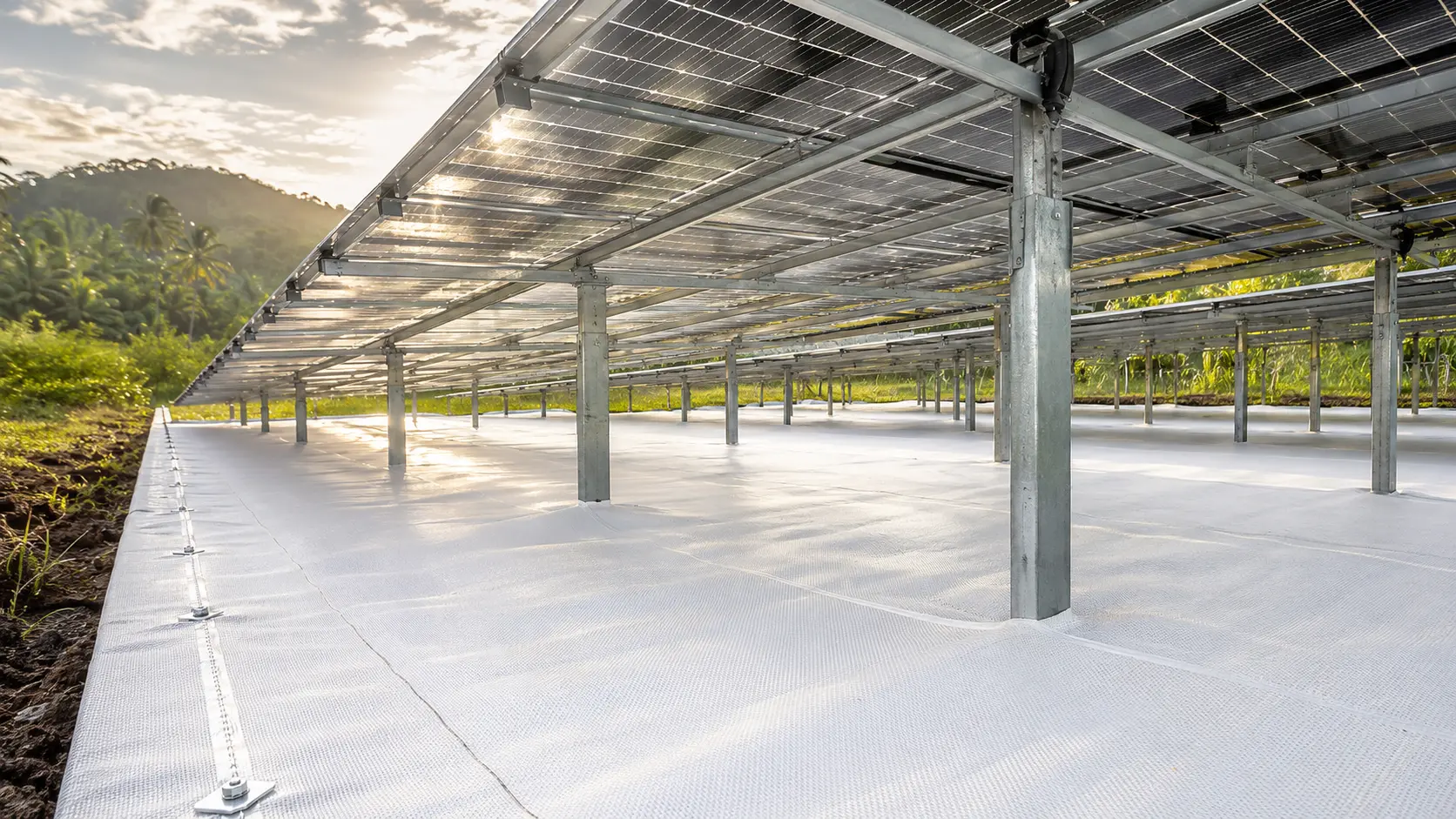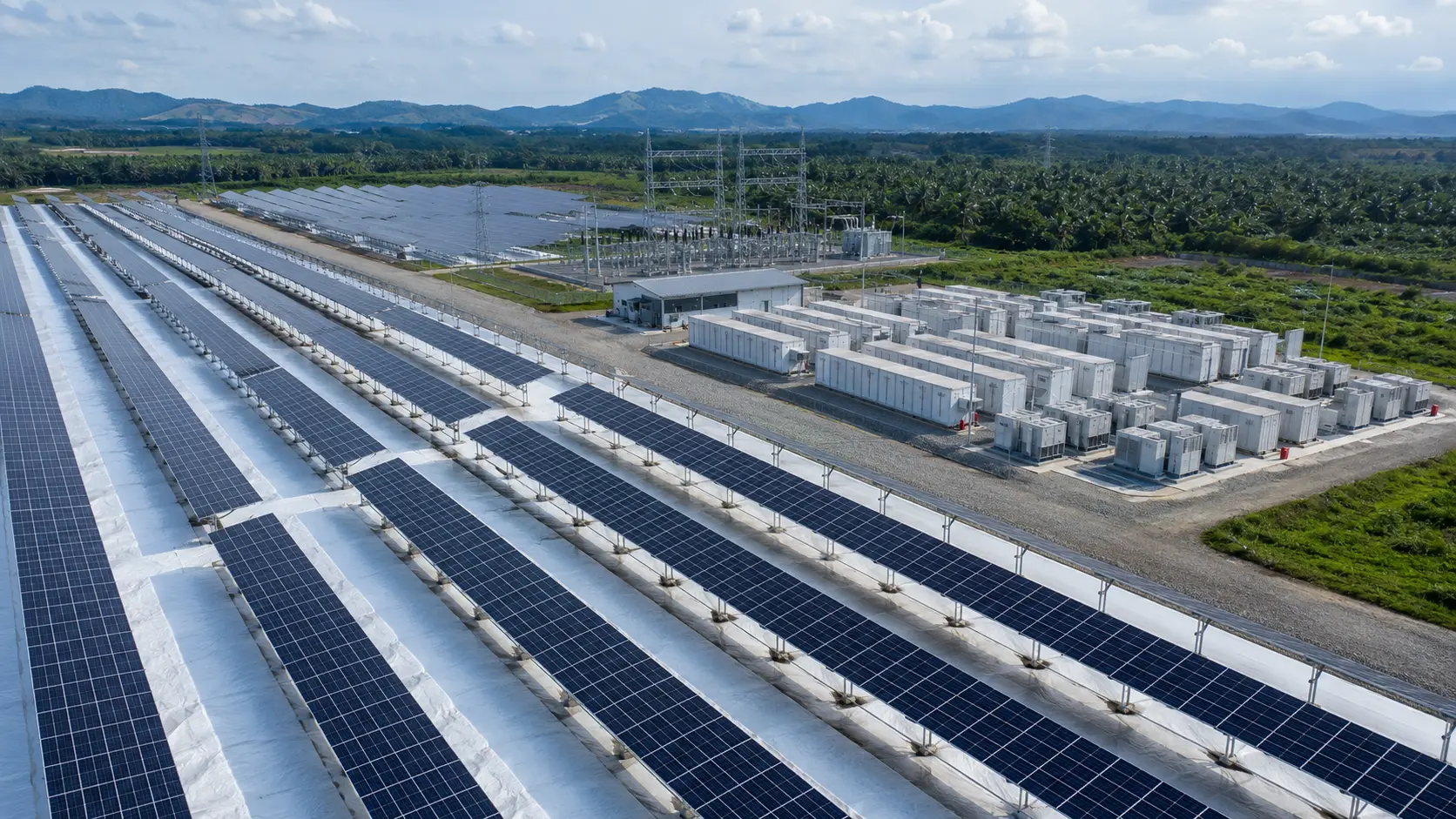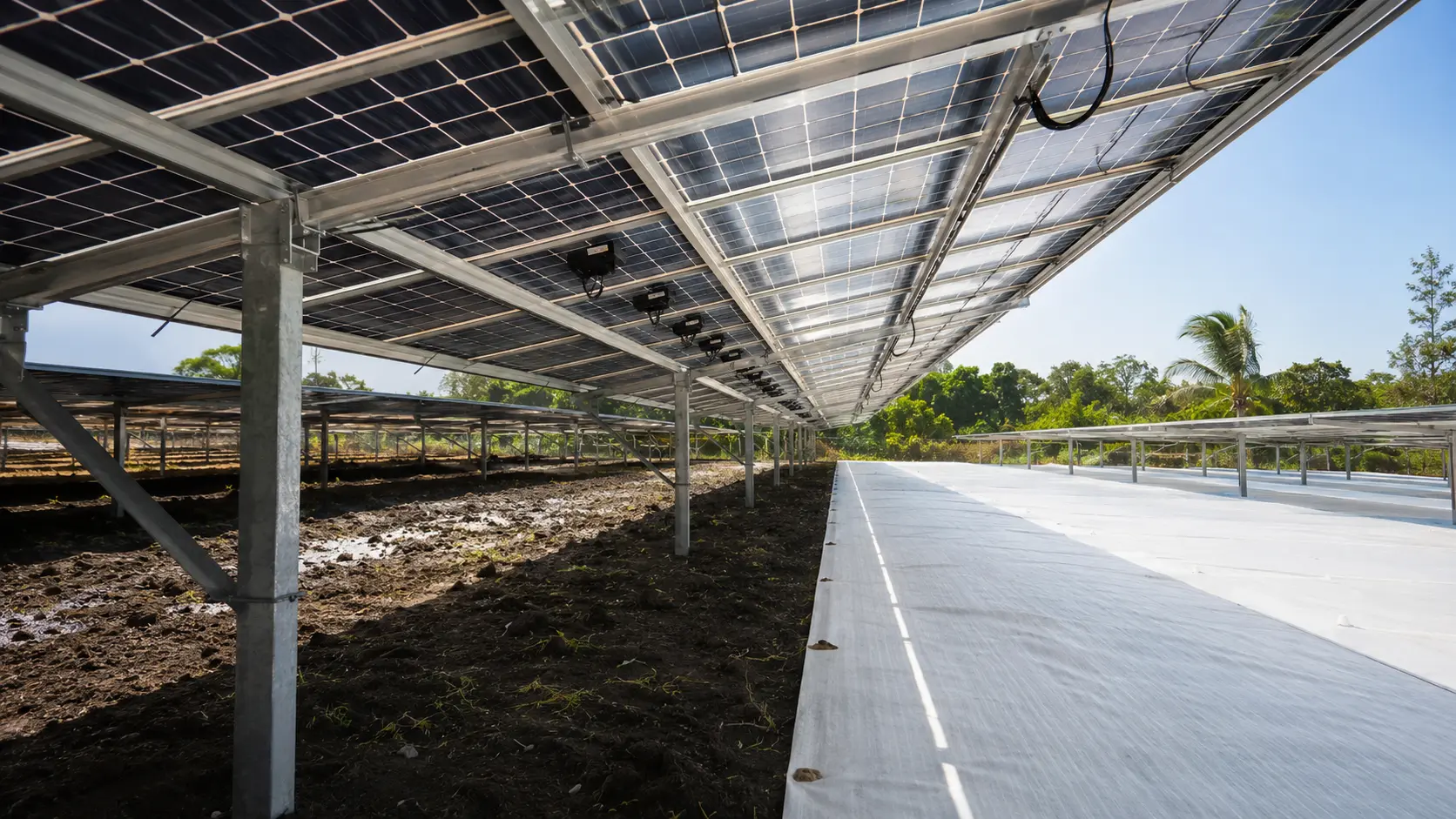
The supplied technical dossier reports large-scale reflective-membrane references in Oman and the UAE, including an Ibri host plant and an Abu Dhabi pilot. Their main value is proof of scale and learning—not a promise that Malaysia will reproduce the same gain. Measurement boundary, dust, cleaning, clipping and geometry must be compared carefully.
Key takeaways
- Reference projects prove mechanism and constructability.
- Reported gain needs a defined measurement boundary.
- Desert results cannot be copied directly to the tropics.
- Use references to design a better local pilot.
What the supplied references report
The dossier cites an Oman Ibri utility-scale deployment at a 575 MW host plant, with 500 MW full coverage and reported non-curtailed gain of 9.74–11%. It also cites an Ibri Phase II reference of 149 MW with reported 10.04% gain, and an Abu Dhabi Masdar pilot with 7.31% reported actual gain.
These figures are supplied-reference claims. Technical due diligence should obtain the underlying reports, dates, control design, exclusions and sample traceability before using them in a forecast.
Dust and cleaning are part of performance
High-reflectance ground can lose optical performance when covered by dust. Cleaning frequency, method, water availability, traffic and wind-blown deposition affect net benefit. A robust case compares energy regained with cleaning cost and water use.
Malaysia has different soiling, rainfall, algae and vegetation conditions. Natural rain may help rinse some material while humidity and organic growth create other challenges.
Understand non-curtailed gain
A reported non-curtailed gain can describe the physical response during periods when the plant is free to export. It may be useful for technology validation but can exceed the monetised annual gain if clipping or curtailment removes part of the production.
Ask whether the figure is DC, inverter AC or point-of-interconnection energy; how weather was normalised; and whether control and treatment blocks were simultaneously available.
Transfer lessons, not percentages
Use large references to improve logistics, anchoring, installation QA, cleaning and monitoring. Rebuild the optical and commercial model using the new site's weather, ground, module, structure, inverter and contract.
A Malaysian pilot should focus on tropical drainage, vegetation and wet reflectance while preserving the rigorous control and measurement discipline learned from arid projects.
Frequently asked questions
Questions asset owners and EPCC teams ask
Are the Oman projects SunBooster projects?+
They are technology references reported in the supplied partner dossier. They should not be represented as SunBooster-owned projects without contractual evidence.
Can Malaysia expect 10% uplift?+
It is possible as a scenario but not guaranteed. Site-specific modelling and validation are required; SunBooster screens a broader 5–11% project-dependent range.
Sources and further reading
External technical and policy links are provided for due diligence. Supplied-reference project claims should be verified against full reports before investment use.
Engineering and investment note: This article is educational content, not a performance guarantee, tender interpretation or investment recommendation. Project results depend on site geometry, measured conditions, equipment, contracts and final engineering.